In about-face, the Atwater Kent Collection won’t be going to Drexel University
‘Philadelphia’s attic’ was slated for a handover to Drexel in 2022. Now, the City and Drexel are hammering out a new deal that will keep the collection in the hands of the City.

Years after being assumed a fait accompli, the ownership transfer of the Atwater Kent Collection to Drexel University appears to be off.
Dubbed “Philadelphia’s attic,” the collection will remain in the hands of the City of Philadelphia, under the terms of a deal being hammered out between the City and Drexel.
The 130,000 objects relating to the city’s history had been slated for a handover to Drexel after Philadelphia Orphans’ Court approved the move in 2022, but a transfer agreement was never signed.
The historic trove became unmoored from its longtime home at 15 S. 7th Street, the Philadelphia History Museum at the Atwater Kent, when the museum closed in 2018. Plans now call for the City to continue owning the Collection, with Drexel maintaining its role in conserving, exhibiting, and loaning out the artifacts.
It was Mayor Cherelle L. Parker who initiated the change in plans, according to a joint statement from the City and Drexel that was produced after The Inquirer asked about the status of the Collection’s ownership.
After Parker took office in 2024, “she insisted that Philadelphians would be best served by the Collection staying in the City’s ownership, with continued expert care and curation by Drexel collections professionals,” said the statement from earlier this month.
“The history of Philadelphia belongs to Philadelphians. I directed my team to ensure that the City’s treasures would always be owned by Philadelphians,” said Mayor Parker in the statement, which added that “today’s announcement reflects that the City and Drexel are [in the process of] reaching an agreement to do just that.”
In another change in course, Drexel will no longer become trustee of the Collection. Instead, the artifacts will be overseen by a body of trustees drawn from the former Atwater Kent museum board.
“It’s going to be up to the City and the trustees to oversee Drexel’s work,” said Jeffry Benoliel, vice president of the museum trustees.
“I think it’s good for the city. It’s a great collection,” said Benoliel. “Our biggest question mark is the City commitment. I know the Mayor’s office is very committed, they have a five-year budget for this. But after seeing I don’t know how many years of pulling back their support,” Benoliel said, he is looking forward to seeing “what their commitment and City Council’s commitment is.”
‘Multiyear financial commitment’
City cultural chief Val Gay said that the City has made a “multiyear financial commitment that exceeds its previous contractual support to Drexel,” but added that “we are not disclosing specific financial terms until the agreement is finalized.”
The change in ownership plans was applauded by Francis W. Hoeber, an independent historian with a concentration in Philadelphia, who has long been critical of the Atwater Kent Collection’s ownership transfer out of City hands.
“This Collection belongs to the people of Philadelphia,” he said. “It is an incredibly valuable part of Philadelphia’s history and it should be maintained and treasured by the City and not by some private entity — not by any private entity.”
The Atwater Kent Museum (as it was originally called) was the gift of inventor, radio manufacturer, and entrepreneur A. Atwater Kent, and opened to the public in 1941. Kent purchased the former Franklin Institute building on 7th Street just south of Market and donated it for use as a museum devoted to the city and its history.
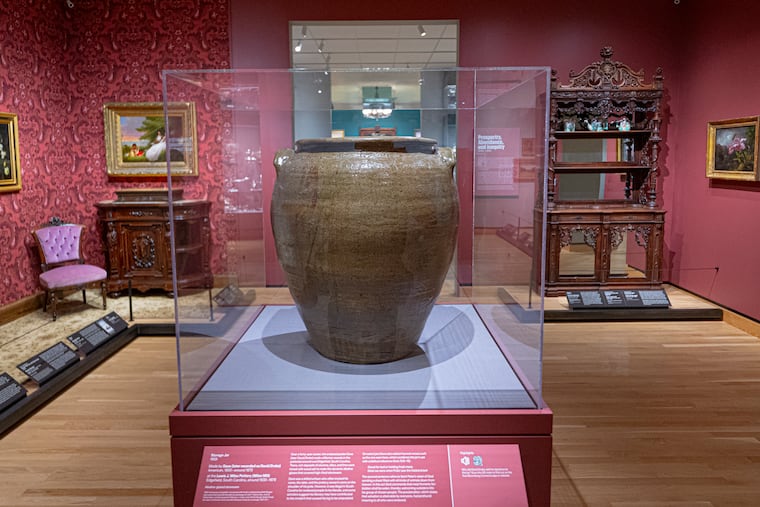
Among the Collection’s treasures are the wampum belt given to William Penn by the Lenape in 1682 and George Washington’s mahogany desk; artifacts from the city’s industrial heritage and 1876 Centennial Exposition; sports memorabilia; and artistic achievements such as works by painters Charles Willson Peale, Benjamin West, and Thomas Sully.
A Kent family representative declined to comment on Monday until the details of the latest development were worked out and available.
‘A huge win’
The museum closed its doors in 2018 after experiencing declining support. Then-Mayor Jim Kenney tapped Drexel to take over the Collection itself, and the building was shuttered. It remains closed.
Though the final transfer to Drexel never happened, the university has proceeded with its work in the past several years, digitizing the Collection, conserving specific items, organizing exhibitions, and raising the money to pay for its work.
“This is a huge win,” said Rosalind Remer, Drexel’s senior vice provost for libraries, collections and archives, who has led Drexel’s work with the Collection. “I also think it opens up the possibility, maybe sooner than we had hoped for, of some more permanent option. I don’t know that there will necessarily be a new museum, but there could be a permanent presence, a public presence, which we would be very happy to curate and support.”
The deal as it was originally envisioned called for the Collection’s name to be changed to the “Atwater Kent Collection at Drexel University,” but now the name change is uncertain.
“The exact terms of the new agreement between Drexel and the City have not been finalized, so it is premature to speculate on that,” said Remer, who is also a member of the board of managers of the Lenfest Institute for Journalism, which owns The Inquirer.
“We’re in the final stages. It’s really dotting I’s and crossing T’s at this point,” she said of the deal between Drexel and the City.
Patricia Wilson Aden, president and CEO of the Greater Philadelphia Cultural Alliance, said she was optimistic about this latest development, but was also eager to learn more about important details — especially regarding what level of financial support the City might offer in the future.
“This is not only a matter of good intentions, it’s a matter of funding, addressing concerns about leadership and stewardship at the board level and staffing level, and ensuring that the Collection is treated as that invaluable resource that we all know it is.”
A long time in the making
Remer said that the change in ownership plans had nothing to do with Drexel’s finances. Facing deficits, the university has been in belt-tightening mode and has been in negotiations for a new affiliation agreement with the board of the Academy of Natural Sciences.
“Absolutely not,” Remer said. “In fact, when President [Antonio] Merlo came to Drexel and I met with him for the first time, he affirmed his support for it and said that he had no intention of backing out of any kind of agreement like this. He thought it was great and he’s been very supportive of our work.”
The idea of the City retaining ownership of the Collection predates the arrival of Merlo and began during the term of his predecessor, acting Drexel president Denis P. O’Brien, said Remer.
Financially, Drexel’s cost of managing the Atwater Kent Collection is “pretty neutral,” Remer said. The lease for storage at the Pennsylvania Academy of the Fine Arts is paid by the City, she said.
Drexel contributes staff time, but as for the Collection’s programs, exhibitions, and other activities, “we only do what we fund. And we’ve been really lucky and grateful to have found so many great funders, both private and foundation grants and even federal funds.” Among the sources are the William Penn Foundation and the federally funded Institute of Museum and Library Services.
Remer says that since Drexel began its work, the Collection has received $2,700,297 in grants (as of September 2026) and landed donations of $739,641 (as of December 2025).
In addition, an endowment drive has brought in $637,500 toward a goal of $2 million. The endowment will remain in perpetuity, with its investment income going toward care of the Collection.
The transfer of the Collection from the City to Drexel had already been approved by Orphans’ Court. Asked about the legal aspect of what might need to happen now that the transfer is off, a Drexel spokesperson said:
“The details of any future court process would ultimately be a matter for the court, and we won’t speculate about what that process may entail.”
No dedicated museum yet
Though public perception has often been that the Atwater Kent items went into hiding after the museum closed, hundreds of its artifacts have been displayed and loaned in recent years.
“Philadelphia Revealed: Unpacking the Attic,” which ran at the Pennsylvania Academy of the Fine Arts in 2024 and 2025, featured more than 600 objects from the Atwater Kent Collection.
In addition, other 250th anniversary-related exhibits utilized almost 500 objects, said Remer.
When the Atwater Kent museum was open, “at any one time in the museum there were only a maximum of 200 or so [objects] that were ever on view permanently, so we’re already way beyond that in terms of the numbers of objects people have been able to actually see and the stories that they tell.”
A free exhibition recently opened at the National Constitution Center — “Pennsylvania’s Founding: How a City and a Colony Shaped America’s Civic DNA” — features 29 items, 16 of which are from the Atwater Kent.
Drexel has digitized about 20,000 items from the Collection, and in addition to photographing, it has made 10 million metadata entries and corrections, “which means every object is researched and understood.”
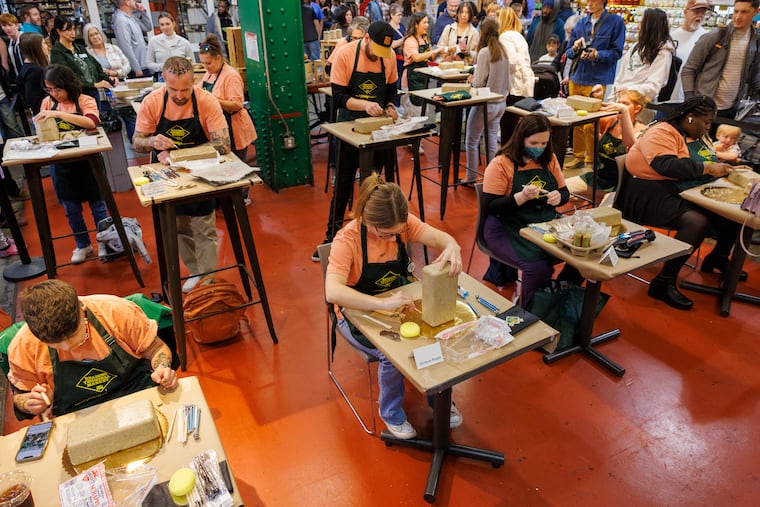
In the meantime, between 5,000 and 6,000 Drexel students have had some kind of interaction with the Atwater Kent materials — through class assignments, in co-ops working in the Collection, by designing exhibitions on campus, and learning about conservation and designing catalogs.
The new plan for the Atwater Kent items does not restore a dedicated museum for Philadelphia history. The loss of such a permanent, standalone museum was bemoaned by historians when the museum closed its doors in 2018 — and has continued to be cited as a major loss for the city.
Hoeber, the historian, says he still believes Philadelphia should have a museum solely devoted to it.
“We were the birthplace of American industrial might, we were the birthplace of America’s leadership in finance, not to mention leadership in constitutional politics, in abolition, in public knowledge and education,” he said. “That affected the way institutions operated in every state in the union and people deserve to know that.”
Still, Remer said, there’s nothing that prevents the return of a separate institution should the civic will find a way to make that happen in the future.
In fact, the Collection is intact, and it continues to grow, Remer points out.
“I know people are sad about it and it’s perfectly fine and reasonable for all of us to be sad that we don’t have a great [Philadelphia] history museum. At the same time, we’ve made sure that we haven’t lost all those materials that can someday make a great history museum or a permanent gallery of some sort. So I feel good about that.”