



The very Philly episode of ‘The Gilded Age’ and other arty must-dos this week
By Earl Hopkins, Dan DeLuca, Bedatri D. Choudhury, Elizabeth Wellington
A new film about very old people
or 10 years, filmmaker Sam Green decided to meet the person who currently holds the Guinness Book of World Records record for the being the oldest person alive. The film he initially wanted to make would just go from one oldest person to another but the film he ended up making, The Oldest Person in the World, becomes so much more.
Green’s son Atlas is born and Green receives a multiple myeloma diagnosis during the making of this film, which he started making shortly after his brother’s death from suicide. What emerges is an endearing meditation on life and mortality. The oldest person in the world, he says, is someone you only meet by chance and not know for long; and in that liminal time they make you see a glimpse of a future you may not even get to see for yourself.
When Green goes to film the birthday party for Susannah Mushatt Jones’ 114th birthday in Brooklyn, she falls asleep right by her cake and doesn’t wake up for the celebrations. Green travels the world speaking to the oldest people, all speaking in different shades of lucidity while we witness Atlas growing up through the film which ultimately becomes a fascinating timekeeper. It reminds us simultaneously of the time we have left on this earth and the time we are constantly and inevitably losing.
Green, whose 32 Sounds is one of my favorite documentary experiences (for those who have witnessed it, it’s more than just a film), is a filmmaker with a distinct style that doesn’t shy away from testing the limits of what a documentary can do. Oldest Person’s next Philadelphia screening is programmed by Yoni Brook, another filmmaker whose work I really admire. You may know him for working on Philly DA, on which he was the cinematographer and producer. Last year’s Holding Liat, on which Brook is a producer, is also a great and urgent watch.
“The Oldest Person in the World” plays Nov. 17, 7 p.m., Pen and Pencil Club, 1522 Latimer St, Phila. penandpencil.org. Open to public.
— Bedatri D. Choudhury
A stylish new film noir-ish album from Wesley Stace
Wesley Stace became an American citizen this past July, having already been a Philadelphia citizen for 16 years.
So the Hastings, England-born songwriter, novelist, and “Cabinet of Wonders” impresario thought it was about time that his music started to absorb the sounds of the city he lives in.
That impact is felt on One Last Heist, Stace’s new album on Pravda Records that was recorded at Pete Rydberg’s Studio 1935 at the Bok Building in South Philly. Stace has a reputation as a folk-rock wordsmith who released over a dozen albums as John Wesley Harding — the title of a 1967 Bob Dylan album — before he started using his given name on Self-Titled in 2013.
But with 2021’s Late Style, Stace started setting his barbed, witty, and narratively sophisticated songs in more posh and polished settings, more suitable for a dinner jacket than a denim one. The musical breadth of that project was limited because it was largely recorded remotely during the pandemic.
On One Last Heist, Stace follows through with a record that swings more than any he’s ever made. The influence of Philly jazz organ greats such as Jimmy Smith and Shirley Scott is apparent, as is Stace’s abundant affection for the lushly orchestrated recordings on the CTI label, which he has been spinning in his guest DJ appearances at 48 Record Bar in Old City.
With the aid of veteran musicians like drummer Stephane San Juan (who’s played with Caetano Veloso and David Byrne) as well as longtime collaborator David Nagler, One Last Heist has a stylish film noir feel and the élan to pull off a subtle protest song such “I Say A Lot of Things,” as a Brazilian samba.
On Saturday, Stace and his backing band the English UK play a show on the Main Line in Wayne at the particularly civilized hour of 4 p.m. He can also be seen playing in a side gig on Dec. 10-11 fronting New Jersey power-pop garage rock band the Smithereens in Red Bank, N.J., and his next multigenre all-star “Cabinet of Wonders” variety show is at City Winery New York on Jan. 10.
Wesley Stace & the English UK at 4 p.m., at 118 North, 118 North Wayne Ave., Wayne, 118NorthWayne.com.
— Dan DeLuca
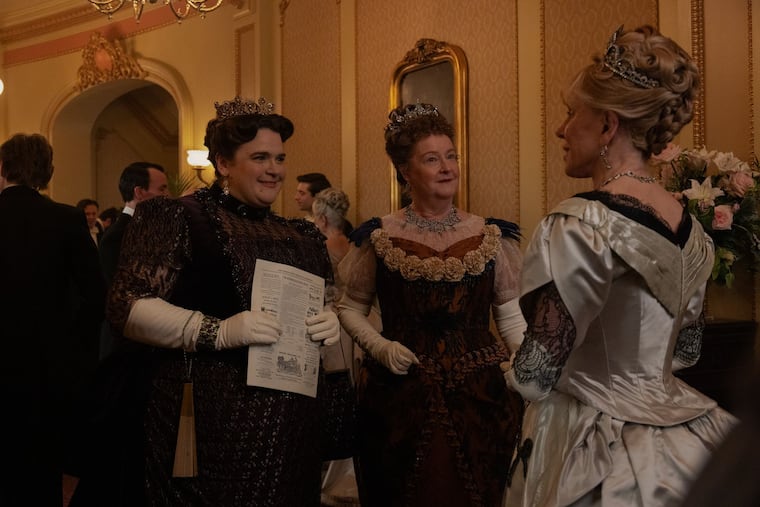
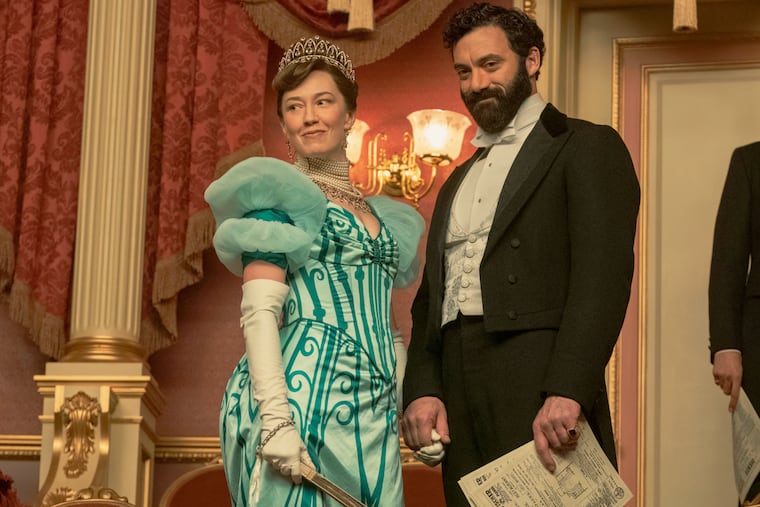
‘The Gilded Age’ and its Philadelphia connections
HBO’s extravagant serial The Gilded Age is back. And I’m thrilled.
I tune in to Julian Fellowes’ New York City dripping in late 19th century diamonds, tiaras, and white tie affairs each Sunday to marvel at the floor-length floral gowns, the elegant updos, the witty dialogue — that Mrs. Van Rhijn (Christine Baranski) doesn’t suffer fools — and forbidden dalliances.
But I also watch The Gilded Age because there’s always a chance a historical figure from Philly shows up at a fictional character’s home for tea. That’s thanks to Philadelphia native, Emory University professor and former director of African American History at the Library Company, Erica Armstrong Dunbar.
Dunbar serves as the co-executive producer and historical consultant of The Gilded Age.
In season 4, episode 2, the featured Philly figure was Louisa Knapp Curtis, the first editor of Ladies’ Home Journal and wife of publisher Cyrus Curtis (for whom the Curtis Building at 6th and Market is named.)
In 1876, Cyrus Curtis founded the weekly farm and family newspaper the Tribune and Farmer in Philadelphia. The magazine carried advertisements geared for women, but the articles weren’t that great; at least according to Louisa Knapp Curtis. Louisa convinced her husband that she should write a woman’s column. It was so successful that in 1883, Cyrus Curtis centered it in his women’s magazine Ladies’ Home Journal that also featured recipes, fashion, and eventually articles on Suffrage. In 1903, Ladies’ Home Journal became the first American magazine to reach a million subscribers.
But I’m getting ahead of myself.
Sunday’s episode of The Gilded Age is set in 1886. In it, Mrs. Knapp Curtis (Bonnie Milligan) travels from Philadelphia to Mrs. Van Rhijn’s Fifth Avenue Mansion to cover her preparations for President Grover Cleveland’s visit. (White tablecloths are the only option for a United States President’s visit.)
Things are going well until, well, they aren’t. And by the end of the episode, we are left wondering if Mrs. Knapp Curtis will return to Philadelphia with an article about President Cleveland’s visit to Mrs. Rhijn’s home — or will Mrs. Knapp Curtis end up filing a story about a presidential dinner held at a different Fifth Avenue mansion.
‘The Gilded Age’ airs Sunday nights at 9 p.m. on HBO.
— Elizabeth Wellington
Victoria Monét’s striking performance
Victoria Monét has all the ingredients of an R&B star. She has the voice to carry a love ballad, enchanting dance moves, and the ability to float between breezy bubble gum hits, foot-stomping anthems, and sleek soulful cuts without slippage.
The Grammy-winning artist’s brilliance was center stage at the Met on Thursday night for her “Frequency of Love” tour.
She wore a silk dress with elbow-length gloves, a look reminiscent of Josephine Baker at the height of her powers. Monét opened with “All I Need,” an ode to her daughter Hazel and the intro to her sophomore album, Frequency of Love. She followed up with another heartfelt record “Come Back To You” from her October release. Although the material is still fresh, even for her most boisterous fans in the audience on Thursday, the singer had the crowd within her grip before the stage curtains were peeled.
The curtains then opened, revealing a glowing platform with her band and background dancers holding firm until Monét reached the top of cascading steps. She glided down to perform “Cadillac (A Pimp’s Anthem)” in a shimmering sequin dress, exuding the elegance of the roaring ‘20s. She also floated between eras in her own discography.
Monét performed familiar favorites like “A– Like That,” “Experience,” and “On My Mama” before transitioning to newer album cuts like “Head To Toe,” “Almost” and “See You in My Dreams.” She broke up the setlist with momentary dance breaks, including a steamy one between her and a backup dancer that drew audible awes from the crowd.
The show was a savory balance of Monét’s new and familiar works, paired with striking dance sequences and high production value, as evidenced by the cinematic videos of Monét that flashed onto the stage during her outfit changes. The brief vignettes were insights into the artist’s life as a mother, and a romantic whose aim is to enjoy the fruits of life, without letting outside forces soil the life she’s built. If the energy at the Met was any indication, it appears that there’s a lot of admiration and love for Monét to enjoy for a while.
— Earl Hopkins


