The documentary everyone’s talking about has a secret Philly connection, plus more arts picks
By Earl Hopkins, Dan DeLuca, Evan Weiss, Elizabeth Wellington
A secret Philly connection in the season’s hottest documentary
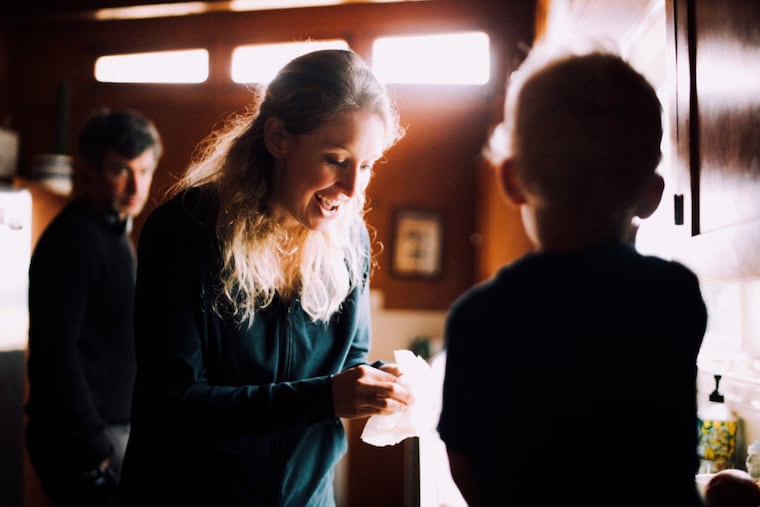
saw You Can See Everything in a packed theater at the Ritz Five on Monday night and it was one of the most delightful moviegoing experiences I can remember — we all gasped, groaned, and laughed together.
In the documentary, Nathan Fielder (of Nathan for You and The Rehearsal) moved in with Theranos’ famed founder and fraudster Elizabeth Holmes in her home during the final days before she went to prison. Their time together is delightful and confounding. It may become the most talked about movie of the year — not because it will be the most-seen movie, but because everyone I know who has seen it cannot stop talking about it.
But there are great movies that come out all the time — why would I write a Philly-specific blurb for this one? Well, I can’t really tell you. Or, I don’t want to because it would serve as a major spoiler.
I will say: there’s a major Philly-area connection. Go see it in a packed theater.
“You Can See Everything” is playing in theaters across the region.
— Evan Weiss
A Bryn Mawr author’s bestselling novel is getting the Amy Poehler treatment
Kate Myers’ bestselling novel, Excavations, is a window into the drama, sizzling romances, and deep-rooted deception of the archaeological world.
The story follows four women who travel to Greece to uncover historical finds at the ancient site of the original Olympics. They soon discover an object buried in the dusty terrain that reveals the significant role women played in early athletic competition. But the most compelling element, for me anyway, was the secret deals transpiring behind the scenes.
Myers, a Bryn Mawr native and University of Pennsylvania graduate, was inspired by an archaeological trip to Greece in 2008. The long hours and sweltering heat convinced her archaeology wasn’t necessarily the career for her, but the experience fueled her appetite for travel and storytelling.
After shopping the manuscript for seven years, Myers landed a deal with HarperCollins Publishers, and the book was released in 2023. The bestseller caught the attention of Amy Poehler and Parks and Recreation co-creator Michael Schur, who adapted the novel into a new Peacock series, Dig. All 10 episodes premiere Nov. 23.
Admittedly, I don’t read much fiction. My growing book collection is far more steeped in self-help books and biographic works. The stacks of books wedged on the shelves of my entertainment center are proof my interests stray far from a title like Excavations. Yet, I couldn’t put the book down for more than five minutes. I was hooked.
I don’t know much about archaeology, but I was fully immersed into the world Myers built from the opening chapters. It’s a credit to her ability to shape these characters, and cohesively weave each of their plot lines into one singular story. It was a true page turner, and I think the episodic nature of the chapters and the audible laughs the story generated, are prime for a project helmed by the likes of Poehler and Schur.
Along with my excitement for the series, Myers’ book is making me reconsider my stance on fiction. It’s inspired me to step outside my comfort zone, as Myers has done throughout her career in entertainment and media. Her journey as an author, and now co-executive producer of a Peacock series, is proof of the power of conviction. Excavations was a leap of faith worth making, and in one month viewers will see her story take on a new form.
— Earl Hopkins
For Camden-native and journalist Trymaine Lee, the root of the Black vote is in Philadelphia
America Amended, Pulitzer Prize-winning journalist Trymaine Lee’s docuseries exploring what America’s constitutional rights mean in the everyday lives of its Black citizens, is overflowing with Philadelphia-based brilliance.
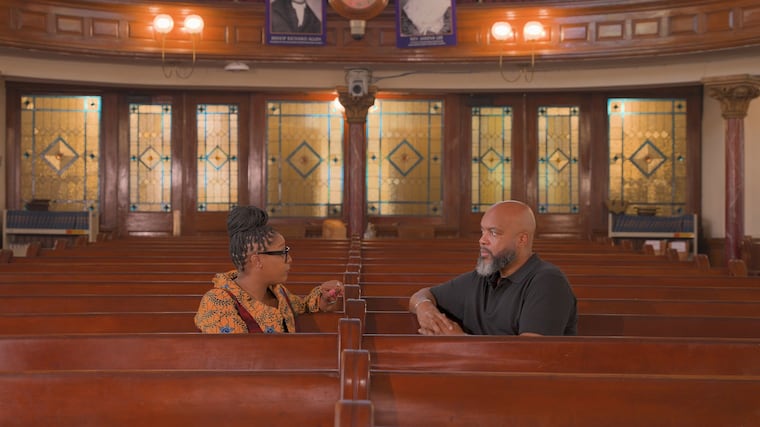
The first episode, “Philadelphia: Does the Ballot Equal Power?,” streaming now on The Root’s YouTube Channel, studies the 15th Amendment, the Reconstruction-era addition to the Constitution guaranteeing Black men the right to vote. Because, according to Carolyn C. Cavaness, pastor of Mother Bethel Church, Philadelphia was the nation’s center of Black power in the 19th century.
It was also in Philadelphia that activist and educator Octavius C. Catto was murdered in 1871 for encouraging Black men to vote, despite the ratification of the 15th Amendment the previous year. His death made him an early martyr for Black voting rights.
It’s a history we should all take care to remember in the weeks before the mid-term elections.
Episodes drop each Sunday through Nov. 14.
In addition to Philadelphia, other major American cities including Detroit, Atlanta, Milwaukee, Houston, and Jackson, Miss., have their own episode. Each city focuses on a particular amendment like the 19th, which prohibited denying voting rights based on sex, and the 13th, which abolished slavery. Sunday’s episode focuses on Atlanta and the Second Amendment right to bear arms.
Lee, a Camden-native and author of A Thousand Ways to Die: The True Cost of Violence on Black Life in America, is an earnest journalist. He’s well-versed in history, clearly knowing the answers to questions before he asks, yet he inquires in such a way we see he’s still learning. It’s what makes the conversations so engaging.
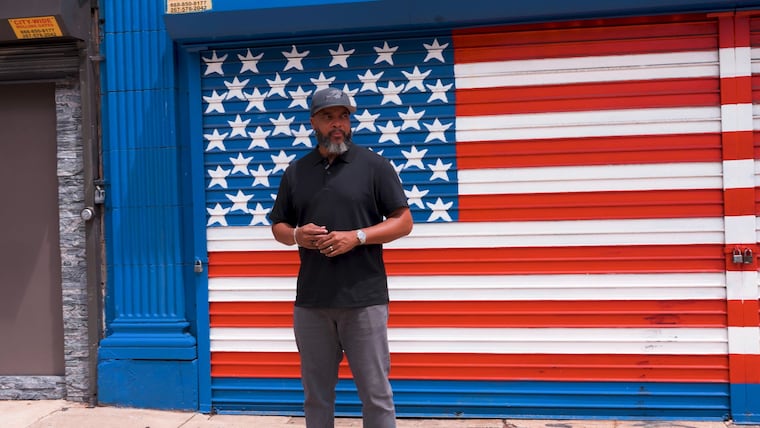
Temple University’s director of the Center for Anti-Racism Timothy Welbeck chats with Lee in front of the Constitution Center. Narrative strategist for 1838 Black Metropolis Joi’ C. Weathers is pensive at Catto’s South Philly mural. Pennsylvania House of Representative Andre D. Carroll is thoughtful in his Germantown office.
Their message is clear: The right to vote drives their activism in Philadelphia.
Lee reminds us why it’s imperative Black folks exercise our hard-fought constitutional right, instead of chastising those who chose not to. By the end of the 15-minute episode, we understand why Philly is at the center of Black people’s storied history at the ballot. We are also gently reminded what the world might possibly look like if Black people lose the vote.
America Amended “Philadelphia: Does the Ballot Equal Power, produced by The Root and Watering Hole Media is airing now on The Root You-Tube channel.
— Elizabeth Wellington
Two picks for the final weekend of Philadelphia Film Festival
It’s the final weekend of the Philadelphia Film Festival, and with it comes a last chance to catch two music-related movies with widely varied subject matter that tell equally compelling stories.
First up screening on Saturday is Once Upon A Time In Harlem, the documentary whose direction is credited to the late William Greaves and his son David, whose daughter Liana is a producer. The film chronicles a 1972 gathering at the home of the great jazz composer and bandleader Duke Ellington that reunited many key figures of the Harlem Renaissance, the Black cultural and intellectual movement of the 1920s and 1930s
The elder Greaves, who died in 2014, shot footage of the cocktail party but never found a satisfying use for it. Now, David Greaves has revisited the footage, which features a staggering number of luminaries looking back on one of the most important cultural movements of the 20th century.
They include writer Richard Bruce Nugent, poet Arna Bontemps, and musicians Noble Sissle and Eubie Blake, who quips that “being here with all these intelligentsias, I’m afraid to open my mouth!”
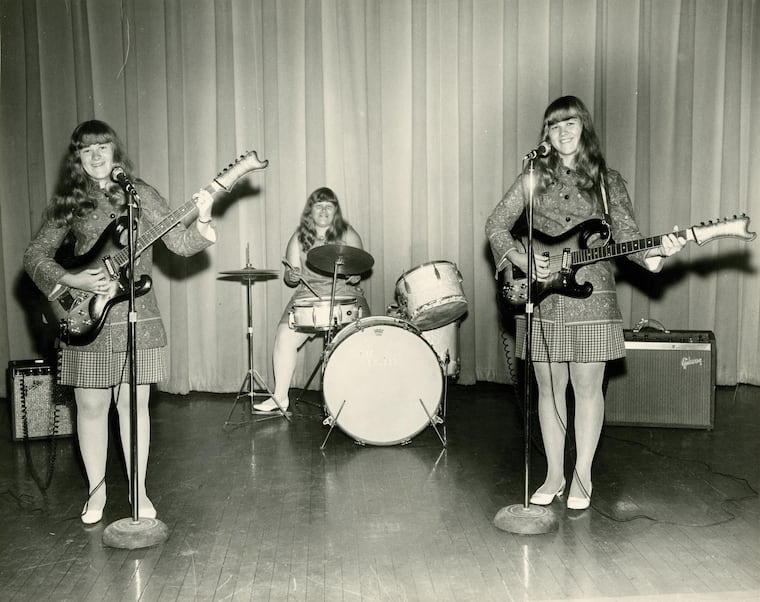
The second music-centric doc is We Are The Shaggs, which tells the story of the love ‘em or hate ‘em trio of Dot, Helen, and Betty Wiggin. Their father, Austin, forced them to form a band to fulfill a prophecy from his mother that he would one day have daughters who played in a famous band.
The Shaggs 1969 album, Philosophy of the World, both has been derided for its rank amateurism and revered as a exemplar of intuitive Outsider Music by super fans such as Kurt Cobain and Frank Zappa who helped spawn a cult of the Shaggs.
And along with director Ken Kwapis’ humanizing of the Wiggins, that gets to the crux of the movie: The question of how it gets decided what music and culture is good (and bad), and who gets to make that decision.
Once Upon A Time In Harlem screens at Film Society East, 125 S. 2nd St. at 11:45 a.m. on Saturday. We Are the Shaggs screens at 9:15 p.m. at Film Society Bourse, 400 Ranstead St., filmadelphia.org.
— Dan DeLuca


