SEC plans to ease limits on campaign donor practice that fed pension corruption
The rule was enacted amid a string of pay-to-play scandals. Americans have until Nov. 9 to comment on the change.
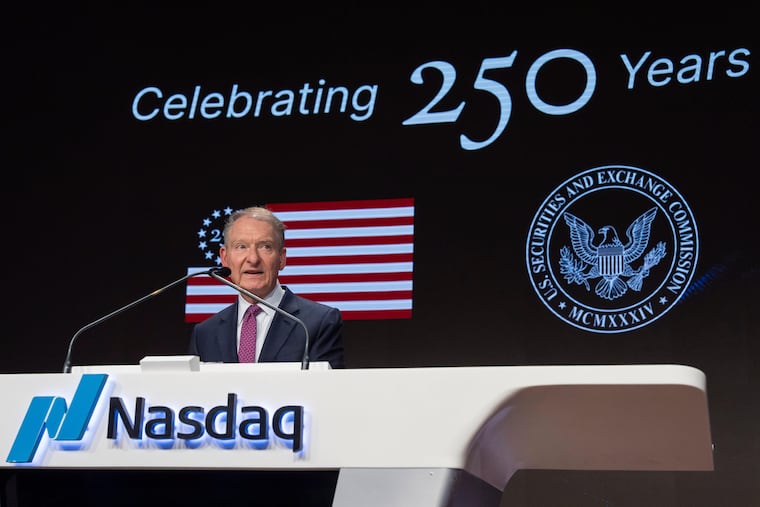
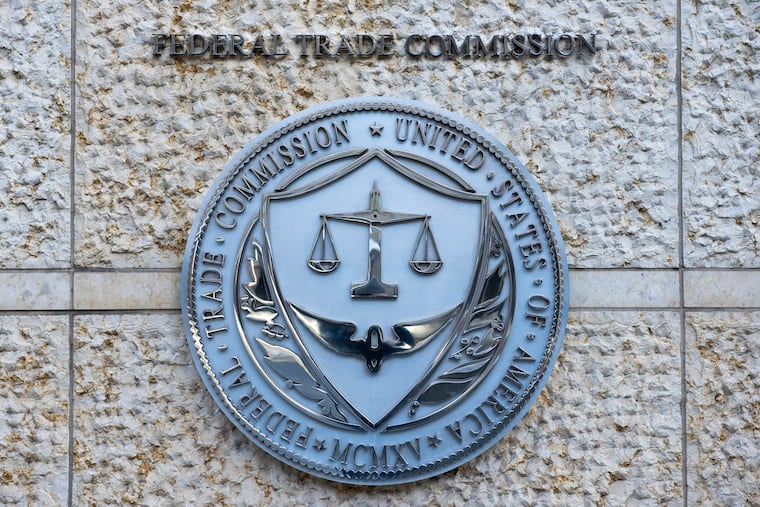
The Securities and Exchange Commission board plans to rescind a rule that said Wall Street money managers who gave money to state and local campaigns were barred from collecting fees for managing state and local-government dollars, for two years after they donated.
The board, currently reduced to two members and three vacant seats, is giving Americans until Nov. 9 to comment on the proposal.
The SEC rule, created in 2010, had special resonance in Pennsylvania, which is home to nearly one-third of the nation’s 5,000 public pension funds. Before then, private money managers had donated relentlessly to the politicians whose pension investment boards hired them.
The proposal would end the limit on political contributions and stop requiring investment advisers to keep detailed political-contribution records.
“The SEC is not the nation’s elections regulator,” SEC chairman Paul S. Atkins, wrote in a public letter accompanying his September proposal to ease the rule. Acknowledging the rule he wants to gut “was intended to deter fraud” by barring donors from getting paid to manage public money, Atkins wrote that the rule instead “resulted in the suppression of free speech,” pushing extra-careful firms to ban all political donations, and reducing Wall Street funding for political candidates.
Fraud is already illegal; leave policing money managers’ influence-buying to state and local law and federal election rules, Atkins urged.
But some money managers, including Pennsylvania fund managers, expressed concern about the scale of the federal rollback.
The 2010 SEC rule was “an objective, preventive restraint,” to prevent corruption, Christopher Tobe, a former Kentucky state pension trustee, said in a summary of his comments to the SEC.
By contrast, state and local antifraud laws are typically applied only “after misconduct and harm have occurred,” added Tobe, a critic of private investments in public funds, who features in the public-pension documentary Pension Fight Club.
The first civil case brought under the SEC rule, in 2011, resulted in then-Pennsylvania Gov. Tom Corbett and Philadelphia Mayor Michael Nutter returning campaign contributions to TL Ventures. The state and city pension boards had hired this money-losing Chester County firm in a failed attempt to cash in on the dot-com boom. TL agreed to return nearly $300,000 in fees and interest, which the SEC said the firm had wrongly collected after donating to the campaigns of top state city and state officeholders.
Politicians were convicted over investment-firm donations
The SEC rule limiting pay-to-play was enacted amid a string of pay-to-play scandals.
In the late 2000s, a string of mostly Democratic state and city politicians went to prison for receiving or demanding bribes in exchange for hiring professional investors to manage public pension money. In 2010, California pension chief Fred Buenrostro and New York State Comptroller Alan Hevesi were each convicted of corruption charges for taking campaign cash from investment contractors, and sentenced to prison.
The political contributors cited in Buenrostro’s case, portrayed by prosecutors as victims of public officials’ extortion, included Apollo Global Management. Apollo was then headed by Leon Black, who later lost the job over his relationship with disgraced financier and sex offender Jeffrey Epstein. Apollo is now the largest private-equity fund and its clients include Pennsylvania’s state pension funds.
In Pennsylvania, elected state treasurers Rob McCord in 2015 and Barbara Hafer in 2017 pleaded guilty to criminal violations related to their handling of campaign contributions from money managers.
McCord, who had been a tireless political fundraiser for governors and his own campaigns, was sentenced to federal prison; he was released early. He didn’t return calls seeking comment.
Hafer, who got probation and a fine, died last year.
Prior to the SEC rule, it was a common practice for money managers to fund Pennsylvania campaigns for governor, treasurer, and legislators. “Not only do they give me money, I hope they vote for me,” Hafer told The Inquirer in 2002.
Political contributions continued
Still, the rule didn’t stop political contributions altogether.
On Sept. 14, 2020, the state officials, teachers’ union local officers, and school board reps who formed the state school pension (PSERS) board met in secret to approve a $100 million investment. The target, code-named Project Newton, was a proposal by Pittsburgh tycoon and Steelers co-owner Thomas Tull.
Two days later, The Inquirer reported, Tull gave $711,000 to campaign funds backing Joe Biden, who was running for president, and $750,000 to a national super PAC for U.S. Senate Republicans. “There is no connection,” Tull said of the timing, so soon after the state’s secret investment. That investment, in hospital-wear maker Figs, later proved profitable.
Indeed, the SEC rule didn’t stop investment managers from donating to national politicians or even out-of-state races.
Still, Tull and national Democrats promised to recover $10,000 of Tull’s money after The Inquirer noted that those funds had been passed to Pennsylvania Democrats, whose leaders included pension board members. The SEC filed no complaint.
What money managers say
“I thought the rule had it right,” said Michael DiPiano, founder of NewSpring Capital, a $3.5 billion private investment fund group in Radnor, whose clients have included the Pennsylvania state and New York City pension funds.
“Limiting or eliminating pay-to-play took donor pressure off of [private-investment fund managers] and leveled the playing field,” so larger firms that could afford the biggest donations wouldn’t crowd out smaller firms, DiPiano said.
“Tighter pay-to-play restrictions should lead to a more objective-based approach” for picking money managers, he added.
Richard Vague, the former banker and Pennsylvania Secretary of Banking who chairs the PSERS pension board, says SEC limits might fairly be eased in some details but “an outright rescinding goes far beyond.”
The rule came after Wall Street “corruption” was exposed in the late 2000s, with the pension fraud cases, he noted. “Protective regulations, laws, and other safeguards get put in place in the aftermath of a major crisis,” Vague added.
It’s not surprising that money managers and their Washington allies chip away at those rules, but with too much trimming, “those safeguards largely disappear,” Vague concluded.
“That makes a subsequent crisis all the more likely.”