Don’t blame the Eagles if draft position is their priority. The NFL is incentivizing a race to the bottom
A certain number of teams are clearly prioritizing the future over the present. A team’s draft position can make or break that future.
The stakes are too high.
The incentives are too great.
At some point, the NFL is going to pay a steep reputational price for making its draft a loser takes-all-contest.
It could be this year.
It could be the Eagles as the exemplar.
» READ MORE: Six storylines to watch during the rest of a lost Eagles season
Or, it could be the Chargers. Or the Falcons. Or the Dolphins or the Jets or the Cardinals or the Titans. Maybe the Colts, although that would require some degree of organizational direction.
Whoever it is, it won’t be any of their faults. The rules are what they are. The competitive cycle is what it is. Eagles fans are fortunate their team is astute enough to recognize the facts. Abstract concepts like competitive integrity and the spirit of the law are secondary to stakeholder value. The NFL’s problem is that a critical mass of teams may finally be thinking like the Eagles.
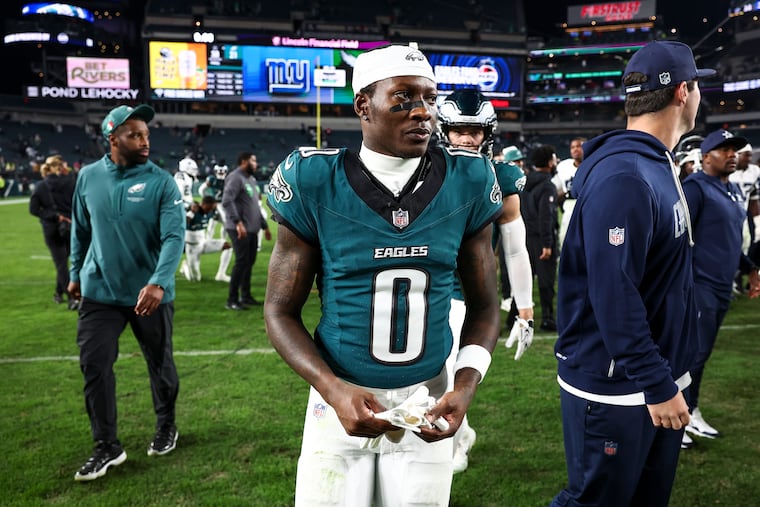
Most of the eight teams mentioned above have made their charted course abundantly clear. The Eagles did it by trading away a player they signed to a hefty extension in March. The Titans did it by trading away two defensive starters, one of whom ranks among the most disruptive in the game. The Falcons did it by trading away the best player on their defense. The Chargers did it by screaming bloody murder after their trade of a veteran for two late-round picks was denied.

David Murphy alerts
The Colts had less to gain than any of these teams, and they ended up gaining the least. They owe their first-round pick to the Jets, who could easily end up with two picks in the top five. At the same time, the Colts are very much the team that set the whole thing in motion by gift-wrapping two impact veterans and sending them to NFC contenders. With games remaining against the Dolphins, Eagles, and Titans, Indianapolis will play a big role in determining the final order of the worst of the worst.
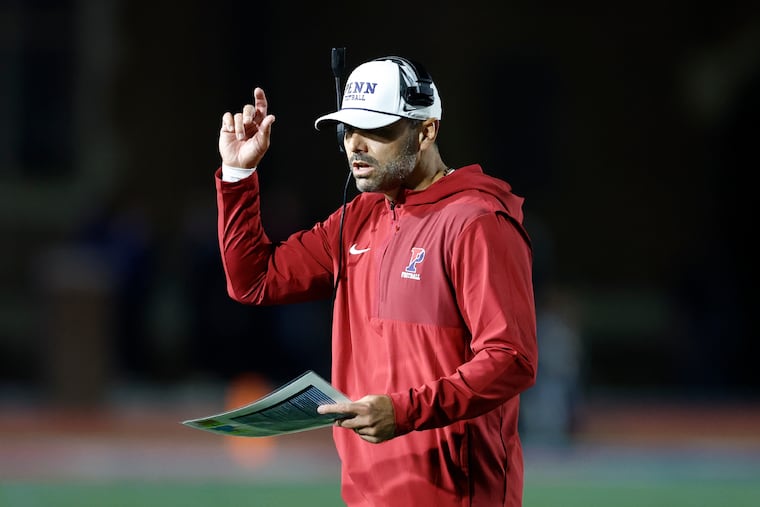
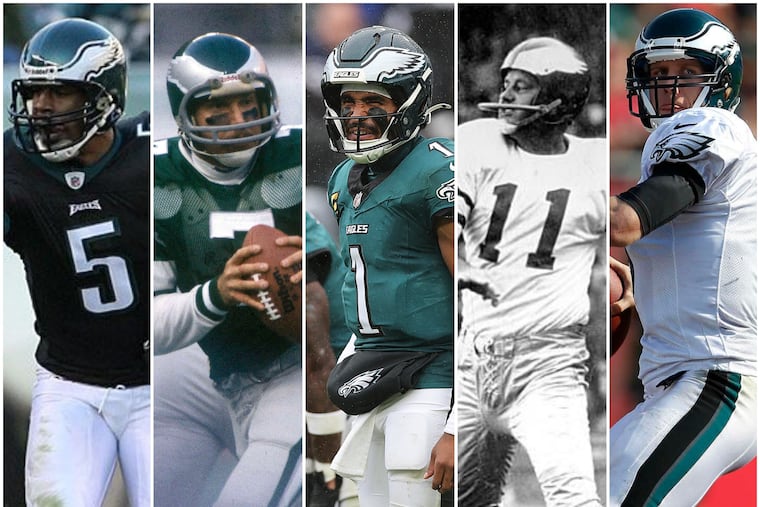
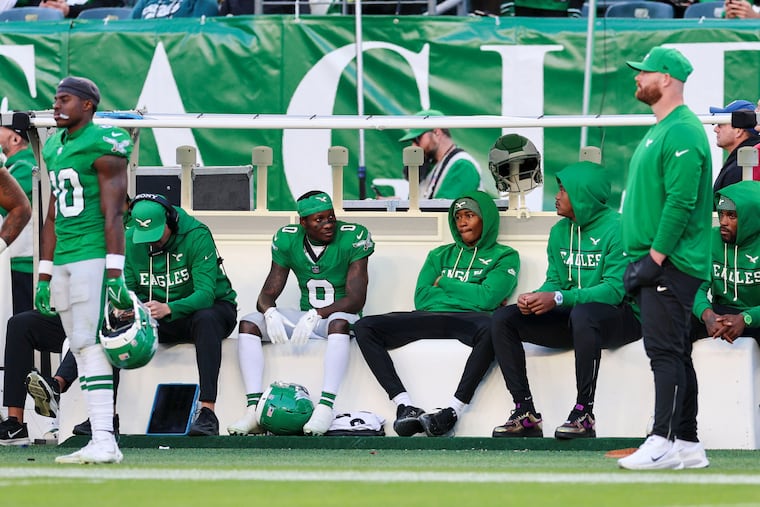
Let’s not open a can of worms by suggesting that any of these teams aren’t playing to win. That semantic game is easily contested. Tanking in the NFL isn’t much of a thing because too many people have too much to lose if they don’t perform in the here and now. Nick Sirianni, Shane Steichen, Aaron Glenn — all three are coaches who could easily be fired after this season. Each of them surely knows that. None has any incentive to do anything less than try to win the next game. Same goes for the players: the Markell Bells, the Tyler Steens, the Drew Kendalls, most definitely whoever starts at quarterback. In their regard, the incentives align. The higher the Eagles draft, the more likely it is they draft a player capable of taking one of their jobs.
Yet, the fact remains: it would greatly behoove the Eagles to draft as high as possible. To draft No. 1 overall could rewrite their destiny in the medium-to-long-term. The difference between a short-order return to the Super Bowl and five years of mediocrity could easily be the difference between drafting No. 1 and No. 5, or even between drafting No. 2 and No. 4.
This is not an exaggeration. It is not a straw man. It is reality. Howie Roseman knows it. Bet your last dollar on that.
Remember the uproar in January 2021 when the Eagles pulled Jalen Hurts in the fourth quarter of their season finale against the Commanders? Remember the questions about the play-calling? The Eagles incentive on that particular day was the prospect of moving from No. 9 to No. 6. Those three spots of draft position gained them an extra first-round pick. They traded down from No. 6 to No. 12, picking up a 2022 first-rounder from the Dolphins. That 2022 first-round pick became Jordan Davis, who helped the Eagles to a pair of Super Bowls and now has landed them 2027 first- and 2029 second-round picks from the Jaguars.
In hindsight, the Eagles would have been committing organizational malpractice had they not done everything within the letter of the law to maximize their chances of drafting at No. 6 in 2021. This year, the potential reward is even greater.
The No. 1 pick is a longshot. But it isn’t nearly long enough to not factor it in to every decision that gets made between now and the end of the season. Look at the schedules and the performances and you’d say that some order of the Titans, Dolphins and Chargers are the favorites to finish with the three worst records in the NFL. The No. 1 overall pick is theirs to (literally) lose. But there is a lot of football left, and a lot of it will be played among the teams who are much better off losing.
» READ MORE: What we learned about the Eagles at the 2026 NFL trade deadline
The Dolphins entered the season in full-fledged tank mode, trading away wide receiver Jaylen Waddle and signing Malik Willis as their starting quarterback. They have outperformed expectations by winning a game, which leaves them only one shy of the Eagles. Miami plays the two-win Colts this week. They have games remaining against the two-win Jets and Chargers. Winning one of those three games is well within the range of potential — even likely — outcomes.
The Chargers have a game remaining against the Jets, in addition to the Dolphins. The Titans have the Commanders, in addition to the Colts.
Put simply, it is quite possible that the Eagles’ games against the Cardinals and Colts in Weeks 13 and 14 will decide whether they pick at least in the top 3.
That is an awful proposition for the NFL to foist upon teams. Right now, the Eagles’ competitive advantage is Roseman’s understanding of how valuable these draft picks are. But he isn’t alone, judging by the trade deadline. The NFL is about to find out what happens when a stoppable force meets a moveable object with draft position on the line.
There is an easy solution. Not a panacea, but at least a salve. Games between teams who would both benefit by losing should not count in the reverse-order standings. It’s not complicated. Just calculate win percentage without those games. Pretend they never existed.
You can argue about where to set the thresholds. You can argue that some limited form of a lottery system would be better. It’s pretty clear that either one can be written into law in a way that avoids any dramatic unintended consequences. The current system is practically begging for a game that makes a laughingstock of both teams and the league at large.
A certain number of teams are clearly prioritizing the future over the present. A team’s draft position can make or break that future. What good does it do to force teams to lose in a plausibly deniable way?

A crucial crossroads is here. The Eagles have reached the bye and, as timing would also have it, the NFL trade deadline, mired in their worst stretch of the Nick Sirianni era. There’s no doubt the franchise needs to course correct, but how? With who? Will players be on the move? Could coaches’ jobs be on the line? The Inquirer’s Jeff McLane and Olivia Reiner conduct an autopsy of the Eagles after their seventh straight loss — a 19-11 defeat to the New York Giants — and look at the big picture of an organization that has swiftly fallen far from its Super Bowl glory two years ago. Listen here.
Listen to all episodes here or wherever you get your podcasts.