Philly teachers union says it has a plan to prevent 17 Philly school closures — for $25 million
The proposal would target only the buildings set to be shuttered. The district said the blueprint “falls short.”

The Philadelphia Federation of Teachers says it has a plan to spare 17 public schools now slated for closure — at a cost of $25 million, money it says the district has in its budget.
The PFT’s blueprint, released Wednesday, is a repudiation of the Philadelphia School District’s controversial facilities master plan, adopted by the school board in April over significant political and community outcry.
The district proposes closing the 17 schools — including some schools that are mostly full and others that outperform their peers — to cope with underenrollment citywide and, its leaders say, to advance academic and extracurricular opportunities for all students.
The PFT says the district has a staggering $6.7 billion in documented repair needs across the city as of this summer; the district’s plan would cost $3 billion, only $1 billion of which the district can cover itself, through 10 years of capital borrowing. The rest of the district’s plan relies on state and philanthropic dollars that are not assured or even promised.
In addition to school closings, the district has proposed modernizing 169 of its 200-plus buildings. But some modernizations are not scheduled to happen for a decade, and some are very modest in scope.
And the district still has enormous capital needs — inadequate electrical systems that do not allow for air-conditioning in about a quarter of all schools, problems with roofs, lead paint, asbestos, mold, and more.
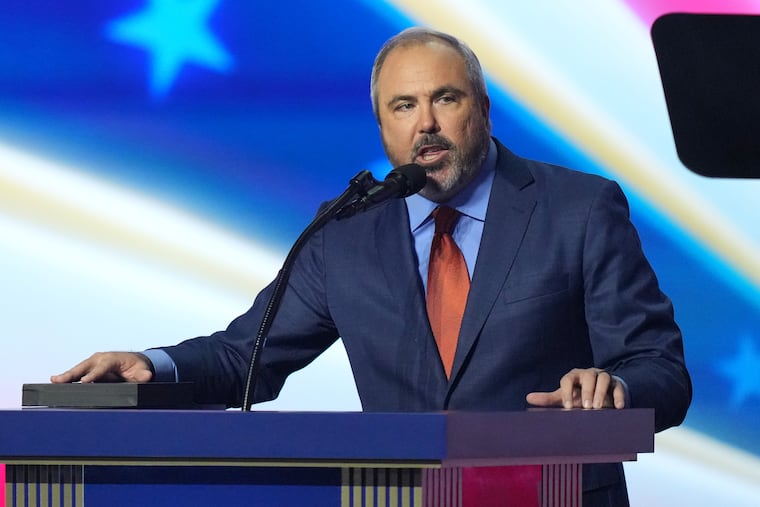
Arthur Steinberg, president of the 13,000-member union, said the district’s proposal lacks crucial detail and makes the system less, not more, competitive for the tens of thousands of students who have left the district for charter and cyber options in the last several decades.
A comprehensive master plan is needed, Steinberg said, but the district’s current iteration “is neither a comprehensive educational facilities master plan, nor a plan that can deliver on even the limited promises it makes.” Use the PFT plan to amend, not discard, the district’s version, the union proposes.
The PFT’s plan “aims to stop an exodus of students and staff from Philadelphia public schools by directing the district to implement a comprehensive approach to building repairs, maintenance, and modernization,” Steinberg and LeShawna Coleman, the union’s treasurer, said in the report.
The union wants to establish four pillars for every building — clean, comfortable, dry, and safe — establishing minimum health and safety standards for all schools.
Jerry Roseman, the PFT’s longtime director of environmental services, was the chief architect of the union’s plan, using district data, historical information, and other records.
Roseman and Steinberg dispute some of the district’s underlying calculations in its facilities plan, including how full or empty some buildings are, and how many unfilled student seats exist. The district says there are 70,000 empty seats citywide; the PFT says the correct number is lower.
The PFT’s analysis comes more than six months after the board formally adopted its plan, which explicitly stated closures or other parts could change if circumstances changed. Steinberg said that he had hoped to get the counterproposal finished sooner, but that the district “is not the most transparent” with its data.
District officials said in a statement they appreciated the PFT’s commitment to safe and healthy school buildings, but felt the union’s plan fell short because it “does not adequately address the fundamental challenges facing our school system: declining enrollment, aging and underutilized buildings, and longstanding inequities in educational opportunities.”
Bill Mich, a district spokesperson, said that the 17 schools tagged for closure have $298 million in facilities needs, and that while the PFT’s $25 million would tackle some pressing issues at those schools, “it falls short of addressing these challenges, including the multi-year student enrollment loss at all 17 schools and the need for a long-term and sustainable strategy for the school district.”
Renovation now, not after kids graduate
The PFT’s current repair proposal targets only those 17 schools set to close, but its $25 million price tag is much lower than the sum of all deficiencies the district says are present in those buildings: $548 million.
“By reorganizing the district’s maintenance and operations and janitorial workforce, measurable improvements to facilities conditions can be made before the end of SY 2026,” the report said.
The reorganization would create district-wide efficiencies, reducing building costs “with results delivered while current students are enrolled in the district, as opposed to years after they graduate.”
PFT wants the district to create two teams — one of trade workers, one of custodial staff — to be prepared to quickly address environmental health and safety risks during school hours, and when students are not in the building.
The new teams would bring down the average response time to work orders. It now takes 62 days, on average, for a district work order — a request to do anything from fix a broken toilet to make electrical repairs — to be addressed, the teachers union said.
That is a tall order, as the district faces a shortage of both tradespeople and cleaners. The PFT said addressing pay and working conditions would attract more candidates.
Reorganizing the cleaning and maintenance forces and adding staff to address issues at the 17 schools would cost between $175,000 and $250,000 per building.
PFT officials said a second part to the plan, addressing needed repairs for the roughly 200 remaining district schools, will be released by the end of the calendar year.
The nuts and bolts
The school board voted to close 10 schools this coming June — Blankenburg, Fitler, Lankenau, Robert Morris, Overbrook Elementary, Parkway Northwest, Parkway West, Pennypacker, Robeson, and Welsh.
The remainder of the closures would be phased in, not finishing, in some cases, until 2031. Phased closures would affect the remaining seven schools: AMY Northwest, Harding, Penn Treaty, Stetson, Tilden, Wagner, and Waring.
Under the PFT’s counterproposal, the district would instead close no schools, and begin investing in deferred maintenance projects immediately. Its plan would result in upgrading all district schools to “good” condition, as measured by the district’s own internal benchmark of facilities condition.
At present, nearly half of all district schools are in what the system considers “poor” condition.
Claire Andrews, a teacher at Wagner Middle School, said the PFT’s plan presented a road map for how to move forward.
“To earn back the trust of families who have chosen charter or private schools, the district must show through consistent action that neighborhood public schools can offer safe, welcoming buildings, strong and engaging programs, experienced teachers, and steady academic and social-emotional support,” Andrews said at a news conference at PFT headquarters Wednesday. “Families must be listened to before decisions are made, not after.”
Will the plan go anywhere?
The PFT presented its plan with high hopes Wednesday.
But its proposal is just that. And though some City Council members have made clear their strenuous opposition to closures, Mayor Cherelle L. Parker has said that some closings are necessary.
Addressing City Council in April, the mayor said shutting schools was a painful but essential step to getting more funding from Harrisburg, whose politicians have historically shown little appetite to help the district, especially with a deferred-maintenance problem that one estimate put at $8 billion at one point.
“I know we’re not trying to build the education system for the past — we’re working on our children’s future,” the mayor told Council in April testimony, before the board voted on the facilities master plan. “Right now, we are maintaining square footage as it crumbles, instead of investing in opportunities our students actually need. Yes, this means making difficult but responsible decisions, and that’s what the district has worked through.”
Steinberg, though, said this month’s Democratic Harrisburg sweep is likely to shift the district’s fortunes somewhat.
“We expect the district actually to have increased revenue,” Steinberg said. “Some of that will be devoted to facilities.”