In 1971, an FBI break-in exposed broad surveillance of Americans. Key players reunited to tell their story.
Five decades ago, an act of civil disobedience in Delaware County revealed a campaign of domestic spying and laid the groundwork for the first true oversight of America’s intelligence agencies.
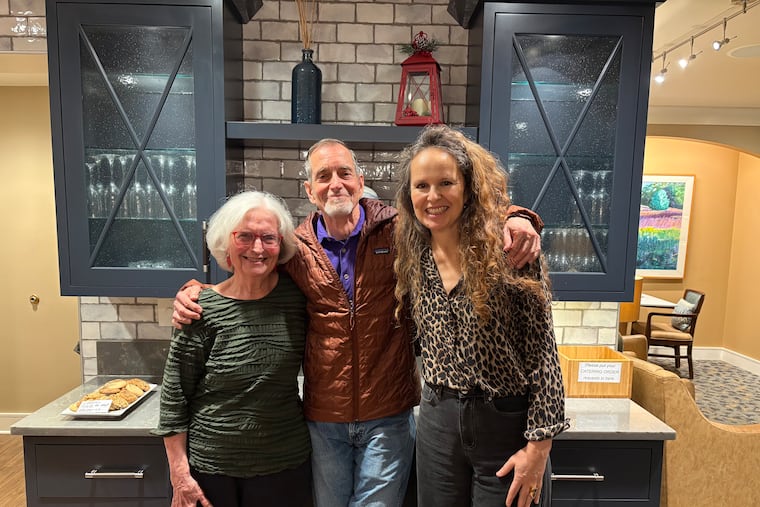
In the dining room of a Montgomery County senior living community on an early November evening, a quiet reunion of old friends was taking shape.
Over broiled fish and sweet carrots, they retold old stories, inquired about family, and debated the details of the historical events that shaped their pasts, some lost to the widening gulf of time between then and now.
It was, however, no ordinary gathering.
The group had assembled at the Foulkeways at Gwynedd senior living community on Nov. 9 to remember 1971, the year eight activists broke into an FBI satellite office in Media, stealing thousands of documents that would expose the agency’s extensive surveillance and harassment of American citizens. The burglary and ensuing revelations changed public opinion of the bureau and laid the groundwork for the first true oversight of America’s intelligence agencies.
Seated around the dinner table were Keith Forsyth, one of the eight burglars; journalist Betty Medsger, who first broke the story of the stolen documents; civil rights attorney David Kairys, who was the burglars’ lawyer and friend for many years; and documentarian Johanna Hamilton, who produced a 2014 film about the burglary.
Fifty-five years after the burglary, and 12 years after Medsger and Hamilton released journalistic projects that first revealed the burglars’ identities to the public, the four friends had assembled for a discussion and screening of Hamilton’s film. Hamilton traveled from London, and Medsger, from New York.
They had gathered, too, to honor Kairys, 83, now battling Parkinson’s disease at Foulkeways. For decades, Kairys served as a prominent Philadelphia civil rights litigator and was a key source in the making of Hamilton’s film.
“So many times, I think people remember primarily that this group of ordinary people did this amazing thing,” said Medsger. “... We lose sight of both the historical significance in the end, but also, what motivated them?”
Uncovering a campaign of surveillance
On the evening of March 8, 1971, as the rest of the world was captivated by the heavyweight championship fight between Muhammad Ali and Joe Frazier, eight activists broke into the FBI’s satellite office in Media.
Medsger, now 84, was a 29-year-old reporter when an envelope full of unfamiliar documents, mailed by the burglars, landed on her desk at the Washington Post.
She had arrived at the Post a year earlier from the now-defunct Philadelphia Bulletin, where, as a religion reporter, she’d profiled John Raines, a professor later revealed as one of the burglars, and covered Catholic anti-war activists.
Raines and his wife mailed the stolen documents to Medsger because they “thought Betty would take it seriously,” Bonnie Raines told the Post in 2021.
The documents, as reported by Medsger, revealed a widespread effort by American intelligence officers to monitor and subvert the activities of activists.
The FBI had hired informants, the documents revealed, to report on the activities of students and professors at local colleges, including Swarthmore, Haverford, Lincoln University, and Pennsylvania Military College (now Widener University). Every Black student at Swarthmore was being surveilled, as were members of the Black Students Union at Pennsylvania Military College. FBI agents had been instructed to “enhance the paranoia” in activist circles and “get the point across that there is an FBI agent behind every mailbox.”
Agents engaged in behavior ranging “from crude to cruel to life-threatening and murderous,” said Medsger, speaking on a panel before a large crowd of Foulkeways residents.
Arguably the single most important file stolen was a cover sheet with the term “COINTELPRO” scrawled in the top right corner — later revealed to be the FBI’s sweeping program of monitoring and infiltrating groups it thought to be subversive, from Students for a Democratic Society and feminist organizations to the Black Panthers.
Medsger’s story set off a flurry of media reports and laid the groundwork for the first permanent congressional oversight of intelligence agencies through the Church Committee, a 1975 Senate committee that investigated allegations of U.S. intelligence agents spying on American citizens.
Before the revelations from the stolen documents came to light, a “culture of protection” shielded intelligence agencies from accountability, Medsger said.
“I think it’s important to understand that nobody knew how J. Edgar Hoover’s FBI operated,” she said. ”There was a huge public relations operation that had been in play for decades by 1971, and it just put out story after story about how great the FBI was.”
As the fallout from the burglary reshaped Americans’ relationships with the federal government, the burglars, who swore one another to secrecy, faded back into everyday life. For decades, they remained anonymous.
It was 20-odd years after the burglary, at a dinner party at the Raines’ home, that John Raines revealed to Medsger his role in the crime.
“John blurted out what he forever claimed he never intended to blurt out,” Medsger said.
Still, it wasn’t until 2014 — after Watergate and Iran-Contra, the MOVE bombing, 9/11, and the first Obama administration — that the burglars publicly revealed themselves in Medsger’s book, The Burglary: The Discovery of J. Edgar Hoover’s Secret FBI, as young Philadelphia-area anti-war activists. In a documentary directed and written by Hamilton that same year, five came forward by name.
The statute of limitations had passed on the burglary after just five years, but rumors that the federal government wanted to charge the burglars with espionage kept them in the shadows for much longer, Medsger and Hamilton said.
The burglars, who called themselves the Citizens’ Commission to Investigate the FBI, were led by prominent anti-war activist and Haverford College professor William “Bill” Davidon. Davidon, Forsyth, Bonnie and John Raines, and Bob Williamson revealed their identities in the 2014 book and film. Another burglar, Judi Feingold, came forward through Medsger the same year, and the remaining two burglars, Ralph Daniel and Sara Shumer, have gone public more recently.
The activists ranged in age from 19 to 43. Some were professors, others college dropouts, some young parents. Many had been involved in the anti-war activities that swept across Philadelphia throughout the 1960s.
‘A lot has happened’ since
At Foulkeways earlier this month, both speakers and attendees recounted a Philadelphia of decades past, one where FBI agents swarmed Powelton Village and draft board raids captivated the public consciousness.
One resident of the Quaker-founded community recalled living in the Temple University home where Students for a Democratic Society held their meetings and worrying that the FBI had tapped their phones. Another said the Media burglary inspired him to request his own FBI file through the Freedom of Information Act, passed in 1966. A third resident remembered John Raines as the minister at her wedding and a “wonderful person.”
Some asked Medsger, Hamilton, and Forsyth how they understand the burglary now, as the country’s Vietnam-era protesters age and the United States finds itself in a time of heightened anxiety around surveillance and government overreach.
Medsger described today’s FBI under director Kash Patel as “an arm of retribution for the president.”
Hamilton noted that nearly half of the funding for her film came from the Independent Television Service, funded by the Corporation for Public Broadcasting, an organization that ceased to exist earlier this year after it was stripped of its federal funding.
For Forsyth, now 76, who picked the lock of the FBI office during the 1971 burglary, while “things have definitely gone in the wrong direction” in recent years, the Vietnam-era mass surveillance and suppression of social movements would be unrecognizable to Americans today.
It had been a long time since Hamilton had watched the film with an audience, making for an emotional experience for the filmmaker.
“A lot has happened in the years since the film was finished,” Hamilton told the crowd, pausing to collect herself.
Davidon died in 2013 at 86 from Parkinson’s disease during the filming of Hamilton’s documentary. John Raines died in 2017 at 84. Williamson died in May at 76.
“It’s a privilege to be allowed into people’s lives,” Hamilton said, recalling the many conversations and visits with the burglars and their families that preceded the making of the film.
“[Being] allowed to tell this story,” she said. “There was an immense generosity of spirit and trust.”

Inquirer Greater Media
This suburban content is produced with support from the Leslie Miller and Richard Worley Foundation and The Lenfest Institute for Journalism. Editorial content is created independently of the project donors. Gifts to support The Inquirer’s high-impact journalism can be made at inquirer.com/donate. A list of Lenfest Institute donors can be found at lenfestinstitute.org/supporters.