Christa Pike was unconscious and on ventilator after execution attempt
The Tennessee inmate was brought to a hospital with burned and blistered arms after an unsuccessful attempt at lethal injection, her lawyers said in a court filing.
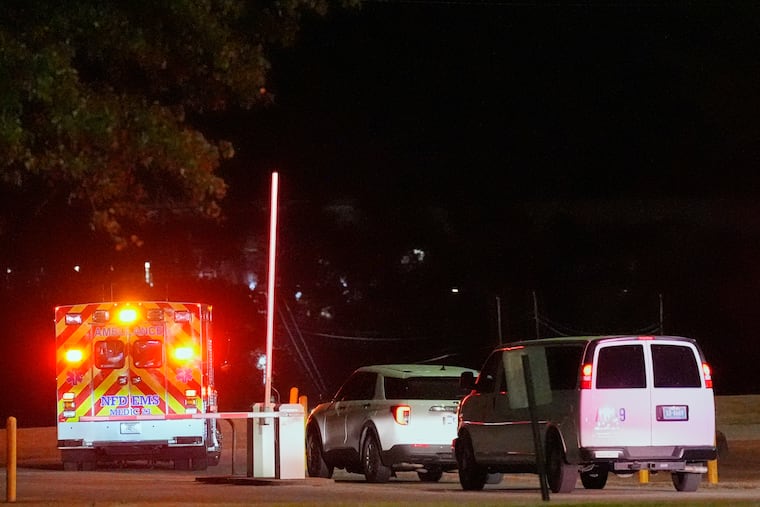
NASHVILLE — Christa Pike was unconscious, intubated, and on a ventilator in a Nashville hospital as of Thursday evening, a day after surviving a botched execution attempt, her lawyers said in a court filing.
Ms. Pike, 50, was critically ill, they wrote in the Friday filing in Davidson County Chancery Court, and both of her arms were swollen, burned and blistered when she arrived at the hospital.
Her condition, some legal experts said, raises questions about whether the state could try to execute her again if she is not fully cognizant or capable of understanding what is happening. Pike, convicted of the 1995 murder of a classmate, is believed to be the first person to have survived after receiving drugs during a lethal injection attempt in the modern era of capital punishment.
The disclosure is the most detailed update on Pike’s health since she survived two rounds of pentobarbital, the drug used as part of Tennessee’s lethal injection protocol, on Wednesday evening.
“Hospital staff are working to save Ms. Pike’s life and to clear the pentobarbital from her system,” the lawyers wrote. In a separate statement, they said she was also receiving treatment for “significant injuries to both arms.”
In a statement, Luke Ihnen, who represents Pike through the Federal Defender Services of Eastern Tennessee, said that “we are working closely with those closest to Christa to respect her wishes, safeguard her privacy and protect her rights as a patient during this extraordinarily difficult time.”
The disclosure about Pike’s condition was part of an emergency filing in which her lawyers asked a Nashville judge to order the preservation of state prison records related to her attempted execution. The records were, they wrote, evidence of “incompetent and reckless actions.”
The Tennessee Department of Correction declined to comment, citing the pending litigation. A spokeswoman for the Tennessee Attorney General, Jonathan Skrmetti, did not immediately respond to a request for comment.
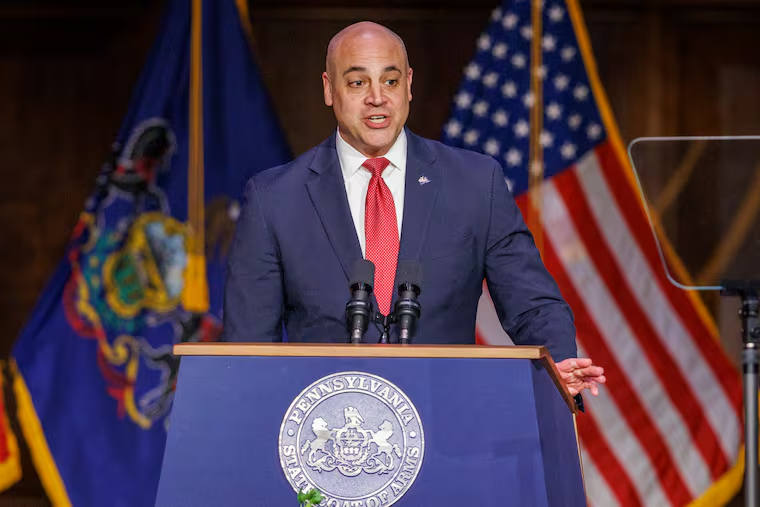
Gov. Bill Lee, a Republican, paused all executions through the end of the year and ordered an investigation into what went wrong Wednesday. But Lee is in the final months of his term.
The front-runner to replace him, Sen. Marsha Blackburn, a Republican, said in a statement she would try to execute Pike again.
“This process has only extended the pain for the family of Colleen Slemmer,” she said. “Their family and the families of other victims deserve swift justice.”
Pike’s lawyers have asked Mr. Lee to grant her clemency and allow her to serve the rest of her life in prison, condemning what they have called a cruel and torturous execution attempt.
Two decades ago, the U.S. Supreme Court barred the execution of people with mental disabilities as a violation of the Constitution’s Eighth Amendment ban on cruel and unusual punishment. The court has also barred the execution of people who lack a “rational understanding” of the reason they are to be put to death.
“If you don’t understand you’re about to die, and do not understand you’re about to die because the state believes you have committed murder, then you may not be executed,” said Christopher Slobogin, the director of the Criminal Justice Program at Vanderbilt University.
Pike’s medical condition also presents a difficult scenario for the medical staff working to save her life: If she recovers, Tennessee might try to kill her again.
“Professionals in healthcare are faced with difficult moral situations all the time — this is a particularly challenging one,” said Jeff Khan, the director of the Johns Hopkins Berman Institute of Bioethics. “I also think that they know that their job is to do the best they can for the patient in front of them and not to think about that.”
This article originally appeared in The New York Times.