A hard winter is coming for Pennsylvania homes that heat with oil
People are buying heating oil a few gallons at a time at gas stations to get them through cold spells.
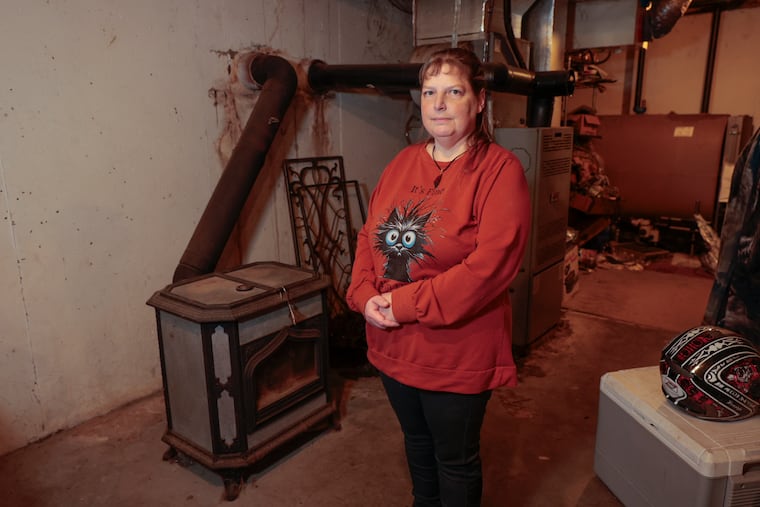
Richmond Township, Pa. — Golden leaves fluttered onto Jennifer Heller’s frost-covered lawn in rural Berks County recently, but she’d rather bundle up and cuddle with the dogs before filling the oil tank in the basement.
A hard winter is coming for Heller and the other 685,000 Pennsylvania households that use oil to heat their homes. As of late October, the average cost of a gallon of heating oil in the Commonwealth was $6.048, the second-highest price ever recorded in the state.
The record, $6.066, was set earlier in the month.
“It’s going to be very tough,” said Jamie Van Nostrand, a fellow at the University of Pennsylvania’s Kleinman Center for Energy Policy. “People are going to be doing everything they can to prevent that oil heat from kicking on.”
Heller, 52, said she’ll wear more clothes around the house, fire up the oven more often, and use the clothes dryer at night, before bed. She’s also sealing cracks and holes and, possibly, weatherproofing her windows.
“Don’t underestimate the power of a dog and a few cats for body heat,” she said, laughing.
Elsewhere in the state, people are buying heating oil a few gallons at a time at gas stations to get them through cold spells. They’re chopping wood or ordering it, and, if they can afford it, installing electric-run heat pumps that can raise the temperatures in specific rooms as opposed to an entire house.
For Brendan Lydon, of Pottsville, Schuylkill County, filling a 500-gallon oil tank is a last resort.
“In November 2025, it would have cost us around $1,500. If I were to order today, it would cost us $2,654,” Lydon said.
Most energy experts attribute the drastic jump in oil prices to the conflict in Iran, which retaliated against the U.S. by tightening oil shipments through the Strait of Hormuz. According to the U.S. Energy Information Administration, 2026 prices started off at $3.348 per gallon in Pennsylvania. On March 2, just days after the U.S. conflict in Iran started, the price jumped to $4.065 and has continued climbing ever since.
Some Republicans have acknowledged the Iran effect, with caveats. Many have said higher oil prices are a “temporary blip,” a hardship Americans must face for a safer world. Others have blamed Biden-era regulations, the Ukraine-Russia war, and decreased refining capabilities here in the United States.
Over half of all Pennsylvanians, and more than 70% of Philadelphians, use natural gas for home heat, and the U.S. Energy Information Administration’s “Winter Fuels Outlook” actually predicts stable or lower costs for most users this coming season.
That’s not the case for heating oil, which the EIA forecast would be 21% higher this winter. The issue is more pronounced in rural counties, which also vote overwhelmingly for Republicans. According to the U.S. Census Bureau, about 2% of Philadelphia households use oil heat. In rural counties like Schuylkill, Carbon, and Mifflin, however, over 40% of households use oil for heat. In Bedford County, almost half the households use oil.
In the Pennsylvania coal region, Michael Sedor has taken small containers to local gas stations to buy a few gallons of heating oil or diesel fuel to make ends meet. Sedor, a Treverton, Northumberland County resident, said lines sometimes form at the gas stations when it gets colder.
“I still do it, I still go to the gas station cause I can’t pay $600 to fill my tank,” he said. “You seal up your house with plastic bags. You cut back. You do what you have to do.”
Sedor said proactive measures like installing new windows, investing in better insulation, or purchasing heat pumps are financially out of reach for many Pennsylvanians. In Philadelphia, homeowner Tony Albrecht researched an oil-to-natural gas conversion when he moved from Pittsburgh to West Mount Airy. The estimate was $10,000. He kept the oil heat.
“And that was in 2014,” he said of the estimate.
On the Coal Region Discontent Facebook page Sedor runs, people told him they plan to use electric blankets, credit cards, and to cut back on Christmas. Some seemed to have no answers.
“I am so screwed, hoping for a heat wave,” one person wrote.
In Chester County, Roisin Ferguson has a low oil tank but a whopping eight cords of firewood stacked up around her property in West Bradford Township. A cord of firewood can run anywhere from $150 to $350 depending on how long it’s been “seasoned” and delivery fees. Last year, the family went through three cords, but Ferguson hopes to cut back on other fuel sources this year, specifically their oil heater.
“We’ll set the oil to 62 and just burn the wood for the winter,” Ferguson said.
At the Vine and Fig Tree, an intentional Christian community in Philadelphia, resident Aaron Wilson lives with about 10 others, including his wife, in multiunit dwellings in Germantown. The community uses an assortment of heating sources, including oil, Wilson said. The water heater, which everyone there uses for showers, baths, laundry, and dishwashing, runs on oil, and they haven’t collectively discussed switching it out to natural gas yet.
“The price of this might get insane, so we’re going to have to start budgeting for a replacement,” he said. “We have to look over the bills.”
Wilson said he’s been surprised that so few elected officials and candidates have been talking about the looming heating crunch.
A spokesperson for Gov. Josh Shapiro, who is seeking reelection, said “no one has reached out to the Governor’s Office on this issue” but mentioned that programs like the Low-Income Home Energy Assistance Program (LIHEAP) are available for residents.
Applications for LIHEAP opened Nov. 2, so there’s no way to know how many more people have applied for assistance this year.
Sen. John Fetterman’s office did not return multiple requests for comment about heating costs in Pennsylvania this winter. Representatives from the Democratic and Republican parties in Pennsylvania also did not return requests for comment.
A spokesperson for Sen. Dave McCormick referred the Inquirer to statements he made recently on CNBC, in which he discussed fuel costs but not heating in particular.
“I think people see a lot of effort to try to bring down prices,” McCormick said. “And I think they appreciate that.”
Earlier this month, the U.S. Department of Energy announced a plan to release 315,000 barrels of fuel oil from the Northeast Home Heating Oil Reserve to “mitigate supply chain challenges disrupting fuel oil supply.” Experts, including Van Nostrand, said that’s not enough to make any lasting impact.
Doug Woosnam, executive vice president of the Eastern Pennsylvania Energy Association, said a quick resolution in Iran would make the biggest difference for consumers.
“If the war ended this weekend,” he said before Halloween, “by the middle of November, consumers would be seeing relief, and that relief would continue to get better through the season.”
Heller said she didn’t want to get political about the issue and didn’t believe the war was a main cause of the price spikes.
“Last time, when Obama or Biden was in office, we were told we couldn’t blame the gas prices on him,” she said. “So the same thing goes with Trump.
Heller estimates there are about 150 gallons left right now in her 250-gallon tank, but she plans to use it sparingly and avoid filling the tank.
“They won’t deliver less than 150 gallons,” she said. “So I can’t fill too early, and I can’t pick too late because then I’m down too low.”
Oil delivery companies in the region said many customers are cutting back and asking for smaller deliveries but shouldn’t gamble with very low tanks, which can require costly repairs due to sludge buildup.
“It’s an issue, and we really tried to get ahead of it this year,” said Michael Longo Jr., of 7 Oil, a New Jersey-based family business started in 1983. “We’ve really tried to be upfront and honest. We know everyone is not going to be able to pay an $800 bill. So if people say, ‘Just bring me 100 gallons,’ we work with them.”
Longo Jr. said his company delivers to 17,000 households, mostly in New Jersey, with some households in Pennsylvania. He regularly puts out YouTube videos giving tips for more efficient heating, like setting a thermostat to 68 instead of 70.
In one recent video titled “What’s been going on with Oil?,” Longo Jr. empathized with customers’ pain and told them to make their concerns known to the people they elected.
“Call your local representatives,” he said. “If you’re unhappy with what’s going on, we live in America; you should have a voice. Let them know your frustration. That’s the only way things change.”
On a recent late-October morning in Berks County, Heller did have her oil heater on, with the thermostat set to 69, but she was hoping the afternoon sun would trap a little warmth. Soon, the days would grow darker, and she’d have to turn to her secret weapon: the rarely-used wood stove and endless supply of firewood she gets from her father, who owns forested land.
If and when she needs more oil, Heller will have a hard conversation with her husband and children.
“It’s going to be oil,” she said, “or Christmas.”