John D. Rockefeller IV, West Virginia governor and senator, dies at 89
Widely known as Jay, Mr. Rockefeller was the great-grandson of the business owner and philanthropist John D. Rockefeller, who built an oil-based empire that made him the nation’s first billionaire.
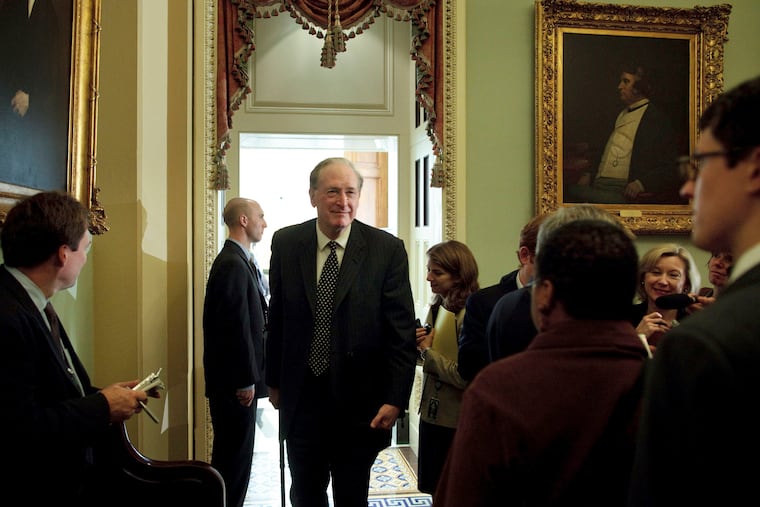
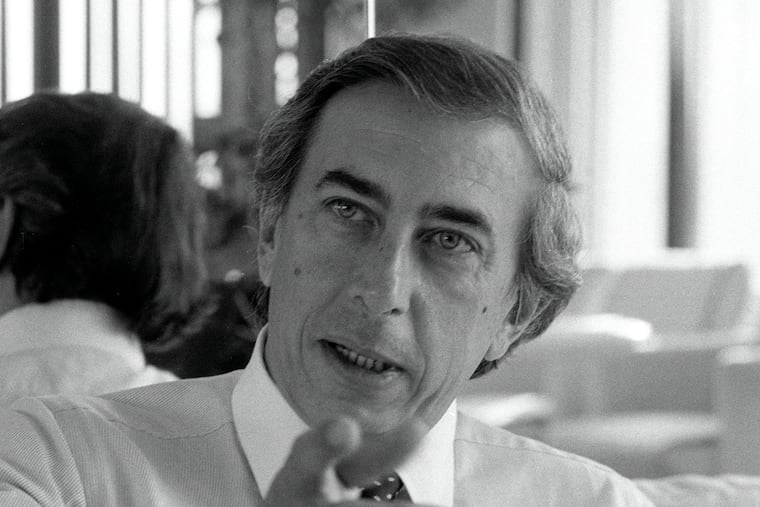
John D. Rockefeller IV, who as a social worker with inherited millions and a fabled name went to live with coal miners in Appalachia in the mid-1960s, then became a two-term governor of West Virginia and five-term U.S. senator, making the expansion of health insurance central to his political legacy, died Friday at his home in Washington. He was 89.
A family representative, Shelley Rodgers, confirmed the death.
Mr. Rockefeller’s pedigree — as the great-grandson and namesake of the founder of Standard Oil — assured him a national profile even while he was serving as his state’s governor from 1977 to 1985. In the Senate for the next 30 years, he amassed a voting record that was generally liberal while also championing national security and veterans’ rights.
He and Sen. Ted Kennedy, the Massachusetts Democrat, were the principal Senate supporters of President Bill Clinton and Hillary Clinton’s 1993 plan for comprehensive healthcare for Americans. It died under massive opposition from the health insurance industry.
Four years later, Mr. Rockefeller went on to co-author legislation that created the Children’s Health Insurance Program, which covers millions of children in low-income families who otherwise would have been uninsured. He also wrote laws to provide extended care services for veterans, including home healthcare, and voted for the 2010 universal healthcare mandate known as Obamacare.
Mr. Rockefeller said his championing of healthcare was directly linked to his exposure as a young man to the plight of children without access to even basic preventive care. “It doesn’t make me liberal,” he told the New York Times of expanding healthcare options during the Obamacare debate. “I care.”
Widely known as Jay, Mr. Rockefeller was the great-grandson of the business owner and philanthropist John D. Rockefeller, who built an oil-based empire that made him the nation’s first billionaire. His descendants became bankers, corporate titans, philanthropists, governors, and a vice president; Jay was the rare Democrat among them.
Like many of his forebears, Mr. Rockefeller attended Harvard University, collected fine art, and found that opportunities came easily. Yearning for extraordinary experiences, he studied language and culture in Japan, living on $50 a month, then joined the Peace Corps as an aide to its director, R. Sargent Shriver. He took a State Department job but was given nothing to do. He was drifting.
At 27, at a friend’s suggestion, he joined Volunteers in Service to America, a federally funded anti-poverty program (now known as AmeriCorps VISTA), and went to Emmons, W. Va. It was 4 miles from the nearest paved road. Steep hills loomed all around. School buses could not get through in winter. Coal mines were closed or had skeleton crews. Most of the 60 families were on welfare and illiterate.
The town was suspicious of do-gooders, especially a 6-foot-6 out-of-stater with the surname Rockefeller. “The people thought I was either a Republican organizer, a federal agent looking for moonshine stills, or a state official checking on welfare recipients,” he told the Associated Press in 1965.
It took six months just to organize a community meeting.
Mr. Rockefeller achieved modest results: a Little League team, a community association, a meeting hall, the start of a library, and reliable school bus service to Charleston, 15 miles away. But for Mr. Rockefeller, it was life-changing.
“Emmons made everything begin to fall into place for me,” he told the Times. “I came to love these people and realize I really could make a difference in people’s lives.”
In 1966, he moved to Charleston, capital of the then heavily Democratic state, and became a Democratic candidate for a seat in the Legislature’s House of Delegates. “I now realize that helping the poor to help themselves cannot be done in just one community,” he said. “You have got to make changes at the top.”
Like a Kennedy, his name had the power to shape his life. At a time when his uncle Nelson was governor of New York (and later served as vice president), his uncle Winthrop was running successfully to be governor of Arkansas, and his uncle David was president of the Chase Manhattan bank, a Jay Rockefeller campaign in West Virginia, even for a modest office, was irresistible to the national press corps.
He breezed to victory and, in the Legislature, backed tax reforms and an environmental bill to control coal strip mining, which scars surface landscapes and causes erosion, unlike the costly and dangerous business of digging deep mine shafts.
Some pundits were already talking about a future run for president. Mr. Rockefeller seemed in no hurry. After the 1968 assassination of Sen. Robert F. Kennedy of New York, Gov. Nelson Rockefeller held the appointment power and thought of his nephew. “I got a call from Uncle Nelson offering me Bobby Kennedy’s seat, and I said no immediately, ” he recalled to the Times in 1991.
Instead, Mr. Rockefeller won the largely ceremonial, four-year post of West Virginia secretary of state, which became his launchpad for the 1972 governor’s race.
His opponent that year, incumbent Republican Arch Moore Jr., who was backed by mining interests, called Mr. Rockefeller a carpetbagger and said his legislative opposition to coal strip mining was really an attack on coal mining itself and a threat to thousands of jobs in the state.
The issue proved decisive. Mr. Rockefeller lost to Moore by 73,000 votes. Vowing to run for governor again in four years, he accepted an appointment as president of West Virginia Wesleyan College, located in Buckhannon and with a student population of 1,625.
In 1976, no longer a strip mining abolitionist, he won the governorship handily with mining industry support. He claimed that land reclamation practices had changed enough to make strip mining acceptable, a flip-flop that critics called political expediency.
He was reelected in 1980, but in his second term, a national recession hit West Virginia hard. Unemployment rose to 21%, the highest in the nation. Residents tightened their belts, and the Rockefeller administration made steep budget cuts.
In 1984, Mr. Rockefeller ran for Senate, edging out a Republican political novice, John Raese, 52% to 48%, despite outspending him 12 to 1. Critics accused him of buying elections; he used $11 million of his own money in his 1980 campaign for governor and even more in his first race for the Senate.
He made no apologies for his campaign spending and acknowledged that he was one of the Senate’s richest members. He lived like a Rockefeller: Besides a palatial home in Charleston, he had a 3,000-acre estate in Pocahontas County in West Virginia, a mansion near Rock Creek Park in Washington, and a ranch in Grand Teton National Park at Jackson Hole, Wyo.
Mr. Rockefeller, who variously chaired the Senate committees on commerce, intelligence, and veterans affairs, was overwhelmingly reelected in 1990, 1996, 2002, and 2008.
After the 2001 terrorist attacks, he initially supported the U.S.-led invasion of Iraq, based on claims by the administration of President George W. Bush that President Saddam Hussein had weapons of mass destruction. But while chairing the Intelligence Committee in 2008, Mr. Rockefeller oversaw a report that said the president and his top officials “led the nation to war on false premises,” noting the false link between Saddam to the Sept. 11 attacks and the terror group al-Qaida.
With the death of his colleague Sen. Robert Byrd in 2010, Mr. Rockefeller became West Virginia’s senior senator. He did not run for a sixth term and, at 78, retired from the Senate in January 2015.
When born in Manhattan on June 18, 1937, the only son among four children of John Davison Rockefeller III and Blanchette Ferry (Hooker) Rockefeller, he was named simply John Rockefeller, without the traditional middle name and Roman numeral in his family lineage. His parents and sisters, Sandra, Hope, and Alida, called him by his nickname, Jay, and it became his everyman tag for life.
“As a boy,” he told Life magazine in 1966, “I was told I should make up my own mind whether I wanted to carry on the full name, which I think stands for public service, a sense of responsibility, and a high standard of demand on oneself. When I was 21, I wrote a letter to my father saying I wanted the name and the responsibility.”
His father was a philanthropist, instrumental in creating Lincoln Center for the Performing Arts. After John III died in a car crash in 1978, his lifetime giving, before bequests, was estimated at $94 million. Jay recalled his father teaching him about money by giving him a weekly allowance of 15 cents and instructing him to divide it evenly, so that a nickel each was used for spending, saving, and charity.
Jay grew up in Manhattan and Westchester County, graduating in 1954 from Phillips Exeter Academy in New Hampshire. He graduated from Harvard in 1961 with a degree in Far Eastern languages and history. In graduate school at Yale University, he studied Asian history and Chinese language.
In 1967, he married Sharon Percy, the daughter of Sen. Charles H. Percy of Illinois; the marriage made the cover of Life magazine. She became CEO of WETA, the public television and radio station in Washington. In addition to his wife, he is survived by four children, John D. Rockefeller V, Valerie Rockefeller, Charles Rockefeller, and Justin Rockefeller; two sisters, Hope Aldrich and Alida Messinger; and nine grandchildren.
In 2010, an underground explosion at the Upper Big Branch coal mine in West Virginia killed 29 miners in the nation’s worst coal mine disaster in 40 years. Mr. Rockefeller, long a critic of mine safety violations, called for new criminal penalties, but they stalled because of Republican and industry opposition.
In 2014, before leaving the Senate, he hailed the indictment of Donald L. Blankenship, former CEO of the mine’s operator. “As he goes to trial,” the senator said, “he will be treated far fairer and with more dignity than he ever treated the miners he employed.” Blankenship was convicted of a mine safety misdemeanor and served a year in prison.
In recognition of Mr. Rockefeller’s half-century of public service to the citizens of West Virginia, West Virginia University in 2014 named its School of Policy and Politics after him and designated its library as a permanent home for his Senate archives.
This article originally appeared in the New York Times.