Philadelphia wrote the playbook on grocery access. It’s about to lead again.
By supporting municipally owned grocery stores, the city can build a holistic system that brings fresh food from farm to neighborhood, giving access to healthy nutrition for underserved communities.

Eli Moraru is the cofounder and president of the Community Grocer, a nonprofit organization reimagining the corner store as a new pillar of nutrition access, local economic resilience, and health equity. Ertharin Cousin is CEO and managing director of Food Systems for the Future Institute (FSFI), where she leads efforts to advance equitable food access and nutrition.
Grocery affordability has become a defining issue of American urban politics.
In New York, Mayor Zohran Mamdani has committed to five city-supported grocery stores with discounted staples, with the first opening in late 2027. In Atlanta, the city put public money into a vacant downtown Walgreens, partnered with a local grocer, and opened Azalea Fresh Market in 2025, with a second store underway. Cities, counties, and towns alike are also exploring what a municipal role in grocery access can look like, from studying the possibility of public ownership to partnering with experienced grocery operators. Philadelphia has now joined that conversation: This month, City Council President Kenyatta Johnson’s Philly Food Affordability Act put a city-supported grocery store on the table.
Immediate need
In Philadelphia, the need for access to affordable, nutritious food is immediate. More than 600,000 people across Philadelphia and the region experience food insecurity each year. Over 30,000 recently lost federal SNAP benefits, a loss the city estimates will grow to over 45,000 in the coming months.
Philadelphia has confronted this challenge before and, in doing so, helped to create the national playbook on grocery access.
In 2004, Pennsylvania launched the Fresh Food Financing Initiative — the nation’s first healthy food financing program — built by the Food Trust and Reinvestment Fund, under the leadership of then-State Rep. Dwight Evans. It financed 88 projects, supported more than 5,000 jobs, and expanded access to fresh food for nearly half a million Pennsylvanians. The model Pennsylvania helped build later shaped state and federal food-financing efforts across the country. Six years later, Philadelphia’s health department and the Food Trust launched their version of Food Bucks, stretching SNAP dollars at farmers markets and corner stores — another model now running in multiple states.
Philadelphia did not follow a national conversation on grocery access. In the city of many firsts, it started one.
That history matters because public action can help make community grocery businesses viable without making the government the grocer. Today’s challenge is not only to build grocery stores where the open market has not delivered or to make food more affordable. It is to build stores that can sell nutritious food at prices families can afford and continue to keep their doors open.
Grocery is not ordinary retail. It is a low-margin, operationally demanding business. The question for cities is where, when, and how they can most effectively support grocery access in neighborhoods the open market has not served. Municipalities can create conditions for successful community grocery businesses by reducing early risk, aligning capital and partners, and supporting a path to profitability, while grocery operators do the work of running stores residents choose to shop at.
Grocery strategy
A municipal grocery strategy should begin before a store opens and continue through its early years of operation. The city can identify priority neighborhoods and viable sites, coordinate public land, utilities, and permitting, and provide flexible support for predevelopment, construction, equipment, and working capital.
After a store opens, the city can fund grocery-specific technical assistance, connect the operator with nutrition benefits, local suppliers, health systems, and workforce programs. It can also establish metrics for measuring and monitoring affordability, customer use, and financial performance. Cities can support these functions while experienced grocers run the stores.
Philadelphia is well positioned for that role. Many of the assets that made its early leadership possible remain in place, in some respects arguably stronger. Pennsylvania is one of the most agriculturally productive states in the country, giving Philadelphia access to a large regional network of farms and food producers. With its Farm Bill fully funded at $13.8 million, the commonwealth is investing in business planning, infrastructure, workforce development, and renewed support for Urban Agriculture Grants to maximize return on that advantage. The institutional expertise remains: The Food Trust and a healthcare sector increasingly willing to treat food as clinical care, as displayed at the recent Philly Food First Health Summit.
City Council has supplied the road map.
Council President Johnson’s Food and Nutrition Security Task Force released 12 recommendations after 17 months of work, anchored by a permanent Office of Food and Nutrition Security now moving toward a vote. Last month, Johnson went further, winning Council approval for hearings to examine a city-supported grocery store, including public-private partnership models like the one Newark, N.J., has used to open five community-partnered stores. And Harrisburg is aligned, with Gov. Josh Shapiro’s administration recapitalizing fresh food financing and House Speaker Joanna McClinton backing neighborhood-level projects.
Communities need durable grocery infrastructure, stores that are open every day of the week.
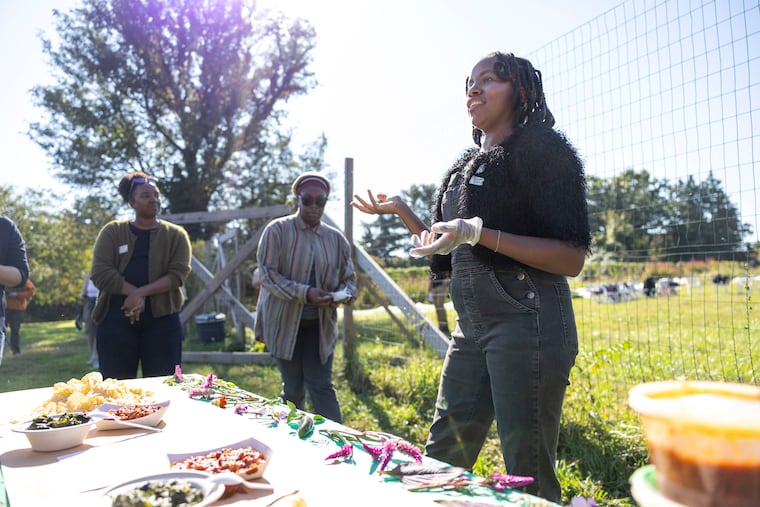
What those assets can make possible, when they align, is visible on 60th Street. In early 2027, the Community Grocer will open in Cobbs Creek — a century-old building without electricity or plumbing bought with philanthropic support from M&T Bank to be rebuilt as a neighborhood market. Every item for sale will be SNAP-eligible. Produce will come from Pennsylvania farms. Food Bucks, in partnership with the Food Trust, will stretch benefits further. Health system partners will connect patients managing diet-related disease to the shelf. A 12-month culinary apprenticeship program will train neighbors for careers. The commonwealth has already invested nearly $750,000 with the support of the governor and the speaker of the Pennsylvania House.
The Community Grocer brings together public investment, experienced grocery operators, food-access benefits, health partnerships, workforce training, and community-rooted leadership that has helped to build trust and local ownership. The development process has gathered national attention while being documented so other communities can move more quickly, and the model is flexible so it can be adapted to local needs. Like any grocery business, its long-term success will depend on earning customers’ loyalty through the food it carries, the prices it offers, and the experience it provides.
Making it work
That last part matters. A successful store opening is not the same as a successful grocery business. The Community Grocer will need a credible path to profitability, realistic expectations about start-up losses and working capital, and the operating discipline that grocery retail demands, from purchasing and inventory management to pricing, merchandising, staffing, and supply chains.
One store in Cobbs Creek does not solve Philadelphia’s food-access issues. But the work of bringing it to life, and helping to sustain it, shows how Philadelphia’s existing assets can be assembled into a long-term approach that helps more neighborhoods build grocery businesses that last.
Mayor Cherelle L. Parker’s administration responded to last year’s SNAP crisis with real urgency, helping to assemble a $14 million city, state, and philanthropic response for residents facing benefit disruption. That was important and right in an emergency. But emergency food is not food access. Pantries typically have limited operating schedules and often are not independently sustainable. Communities need durable grocery infrastructure, stores that are open every day of the week.
We urge Mayor Parker to join Council President Johnson. Council has asked whether Philadelphia should support a grocery store; the administration should come to those hearings with an answer. The Office of Food and Nutrition Security would be led by a mayoral appointee, and if voters approve it next spring, the mayor’s administration is the one that will have to make it work.
Support it now, and pair it with dedicated, recurring, flexible capital and grocery-specific technical support for neighborhood food operators across the city. Not one grant round. A standing commitment that can coordinate support and endure beyond a single administration, so that Kensington, Nicetown, Hunting Park, and Southwest Philadelphia get what 60th Street is getting: permanent nutrition access that strengthens communities from soil to supper.
Philadelphia started a national conversation on grocery access. Now it has the chance to show what municipal leadership can look like when the goal is not just to open stores, but to help ensure enduring nutrition access that lasts.
About guest essays
Guest essays, or op-eds, are commentary pieces that present the opinion or perspective of the author. Many are submitted to us by Inquirer readers and writers with insight on the news, but we also solicit op-eds from authors on specific topics. For more information visit our guidelines.

Inquirer Opinion Newsletter