Is the United States facing a second Reconstruction era?
Given the nation’s deep division, the incoming Congress will have its work cut out for it.

Peter Schmidt is a retired high school principal and history teacher.
As election returns on the night of Nov. 3 made clear that voters were endorsing sweeping changes for the political future of our country, media pundits were offering a broad range of explanations of what was unfolding across the nation.
The most obvious sources of voter unrest were spoken about at length: the reeling economy; deep dissatisfaction with the unending war with Iran; confrontational immigration policies that led to the deaths of American citizens in Minnesota, Maine, and Texas; opposition to data centers; and the Trump administration’s blind faith in the future of artificial intelligence.
Regardless of how we interpret the results of the 2026 midterm elections, it is abundantly clear the United States is facing a crucial moment in its history. In fact, I would argue that the next two years will be as defining for America as any period of time since the conclusion of the Civil War in 1865.
At that time, the nation was facing not only the political uncertainties of how to reunite a country torn by four years of domestic warfare that claimed the lives of hundreds of thousands of soldiers and civilians, but also the loss of its president, who had been assassinated just a few days after Robert E. Lee’s historic surrender to Ulysses S. Grant at Appomattox in Virginia.
Opportunity to rebuild
Call it a second Reconstruction, if you will.
Historians have argued over the successes and failures of Reconstruction-era policies and their enforcement, or lack thereof, since the late 19th century. It remains abundantly clear that the opportunity to rebuild a nation that practiced its principles of liberty and justice for all was left incomplete.
The failure of Reconstruction to rebuild a country torn by war should lead our contemporary policymakers to understand that it won’t be enough to create legislation that will right the wrongs of the past several years.
Despite the passage of the 13th Amendment to the Constitution, which abolished slavery, there remained forced incarcerated labor, which remains in effect to this day. Despite the passage of the 14th Amendment, which granted citizenship to enslaved African Americans, the debate over the meaning of “birthright citizenship” continues. And while the 15th Amendment granted the right to vote to African Americans, we must not forget the battles over voting rights that dominated the news before the recent midterms.
We need to pay close attention to our history and learn the lessons it has placed in front of us. Well-intended Reconstruction policies meant to restrain the forces of hate that sustained the brutality of slavery were not enforced. That hatred and brutality did not end with the conclusion of the Civil War. It continued with the rise of the Ku Klux Klan and other forms of white supremacy that led to the lynchings of African Americans and uninhibited racial violence in both the North and the South.
To be sure, the past two years of the Trump administration can hardly be compared to the horrors of enslavement. And while the country is not as shattered as it was 160 years ago, the division and distrust and disillusionment today run deep. What is broken won’t be easily put back together.
Benefit the majority
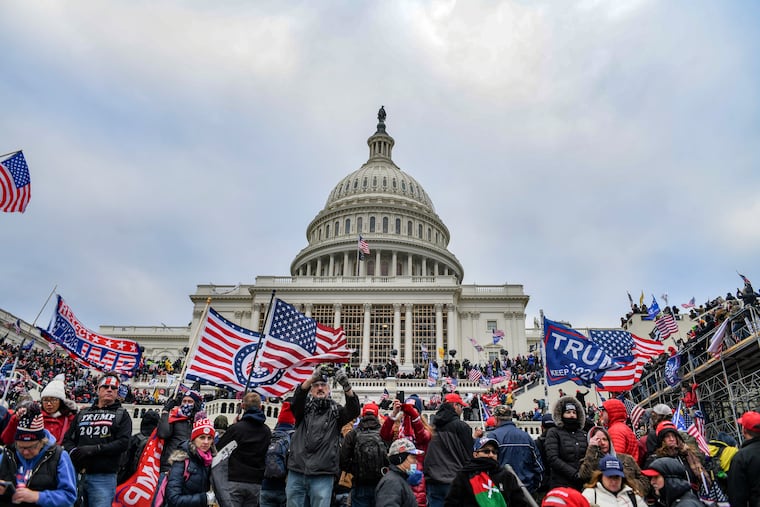
We cannot forget the efforts by the Trump administration and its Republican allies in Congress to erase the reality of the Jan. 6, 2021, insurrection from history. That alone has created a seemingly unbridgeable chasm, but it should compel the incoming Congress to focus its attention on what will benefit the vast majority of Americans who are now in financial distress, including measures that end the senseless war with Iran, and legislation that will address the failures of immigration policies that have contributed to the deaths of honest and law-abiding Americans.
The failure of Reconstruction to rebuild a country torn by war should lead our contemporary policymakers to understand that it won’t be enough to create legislation that will right the wrongs of the past several years. We must now work to repair our frayed democratic ideals. It will take political will and moral fortitude. And a resolute commitment to making the nation whole.
As President Abraham Lincoln noted so clearly in his Second Annual Message to Congress in 1862:
“We shall nobly save, or meanly lose, the last best hope of earth. Other means may succeed; this could not fail.”
About guest essays
Guest essays, or op-eds, are commentary pieces that present the opinion or perspective of the author. Many are submitted to us by Inquirer readers and writers with insight on the news, but we also solicit op-eds from authors on specific topics. For more information visit our guidelines.