All time is local: Against a permanent daylight saving time
Making daylight saving time permanent would only further institutionalize a state-controlled and sanctioned system of artificial time, extending a temporal framework that has long been tied to war.
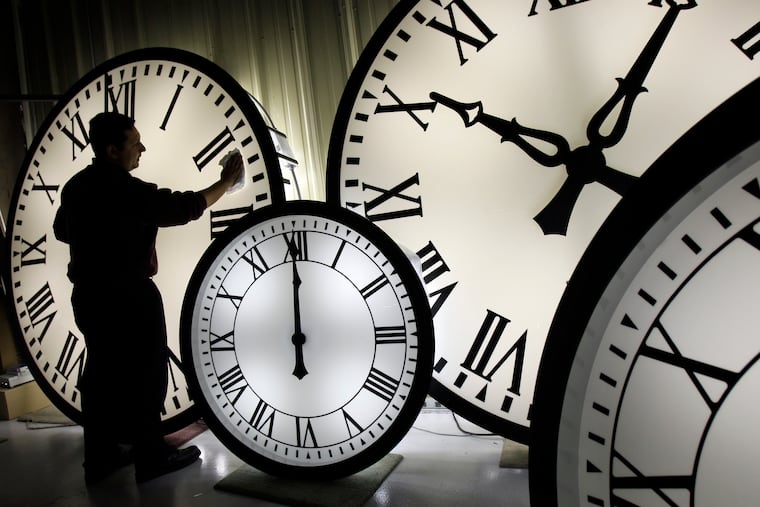
The push to make daylight saving time permanent has recently gained momentum, with the House voting in July to pass the Sunshine Protection Act. The bill now sits with the Senate, but no vote has been scheduled, and it appears increasingly unlikely it will pass before the November time change. For now, we can still expect time to “fall back” an hour this year, even as the debate over permanent daylight saving time continues.
Depending on your geography and what season you’re in, permanent daylight saving time may mean a marginal difference in terms of darkness and sunlight balance. But for other states, this could mean something more extreme, like getting “plunged into early-morning darkness during the winter.”
The renewed energy around passing the act to “protect sunshine” is being presented as a way to end the inconvenience of changing our clocks twice a year and, according to Donald Trump, the anxiety it creates, while also offering economic benefits, extended daylight, and energy conservation.
What he is ostensibly referring to is the fact that the impacts of daylight saving time exceed the ticking and switching of clocks, impacting our health, safety, sleep, and our very circadian rhythms.
These internal timekeepers, synchronized with the natural light-dark cycle, play a crucial role in regulating our sleep, metabolism, hormone release, mood, and alertness levels. When daylight saving time disrupts these rhythms, it can lead to sleep disturbances, reduced productivity, and an increase in health-related issues, with many of these impacts disproportionately affecting Black people and communities.
However, these impacts occur most often as a result of daylight saving time beginning, or setting the clock an hour ahead (losing time), rather than daylight saving time ending, or setting the clock back one hour (gaining more time), so it’s not clear that making daylight saving time permanent would have the effect Trump claims it would.
Instead, it could severely undermine the very different relationships communities have to daylight, geography, climate, work, culture, and the environment.
In fact, making daylight saving time permanent would only further institutionalize a state-controlled and sanctioned system of artificial time, extending the same temporal framework that has long been tied to war, state violence, capitalist labor production, guilt-inducing propaganda, and (white) Western linear time programming.
The origins of daylight saving time are linked to wartime, with the stated aim of conserving resources and energy to support the war effort. The first modern-day state-mandated version of daylight saving time, called “Summer Time,” went into effect in Germany and Austria-Hungary during World War I in 1916.
In the United States, daylight saving time was instituted by Congress two years later, justified as a system of timekeeping that would save energy, help coordinate military operations, transportation, and communication. “Set the clock ahead one hour and win the war!” the propaganda declared.
After World War I, daylight saving time was repealed following widespread opposition. The system had also created problems for people whose lives and work followed the rhythms of the sun, particularly in rural communities. The schedule that made sense for factories and cities did not always make sense for farmers and others whose workday was tied more closely to daylight.
After World War I, daylight saving time was repealed following widespread opposition.
Daylight saving time returned during World War II as “War Time,” when the clocks were moved forward year-round as part of the wartime effort. It ended once again after the war, but the country continued to debate its value and existence. The Uniform Time Act, established in 1966, was meant to be a more consistent system for daylight saving time across the country, although states could choose not to observe it.
The country tried year-round daylight saving time again in 1974. The change was unpopular, especially during the winter, when it was still dark as people made their way to work and school. By October of that year, President Gerald Ford signed legislation ending year-round daylight saving time and returning the country to its current seasonal schedule.
Today, this biannual state-sanctioned artificial time-manipulation holiday begins and then later ends again, often with little attention, question, or challenge, as our phones and timekeeping devices are now mostly programmed to shift automatically.
But our bodies keep the time. It is essential, therefore, that we disentangle our temporalities from the nation-state and global war machine’s time.
The Uniform Time Act allows states to opt out of daylight saving time, but it requires legislation and approval from Congress, which is a high — but not impossible — bar to pass. Hawaii has chosen to operate on Hawaii Standard Time year-round, while parts of Arizona, the U.S. Virgin Islands, Guam, Puerto Rico, and American Samoa have opted out of daylight saving time. These places have made different temporal choices based on their own geographic, environmental, and social circumstances.
The debate over how we organize time is taking place closer to home, too. Pennsylvania House Bill 119 proposes banning daylight saving time, while Pennsylvania Rep. Mary Gay Scanlon’s Sunshine for Our Kids Act would repeal daylight saving time federally while allowing states to choose whether to observe it.
A shift toward local and communal time reckoning and organizing rejects that a standardized, institutionalized, war-laden system of time should determine how everyone lives. These alternatives are not necessarily new or even unfamiliar to many of us.
Communities already have their own ways of creating and observing time, shaped by family, spirituality, culture, place, seasons, work, ceremony, and everyday life. These existing practices should be understood as temporalities in their own right, even when they appear to fit within standardized clock time.
Communities already have their own ways of creating and observing time, shaped by family, spirituality, culture, place, seasons, work, ceremony, and everyday life.
Looking beyond the United States also makes visible other ways communities organize time and space. Different relationships to the day, the season, collective activity, and place can offer countless templates for thinking about what more localized spacetimes can look like. We can learn from other temporal arrangements where communities have more control over their rhythms and priorities.
The current proposal therefore gives us another opportunity to question the assumption that time must be standardized in order to be coordinated, and to disrupt the systems that divide the world into standardized temporal units. Who established these divisions? Whose time became the reference point and why? What histories and relationships disappear inside the map? What temporalities have been pushed outside of it?
Unmapping time means questioning the boundaries, reference points, and protocols that have been used to organize us in time and space in order to make room for localized, ancestral, communal, natural, and otherwise unstandardized spacetimes.
It is to rezone time itself, creating new temporal markers and protocols and restoring the agency of communities to define their own relationships to pasts, presents, futures, dream times, and other spacetimes of their choosing.
Rasheedah Phillips is the author of “Dismantling the Master’s Clock.” Read it and visit www.timezoneprotocols.space for additional histories of prime meridians, time zones, daylight saving time, and tools and practices for spatial agency and temporal autonomy.