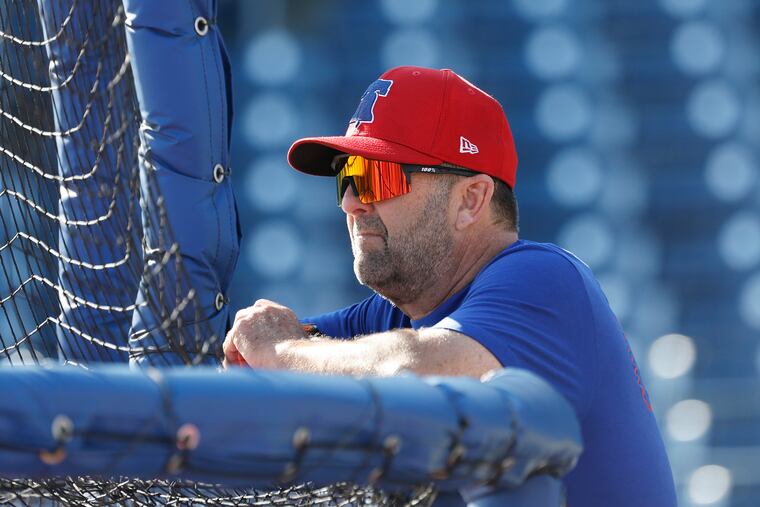
Dave Dombrowski didn’t have an ‘elite’ season. And turning it around in 2027 won’t be easy.
Change will take creativity that goes beyond spending John Middleton’s money, Dombrowski’s most common solution to problems since he got hired in 2020.
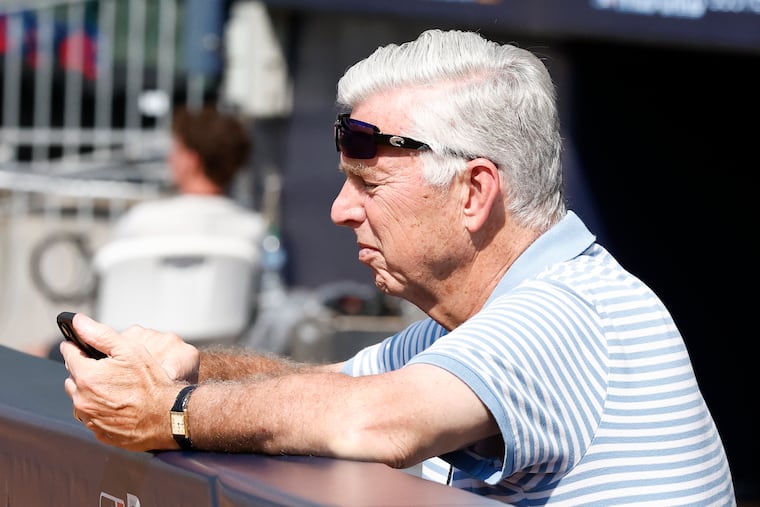
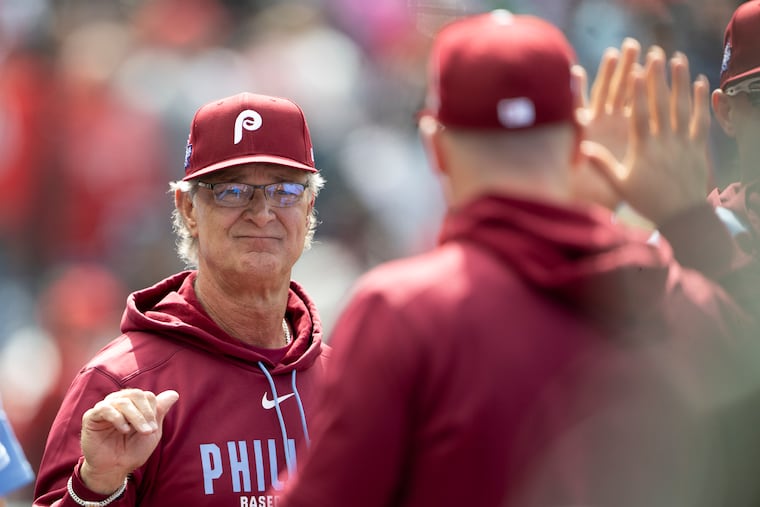
Dave Dombrowski will pull on a natty blazer, run a comb through his perfectly coiffed hair, and step to a podium in the basement of Citizens Bank Park.
The timing will be impeccable, if unintentional.
Because when Dombrowski finally takes questions from reporters Thursday, two weeks after the Phillies got booted in the wild-card round of the playoffs, it will be 364 days since he sat in that room and gave a season-ending news conference in which he wondered aloud if the future Hall of Famer in the lineup is still “elite.”
A year later, let’s throw that same doubt right back at the future Hall of Famer leading the front office.
» READ MORE: The big offseason questions facing the Phillies: Core’s future, fixing the bullpen, and who’s managing?
Before we do that, though, a reality check: The only person whose opinion really counts insists he still has full confidence in Dombrowski’s roster-building. Indications are that owner John Middleton even intends to extend Dombrowski’s contract, which runs through 2027 but might as well be for as long as he wants to stay on as president of baseball operations.
“To be in the postseason five years in a row, that’s remarkable consistency,” Middleton said last month before his latest chance to win his (damn) trophy back went poof into the Atlanta night. “It’s consistency throughout a season, a sign of a really, really good organization, not surprisingly when Dave Dombrowski runs it.”
Indeed, Dombrowski, who turned 70 in July, has taken four franchises to the World Series, including the Phillies in 2022, and won it twice. But he had an objectively bad year — or, as he infamously put it when describing Bryce Harper’s 2025, “didn’t have an elite season like he has had in the past.” The Phillies started 9-19, finished 9-14, went 23-33 against playoff teams, and barely survived a final-week collapse.
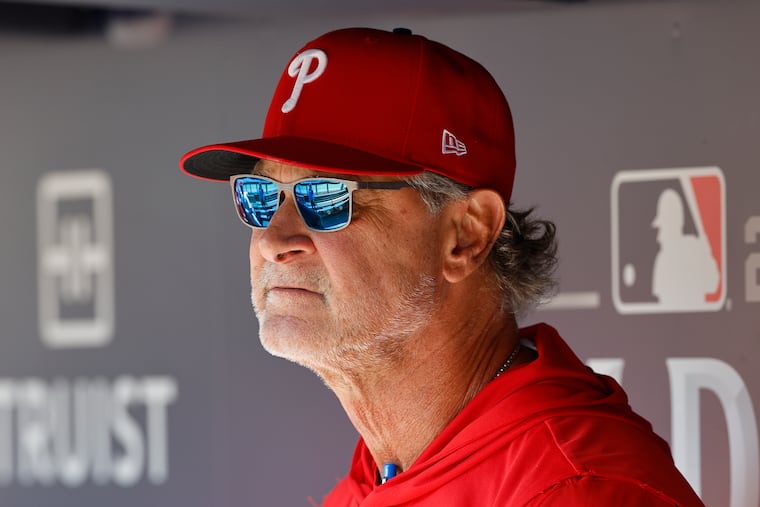
And it all had much less to do with the manager — be it Rob Thomson, Don Mattingly, or if Dombrowski had his way in April or last week, Alex Cora — than the makeup of the roster.
Consider the list of shortcomings despite a $322 million luxury-tax payroll, fourth-highest in baseball:
Starting pitching depth: In short, there wasn’t any. Taijuan Walker got released in April with a 9.13 ERA and $15.3 million left on his contract, and Dombrowski never found another No. 6 starter. The Phillies were the only team with five pitchers who made at least 23 starts. But when that remarkable run of health ended with Jesús Luzardo going down with an inflamed left shoulder in September, the best they could do was two bullpen games and Aaron Nola on two days’ rest against the Rays. It almost cost them a wild card.
Late-inning relief: The torn elbow ligament that ended Brad Keller’s season in July probably wasn’t foreseeable. But Dombrowski placed a $22 million, two-year bet on the setup man based largely off a breakout season with the Cubs. Dombrowski gets points for trading Matt Strahm for Jonathan Bowlan. But he also exercised lefty José Alvarado’s option, brought back Orion Kerkering after his season-ending error, and traded for lefty Brooks Raley at the deadline. None pitched in the playoffs for Mattingly, who trusted three relievers other than closer Jhoan Duran to face a total of 12 batters out of 115 in three games.
Middle-of-the-order bat: Dombrowski must’ve realized the Phillies lacked a cleanup hitter because he offered a seven-year, $200 million contract to Bo Bichette. Maybe they dodged a bullet. Bichette grabbed the Mets’ shorter-term, higher-salary offer and posted a 97 OPS+ (100 is league average). But there wasn’t a Plan B. And after posting a .720 OPS last season from the cleanup spot behind Harper, the Phillies sank to .645, second-worst in the majors. The fifth (.691) and sixth (.639) spots were also punchless, ultimately costing hitting coach Kevin Long his job.
» READ MORE: The most imaginative changes the Phillies can make begin with moving Trea Turner off shortstop
Backup catcher: Nobody was happier than the pitchers when the Phillies re-signed J.T. Realmuto, whose game-calling and work behind the plate is as essential as ever. But at age 35, amid a three-year decline as a hitter, he would’ve benefited from a lighter workload. Instead, he led all catchers with 122 starts because Rafael Marchán and Garrett Stubbs combined to produce an impossibly low .316 OPS and two extra-base hits in 156 at-bats. Yet both Marchán and Stubbs were on the postseason roster because there weren’t any better bench options. (Cue facepalming emoji.)
None of that changed Wednesday with the appointment of Mattingly as full-time manager, shedding a five-month interim tag. Nor would it have changed if Cora took up Dombrowski on his second offer in six months to manage the team.
The only way it will change is if Dombrowski builds more depth to support a Jenga-tower roster that included only six position players who were at or above replacement level, according to Baseball-Reference WAR.
It won’t be easy. And it will take creativity that goes beyond spending Middleton’s money, Dombrowski’s most common solution to problems since he got hired in December 2020.
Not only do the Phillies have $236.5 million in luxury tax commitments for 2027, but the offseason will be interrupted on Dec. 1 when the owners lock out the players and freeze transactions until the negotiation of a new collective bargaining agreement that will include either a salary cap or harsher penalties for the highest payrolls.
“I’d imagine this team is going to look a lot different next year with the [free agents] that are kind of leaving this clubhouse,” Harper said after the season-ending Game 3 loss in Atlanta. “So, we’ll see.”
Harper, who turns 34 on Friday, rarely shies away from offering opinions about how the Phillies can improve. He seems unwilling to broach that topic now, at least publicly, other than to say this: “I obviously have trust in the organization and the people that are in charge.”
Maybe Harper and Dombrowski reached a détente after their rocky last 12 months, mutually agreeing not to publicly discuss one another’s job performance. (Heck, Harper couldn’t even say Dombrowski’s name.)
But Thursday, of all days, as Dombrowski returns to that podium, someone should really quote him back to himself.
“I guess we only find out if he becomes elite [again] or he continues to be good.”
“Can he rise to the next level again? I don’t really know that answer. And really, he’s the one that will dictate that more than anything else.”
Only a championship-starved owner, an increasingly disillusioned fan base, a deep and talented starting rotation, an aging core, and especially an elite No. 3 hitter will be watching.

The Phillies haven't won a playoff series since 2023, and their postseasons keep getting shorter and shorter. How can they fix it? Radio play-by-play announcer Scott Franzke joins Phillies Extra, The Inquirer's baseball podcast, to discuss Trea Turner's future, the managerial uncertainty, whether the Phillies can get "creative" to change the mix of the roster, and more. Watch here.
You can also subscribe to the podcast version of Phillies Extra on Spotify or Apple Podcasts.
Previous episodes: Larry Andersen | Matt Klentak | Jeff Francoeur | Luke Murton | Mike Hazen | Tony Gwynn Jr. | Kevin Stocker | Bobby Dickerson | Jim Bowden | John Middleton