Democrats flip six seats in Pa. and N.J., winning back the U.S. House in blue wave
Bob Harvie ousted Brian Fitzpatrick, the last congressional Republican in the Philly suburbs, in a major shift in Bucks County politics.
Democrats have flipped four U.S. House seats in Pennsylvania, a clean sweep of the state’s competitive congressional elections.
Two of the ousted GOP incumbents won their seats with President Donald Trump’s help just just two years ago. The other two, including U.S. Brian Fitzpatrick in Bucks County, are longtime Republican lawmakers with long tenures and distinct political brands.
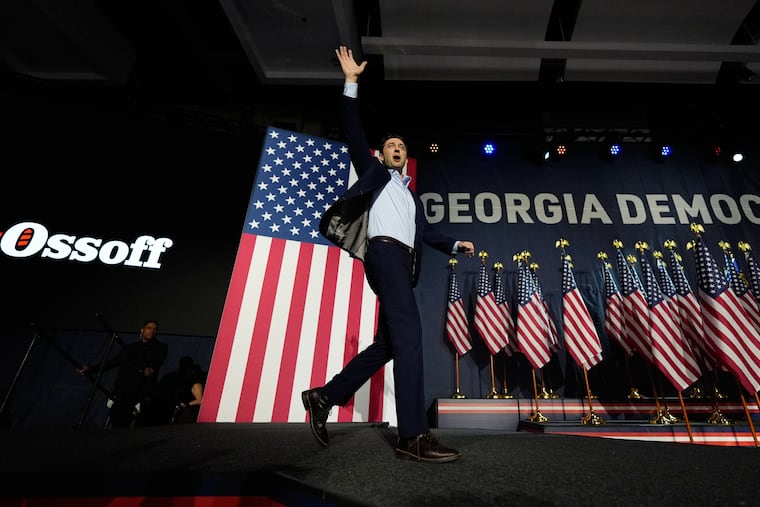
The sweeping wins in Pennsylvania — along with Democratic wins in New Jersey — will help put the party in control of the House for the first time in four years and for the remaining years of Trump’s presidency, The Associated Press projected early Wednesday.
It was the second time in the last decade that an uprising against Trump’s unpopularity led to Democrats gaining four seats in Pennsylvania’s House delegation, with the first happening in the 2018 midterms.
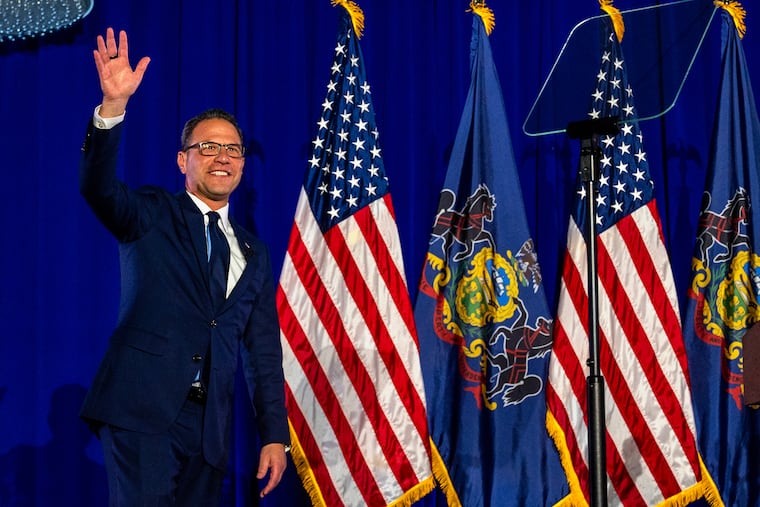
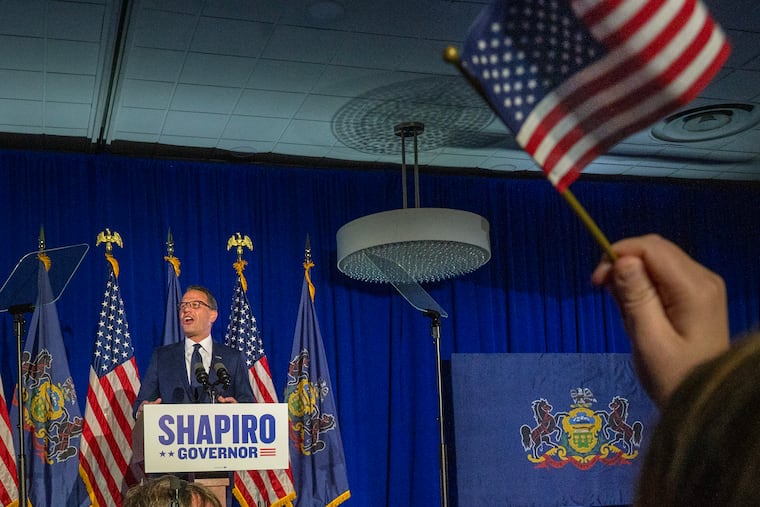
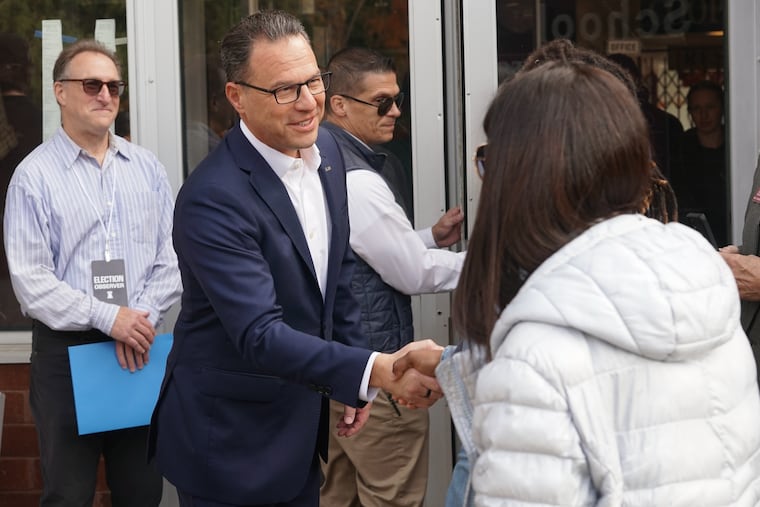
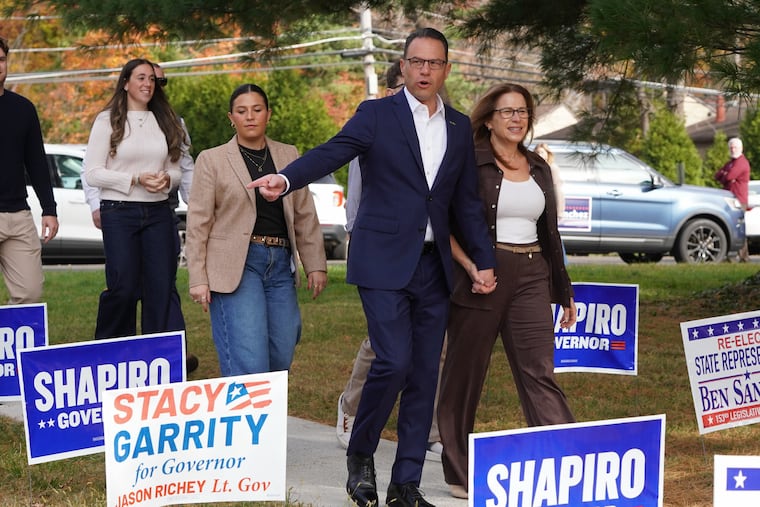
This year, it also came as Democratic Gov. Josh Shapiro — who handily defeated Republican challenger Stacy Garrity on Tuesday — used his campaign and popularity as a boon to downballot Democrats.
Unlike the 2018 midterm backlash against Trump, Democrats in Pennsylvania didn’t just win open seats that Republicans had vacated. They unseated incumbents in each of the races this year — a particularly challenging feat in modern politics when elected officials run for reelection with substantial resources and name identification.
“The great American middle class spoke today, and it was pretty loud,” said Neil Oxman, a Philadelphia-based political consultant who has worked on congressional races across the country.
Across the river, Democrats also flipped two U.S. House seats in New Jersey, including a shocking upset in which Cape May Mayor Zack Mullock ousted four-term U.S. Rep. Jeff Van Drew in South Jersey’s 2nd District. (Van Drew conceded the race while it was still considered too close to call).
» READ MORE: Trump again looms large among Pa. and N.J. voters, with Congress and a governor’s chair at stake
Fitzpatrick’s defeat to Democrat Bob Harvie in Bucks County was perhaps the most monumental of those outcomes, and it means that Democrats had ousted the last House Republican in the Philadelphia suburbs. Fitzpatrick had repeatedly survived blue waves and entered the race with a massive cash advantage.
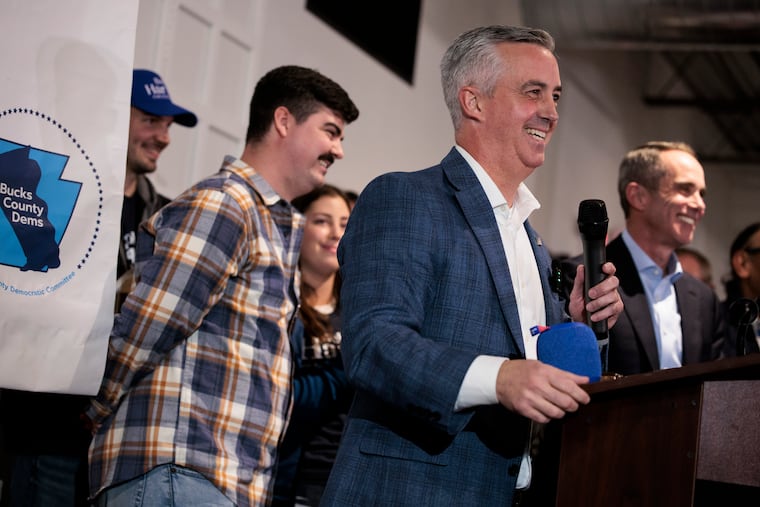
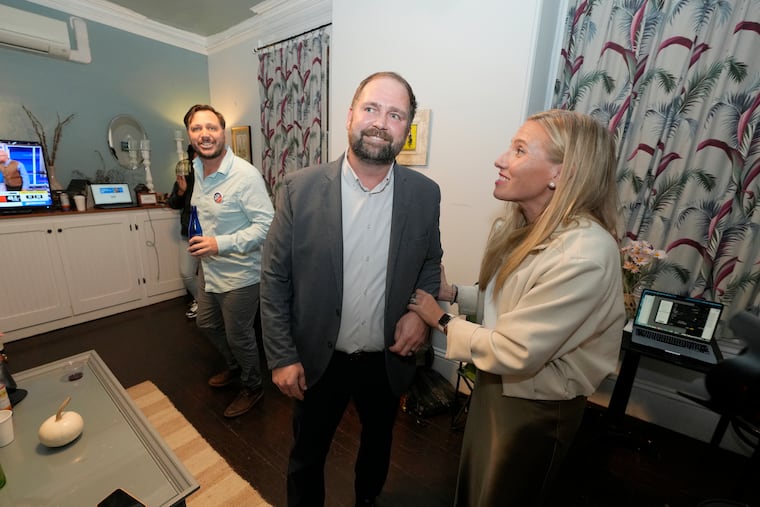
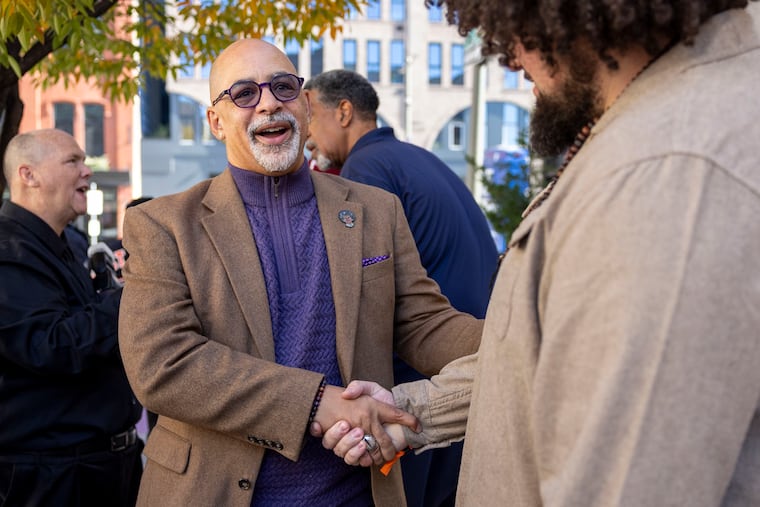
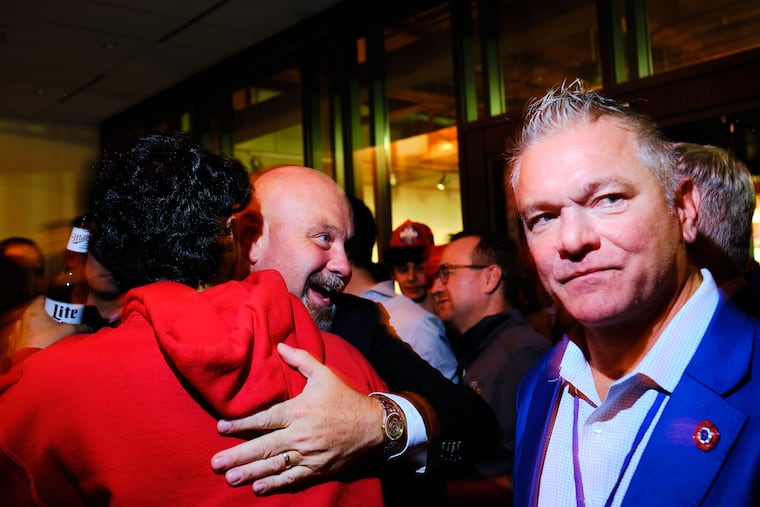
Harvie and other Bucks County Democrats declared the victory after midnight.
“We’re turning it away from the negative, from the ugly, from the heartless, from the ignorant, from those who would take us backward and who would divide us and make us fight each other,” Harvie said. “And instead we are turning toward the America that we have always wanted to be and have been at brief times in our past.”
A late surge of momentum behind Harvie meant millions of dollars in ad support from national Democrats and repeated voter turnout efforts headlined by Shapiro and other prominent party members.
» READ MORE: Bob Harvie ousts Brian Fitzpatrick in Bucks County, flipping a House seat Republicans have held for over a decade
Fitzpatrick’s astounding $11.9 million in campaign spending in the campaign through Oct. 22, which was the last available public report, was ultimately more than he spent in his last three campaigns combined. He still saw millions of dollars more spent on his behalf from national Republican groups and even Trump’s super PAC.
In his race and another around Harrisburg, Democrats worked to capitalize on the especially challenging moment for Republicans to attack lawmakers who repeatedly managed to win close elections in the past.
Fitzpatrick’s loss was in part fueled by former supporters who, this year, decided to cast their ballot for Harvie.
Julie Marshall, 61, a Democrat, has previously voted for Fitzpatrick, but the final straw for the Levittown resident was when the lawmaker repeatedly called his congressional office but could not get in direct contact with him.
She cited gas prices, housing, education, and healthcare among the issues that had left her frustrated with the state of the country, adding that Fitzpatrick hasn’t done enough to hold Trump and his contemporaries accountable.
“Something’s gotta be done,” she said. “We can’t keep doing this.”
Other voters were motivated by the economy. Democrat Dennis Bridges cast an enthusiastic vote for Harvie at Central Bucks High School South on Tuesday to, in his view, correct the course of a federal government that has veered wildly off track.
“Healthcare was the big one, the gas, the war,” the 75-year-old Chalfont resident said of his concerns this year. “And then the corruption. It seems like no matter what, [Trump is] getting away with all kinds of corruption.”
Oxman, the political consultant, said the national political climate was so bad for Republicans that Fitzpatrick’s well-known local political brand couldn’t help him defy the odds, as it has in the past.
“Every campaign, one of the candidates has a burden of proof, and every time a Democrat ran against him, they had the burden of proof,” Oxman said. “This time, he did, because of the national mood.”
U.S. Rep. Scott Perry, one of Trump’s staunchest allies in Washington and the former leader of the far-right House Freedom Caucus, had won seven times in the 10th Congressional District that now encompasses all of Dauphin and parts of York and Cumberland Counties. The district morphed and became more competitive during Perry’s time in office, with the Republican winning by just 1 percentage point in 2024.
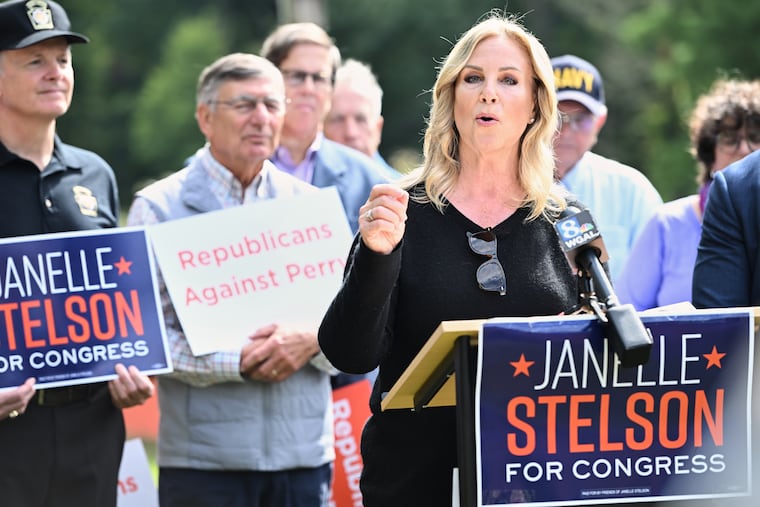
In a rematch this year with Democrat Janelle Stelson, the challenger hammered Perry over rising gas prices due to the war in Iran and what she called his too-extreme platform for the district.
Meghan Getz, 42, an elementary school art teacher, supported Stelson and said of the Democrat, “Her core values, like supporting food stamps and Medicaid, are just better than Perry’s.”
» READ MORE: Former TV anchor Janelle Stelson defeats Trump ally Scott Perry in tense central Pa. congressional rematch
The two other districts — one in the Lehigh Valley and another in the Northeast corner of the state — saw the largest influx of campaign spending as both parties saw opportunities in key battlegrounds.
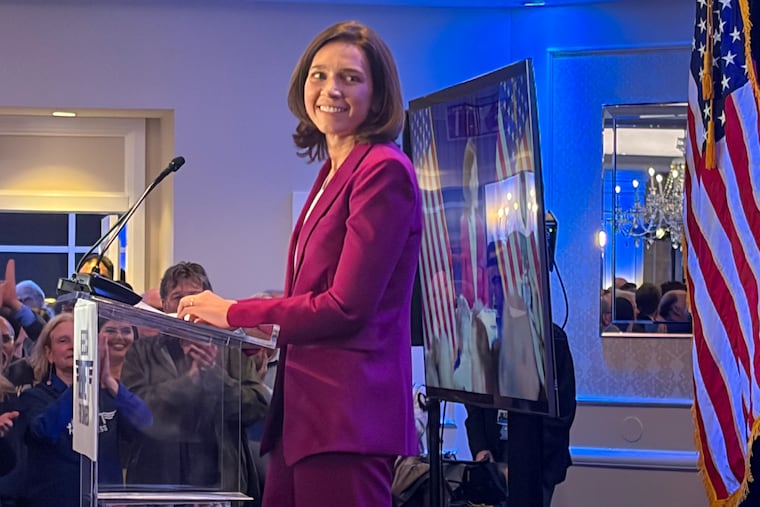
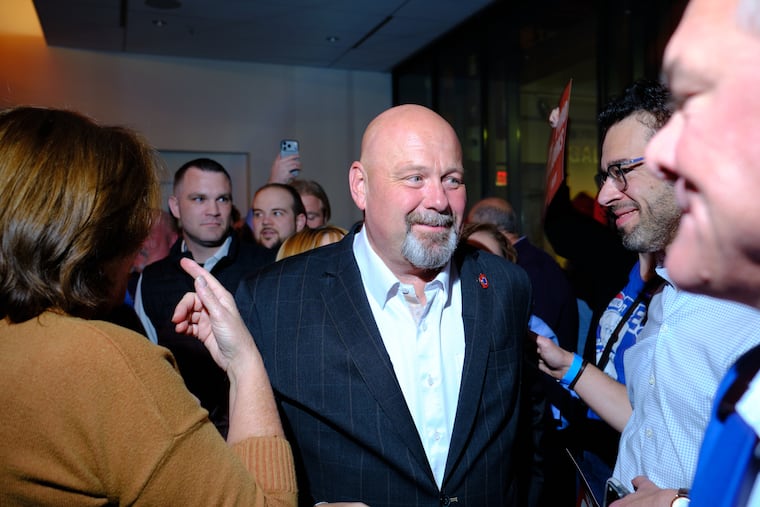
In the 7th Congressional District, union leader and retired Bethlehem firefighter Bob Brooks defeated U.S. Rep. Ryan Mackenzie. In the 8th District, Scranton Mayor Paige Cognetti won against U.S. Rep. Rob Bresnahan.
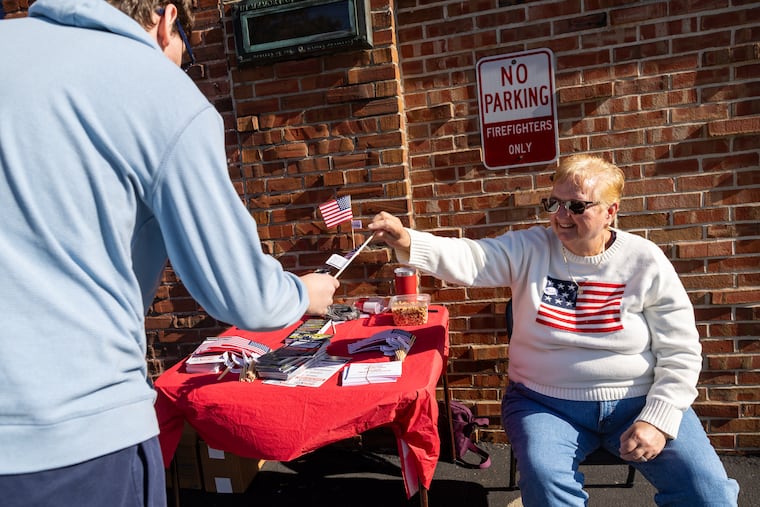
Carlene Flynn, 74, hasn’t seen much change in the city since Cognetti became mayor in 2020, but was hoping Tuesday that she would replace Bresnahan because of the Republican’s alignment with Trump.
» READ MORE: Scranton Mayor Paige Cognetti ousts Rob Bresnahan in key race, flipping House seat for Democrats
“We just watched Bresnahan vote for everything that Trump wanted,” said Flynn, as nearly every voter passing by greeted her by name.
As Democrats looked to rebound after a disastrous 2024 effort, all four races were not only defined by Trump but also hinged on critical recruitment efforts to secure what the party considered the best possible candidates.
Harvie is a twice-elected Bucks County commissioner. Stelson is a well-known former local television anchor who came within a hair of defeating Perry in a GOP-friendly year in 2024.
Cognetti focused on her history in local politics and anti-corruption work that meshed with a top attack line against her opponent.
And Brooks leaned into his working class background — a clear attempt to recapture voters who drifted toward Trump — and his experience around the political process as a well-connected advocate for emergency responders.
“D.C. is going to hear this message loud and clear when Bob Brooks gets to town,” Brooks said while declaring victory in Bethlehem, surrounded by union leaders and supporters wearing plastic firefighter hats with his campaign logo. “We aren’t going down there to try and piece things back together where they were before. We’re going down to shake up the status quo, fight for working people, stop the bullshit and build something better from the ashes.”
While Brooks emphasized his union support, one key ally said his and other victories around the country leaned on Latino voters who swung toward Trump in 2024 but had become enraged by his immigration enforcement and policies that raised prices.
» READ MORE: Democrat Bob Brooks unseats Ryan Mackenzie in the Lehigh Valley, reclaiming a House seat Trump helped flip in 2024
“Latinos decided this election,” said Allentown Mayor Matt Tuerk, the first Latino mayor of the majority-Latino city, which is Pennsylvania’s third-largest. “We saw significant turnout in Allentown… We supported candidates that rejected Republican policies and have done harm to our families [and] that have raised prices.”
Kevin Black, 66, a retired teacher from Macungie, cast his vote for Brooks because he was turned off by Mackenzie’s negative ads and is concerned with the economy.
“I can go either way. I used to vote with Republicans a lot. The past few years now, I’ve been switching around,” he said.
Republicans in all four races launched attacks at the newcomers while defending their records and, in some cases, distancing themselves from the leader of their party.
“There’s been plenty of examples of where we’ve pushed back on the administration,” Bresnahan said last week at the end of a debate — a notable move in a region that voted more for Trump than any of the other competitive districts.
Those late rhetorical efforts came after Bresnahan and Mackenzie had largely stood by Trump and his policies. Each of them spoke at the Republican midterm convention he convened in September. They also welcomed support from House Republican leaders, though Trump didn’t appear in the state for a campaign event in the final stretch.
But in all four of the districts, Trump’s approval ratings had sunk dramatically, according to an Inquirer/New York Times/Siena University poll conducted in recent weeks. Democrats also had the edge over their opponents on nearly every policy issue that the survey asked about — such as cost of living and corruption.
By the time voters went to the polls on Tuesday, one major nonpartisan ratings agency had moved all of the races — which had started as toss-ups or “leans Republican” in the summer — to “leans Democratic.”
The picture was similar across the country, with Democrats projected to easily retake the House and also likely the Senate. When Trump took office nearly two years ago, that level of a blue wave seemed far out of reach.
But it may have not necessarily been a surprise to Marshall, the Democrat from Bucks County.
“A lot of people are not happy,” she said Tuesday. “People in Bucks County want change. They want this president reined in.”
Staff writers Dugan Arnett, Al Lubrano, Dana Munro and Jesse Bunch contributed to this article.