What went wrong for Republican Stacy Garrity’s campaign for Pennsylvania governor
Republicans hoped Stacy Garrity would save them from a defeat like the one they suffered in 2022 against Josh Shapiro. This year, it was worse.
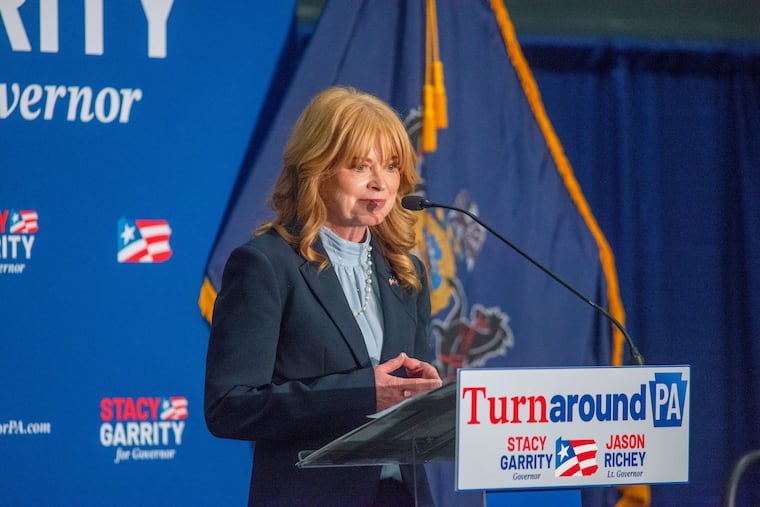
TUNKHANNOCK, Pa. — Just one minute after polls closed on Tuesday, the Pennsylvania governor’s race had already been called. Within the hour, Republican Stacy Garrity took the stage at her election night watch party to accept the more than 20-point defeat.
Flanked by her mother, husband, and running mate, Garrity told the crowd of about 150 supporters that she called Gov. Josh Shapiro to wish him her “sincere best” in his second term.
“His success is our success,” she said. “Pennsylvania’s best days are ahead of us, and that is not because of any politician of any party. It’s because of our people.”
Her speech, at the Stone Hedge Golf Course in Wyoming County, capped an uphill 16-month campaign for the state’s highest office against Shapiro, a popular incumbent with a rising national star and rumored presidential ambitions.
» READ MORE: Why Josh Shapiro put himself on the line for the midterms — but still won’t talk about 2028
And though the state’s party coalesced around her unprecedentedly early in hopes of avoiding another bruising loss like the one it suffered in 2022, Garrity, the state’s treasurer, struggled to build momentum. She entered the night with odds stacked against her: behind by double digits in every public poll, massively out-fundraised, and endorsed by President Donald Trump amid growing dissatisfaction with the administration as the GOP faced strong national headwinds.
Inside the Northeastern Pennsylvania golf course’s main dining room on Tuesday, however, the speed at which Garrity’s loss was announced still took some by surprise.
“How can it be called so early?” said Diane Elliot, 72, who lives in Garrity’s home Bradford County.
Suzanne Gilpin looked up from her phone in puzzled disbelief, taking a break from practicing Czech lessons via the Duolingo app. She sighed and shook her head.
“As a treasurer, she’s been marvelous. She’s honest, she shows up, she has a good history,” said Gilpin, 68, of Factoryville.
‘Tough political environment’
In an interview with reporters Tuesday night, Garrity, 62, said she was operating in a “tough political environment,” as Democrats made historic wins across the country.
“We didn’t go into this race thinking we’re going to win. But we did go into it thinking, we’re going to make it competitive and make sure we help with the congressional seats and the state Senate,” said Kent Gates, a Republican consultant who worked on Garrity’s campaign, and who worked on former Sen. Arlen Specter’s 1998 campaign.
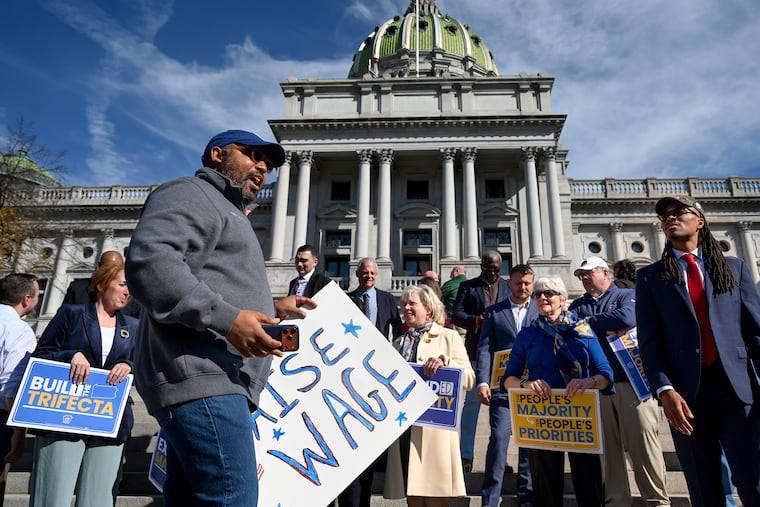
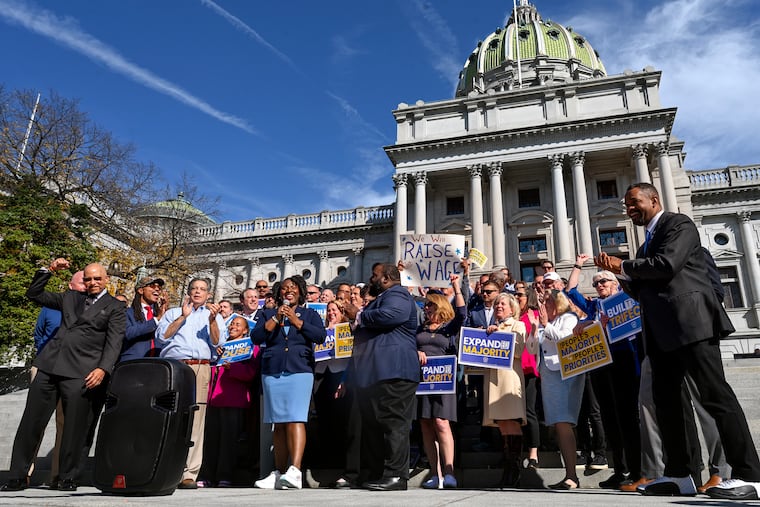
This week, Pennsylvania’s GOP-controlled state Senate flipped blue for the first time in more than 30 years, while Democrats gleefully expanded their majority in the state House.
» READ MORE: Democrats win trifecta control of Pennsylvania Senate, House and governorship for the first time since 1993
Still, Republicans looked to Garrity last September with promise, endorsing her early in an effort to clear the field and build enthusiasm for her run. U.S. Rep. Dan Meuser also considered a run, but ultimately bowed out in July 2025.
“I think they each would have brought different strengths and skill sets to the race,” said State Sen. Lisa Baker, the longest serving senator in the Republican caucus, said about Garrity and Meuser. “Stacy obviously stepped forward and was a very strong background to run.”
The decision to coalesce around Garrity early was driven in part by a desire to avoid a repeat of 2022 when right-wing State Sen. Doug Mastriano lost by nearly 15 points. Mastriano had been weighing another run before the state party’s endorsement of Garrity.
But Garrity ended up losing by a bigger margin — a fact noted by Mastriano in a series of social media posts comparing the two GOP candidates’ vote totals and electoral maps.
State Sen. Judy Ward, who represents Blair County and has known Garrity since her first foray into public office in 2020, was impressed by her resume: a decorated military career including three tours in the Middle East, a business executive, and a “hard-working” public servant.
“I really thought she was really the only person that could run against Josh Shapiro because of all those things,” Ward said.
Sam Chen, a Pennsylvania Republican strategist, was more blunt.
“Garrity tied herself to the president,” he said. “I don’t think she ran the best campaign. I think she kind of kept within GOP circles in a year when the GOP was floundering.”
Less money, more problems
The first signs of trouble came in January, when Garrity struggled to find a running mate, before eventually recruiting Jason Richey — a Pittsburgh attorney and chair of the Allegheny County GOP.
With only two elections under her belt, Republicans close to the campaign said Garrity didn’t have extensive relationships with a network of donors. Her entire campaign staff was under the age of 28, too, she said, without decades of campaign experience.
Throughout the campaign, Garrity struggled to fundraise, and though she received an eleventh-hour cash infusion from skill games industry backers, she ended the race with around $11 million — a small fraction of Shapiro’s more than $60 million war chest.
But the money came too late to make a difference, said Christopher Nicholas, a GOP consultant, after Shapiro had spent months airing ads blasting Garrity as “Pennsylvania’s #1 fan of data centers.” For the majority of the campaign, Garrity’s television advertising footprint was barely existent.
“If you could have had that in July, in August, he would not have had the airwaves to himself to gaslight on the data center issue,” Nicholas said. “Sometimes in politics, it’s not how much money you have, it’s when you have it. If you would have had this money to use in July and August, it would have been a different turnout perhaps.”
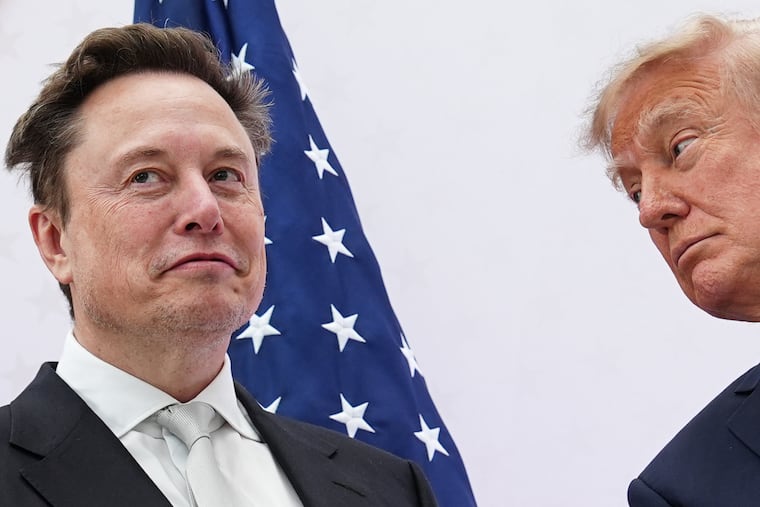
Top GOP groups, who would typically help finance a gubernatorial run — the Republican National Committee, the Republican Governors Association, Pennsylvania Republican Party — never contributed directly to Garrity’s campaign, according to campaign finance reports. Neither did political action committees backed by Pennsylvania’s richest man, Jeffrey Yass, nor billionaire Elon Musk, who spent nearly half a billion dollars in the midterm elections, including more than $1 million on Pennsylvania congressional races. (Garrity’s campaign noted the state party helped with get-out-the-vote efforts.)
Garrity on Tuesday acknowledged the initial help she received but added, “there could have been a lot more done.
“In politics, you learn very quickly that not everyone follows through on your promises,” she said during her concession speech.
Ward said she believed Garrity didn’t receive more money because large donors and big businesses were fearful of retribution from Shapiro, a politician known to demand loyalty from his allies.
“I think people were afraid for their businesses. They were afraid for maybe a grant opportunity. They were just afraid, in general, of retribution,” she said.
In a statement, Manuel Bonder, a spokesperson for Shapiro’s campaign, did not address Ward’s comments, instead writing that Trump and the state’s GOP on Tuesday “were resoundingly rejected across the Commonwealth — including with historic losses up and down the ballot.”
In a statement Wednesday, the Pennsylvania Republican Party lauded Garrity for her efforts.
“Stacy and Jason’s dedication to public service and commitment to the Commonwealth are unquestionable, and the Republican Party of Pennsylvania is grateful for their efforts,” it read.
Little star power
Garrity also saw little public support from top Republicans.
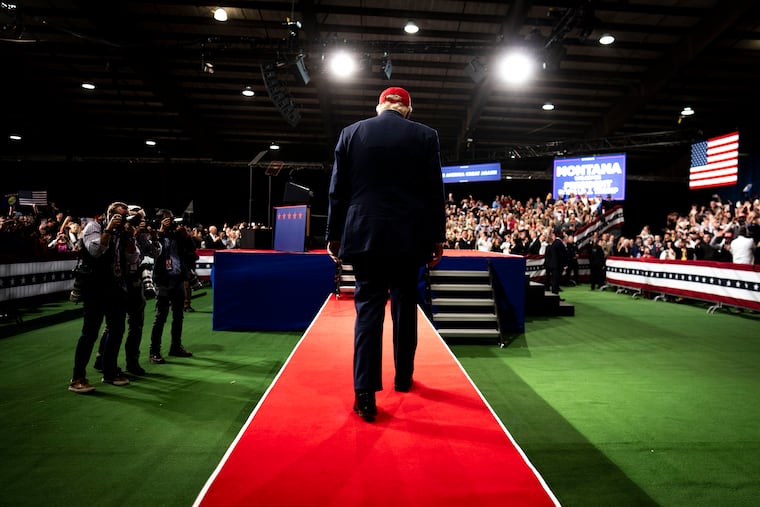
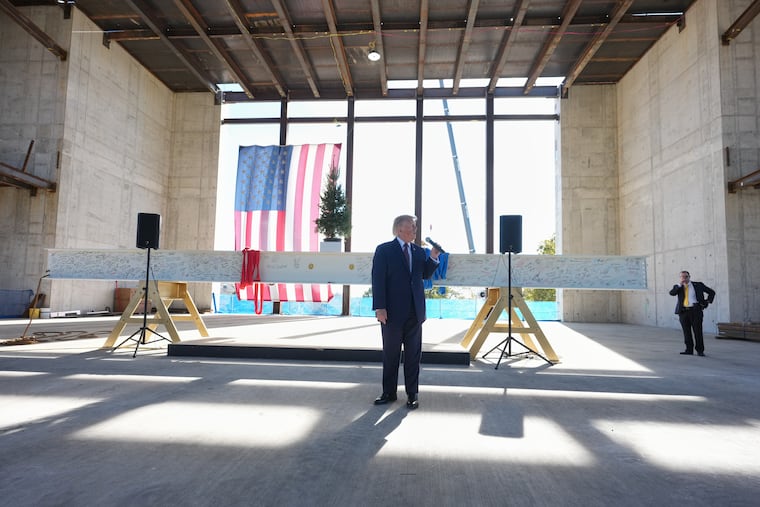
She held a fundraiser at Trump’s Mar-a-Lago resort in March, but when the president visited Pennsylvania months later, Garrity introduced him at the event but he didn’t mention her at all. Trump returned to Pennsylvania in July for Sen. Dave McCormick’s Pennsylvania Defense and Innovation Summit, this time acknowledging Garrity and adding he’d heard “some poll numbers that are very good.”
The visit would be Trump’s last public appearance in the state through Election Day.
(The president met with Garrity at the White House in August, held a telerally for her on Oct. 31, and posted multiple messages of support to social media.)
McCormick, Pennsylvania’s top Republican, held a fundraiser in Pittsburgh for Garrity in May, her campaign said. He also appeared alongside Garrity in Bucks County on the night before the election.
“She is an incredible force for strong government, strong conservative policies, and the contrast with her opponent could not be more clear,” McCormick said. “We are fortunate to have her in the ring as our gladiator.”
But to some, it was not enough.
“She should have had more support. He didn’t come around, at least in Wyoming County,” said Jeannette Kitlan, who serves on the county’s Republican Committee. “It was almost as if the national Republicans just stayed away from Pennsylvania in general, and that was very hard to swallow,” she said.
McCormick’s office did not respond to a request for comment.
Garrity developed a closing message focused on lowering costs, especially property taxes and electricity bills.
“What do we believe in? We believe we should produce energy. We should build things. Create jobs,” she said at her rally on the eve of the election.
Gates, who helped prepare Garrity for the Oct. 7 debate, said she did remarkably well against Shapiro. Donors agreed, and money began to flow in after that, her campaign said.
By that point, it was too late to make a difference.
Ward said she was proud of the campaign Garrity ran, even if she came up short, adding it would be a tough race for any GOP candidate to win.
“If Jesus Christ was on the ballot, and he was a Republican, people would not even vote for him,” Ward said.
Staff writer Anna Orso contributed to this article.