The Washington Post reviewed $1.6 billion of campaign ads. Here are the takeaways.
Republicans have outspent Democrats on campaign ads, nearly $1 billion to $661 million, according to The Post analysis of AdImpact data.
Campaign ads are all about the economy. Republicans highlight immigration and social issues in commercials more than Democrats. But they rarely mention President Donald Trump.
The Washington Post analyzed over 8,000 political ads appearing on television, social media and online for competitive congressional and governor’s races to find out which issues parties emphasized and where.
Republicans have outspent Democrats on campaign ads, nearly $1 billion to $661 million, according to The Post analysis of AdImpact data. Republican groups spent the most on Ohio’s Senate race, pouring $138 million into ads supporting Sen. Jon Husted (R) in the toss-up race against former senator Sherrod Brown.
This glut of spending has made commercials inescapable for people in battleground states (and sometimes beyond) watching football and the nightly news, or bingeing videos online.
Here’s what The Post found each party talks about and avoids in their advertising.
Everyone’s talking about the economy
Nearly 3 in 5 ads aired in competitive races mentioned the economy, and most of those referenced high costs.
Those ads mentioning wages, housing, affordability and other economic issues totaled $920 million, almost evenly split between Republicans and Democrats.
This focus makes sense in a midterm election defined by affordability and cost-of-living consistently ranking the greatest voter concern. Notably, Republicans are acknowledging that economic conditions are poor even though they control the White House and Congress. But the parties focus on different aspects of a tough economy.
Democrats’ ads emphasize expenses: They were three times more likely than Republicans to mention the cost of groceries and twice as likely to mention gas prices.
“Across the board, Democrats are tying Republican candidates to Trump’s economic policies, which have proven to be very unpopular,” said Trip Yang, a Democratic strategist whose firm is supporting New York Gov. Kathy Hochul (D). “It doesn’t matter if you’re Democrat or Republican, most Americans don’t want to pay higher prices out of their pocket.”
Republican ads emphasize pay: They were eight times more likely to mention wages and tips and were seven times more likely to mention Social Security. GOP ads also attacked Democrats who opposed the One Big Beautiful Bill Act, Trump’s signature domestic policy legislation that cut social services to extend tax cuts and to reduce taxes on tips.
“That’s the real conundrum for Republicans: How do you run on the economy when everybody feels like you’re to blame,” said Mike Madrid, a California-based Republican consultant. “You’re left with trying to get some modicum of success based off of things you were complicit in and voting for, and that’s where you get to the no tax on tips or tax on Social Security. That’s not going to carry the day, but that’s all they’ve got.”
Corruption and government ethics reform is the other top issue
Both Democrats and Republicans have spent big on ads vowing to tackle corruption in Washington or painting their opponents as corrupt. Government ethics reform ranks second in total spending for issues featured in midterm election ads.
Democrats spent nearly twice as much as Republicans on ads tackling the issue, totaling over $306 million.
Texas Democratic Senate candidate James Talarico had two of the highest-spend ads about the issue, both of which said he’d “take on corruption” and champion affordability. About three-quarters of Talarico’s ads, which aired more than 88,000 times, mentioned corruption, including the bribery allegations against his Republican opponent, Texas Attorney General Ken Paxton.
When Republicans talk corruption, it’s usually to criticize their opponents’ voting records or ethics.
Health care is important in some races, not others
Health care was the defining issue of the 2018 midterm elections, in which Republicans suffered heavy losses in the House during Trump’s first term.
Democrats have a broader affordability message this year, but health care still ranks third in issues featured in campaign advertising this election. Unlike widespread advertising on the economy, the $400 million spent on health care ads swings from race to race. On average, Democrats spent more than 1½ times as much as Republicans on the issue. But in 1 in 5 competitive House races, Republicans spent more ad money on health care than Democrats.
Democrats uniformly take the position that health care coverage should be expanded and protected. They have spent $85 million on ads mentioning Medicare or Medicaid, including cuts under the Big Beautiful Bill, compared with $4 million worth of GOP ads mentioning the programs.
Republicans in competitive races are also airing ads on protecting health care, but they also include commercials warning of “socialized medicine” or government takeovers of health care.
Immigration has faded, but is still a top GOP issue
Immigration was one of the top subjects of campaign advertising in the 2024 election and was widely seen as a winning issue for Republicans.
It is no longer a top priority this year, but Republicans still spent $132 million on 416,000 ads about it. Those ads frequently linked immigration to crime and public safety and framed illegal immigration as a threat that required greater use of enforcement measures and border security.
Immigration produced one of the biggest partisan gaps in campaign advertising this year, with the $132 million in GOP ads accounting for 77 percent of the total spend on the topic.
“Midterm elections are largely about base turnout and few issues turn out Republicans better than the immigration issue,” said Alex Conant, a Republican strategist.
While Democrats often criticize the Trump administration’s aggressive mass deportation campaign, they do not air many campaign ads on the issue. When their commercials do mention immigration, they tend to focus on restrictions, with $13 million of ads advocating for securing the border compared with $4 million on pro-immigration ads.
Democrats fixate on Trump, not so much Republicans
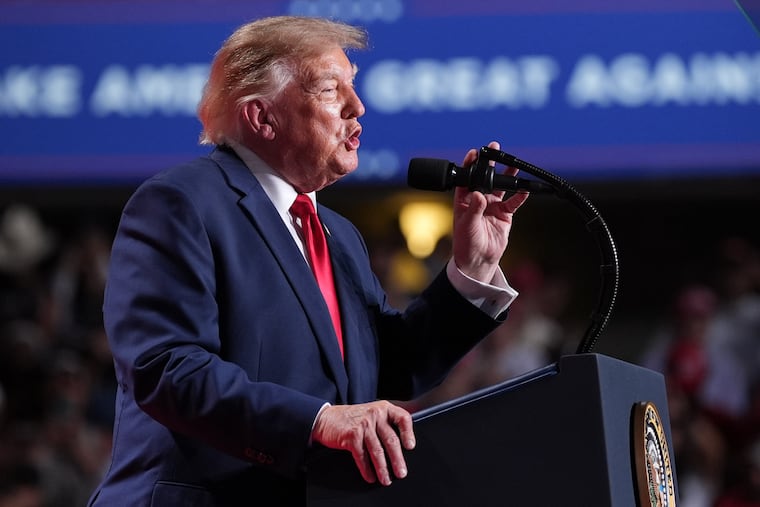
Trump looms large over the midterms. Democrats are hoping voters who broadly disapprove of his performance will punish Republicans on the November ballot, while Republicans are hoping that Trump can help turn out his loyal supporters.
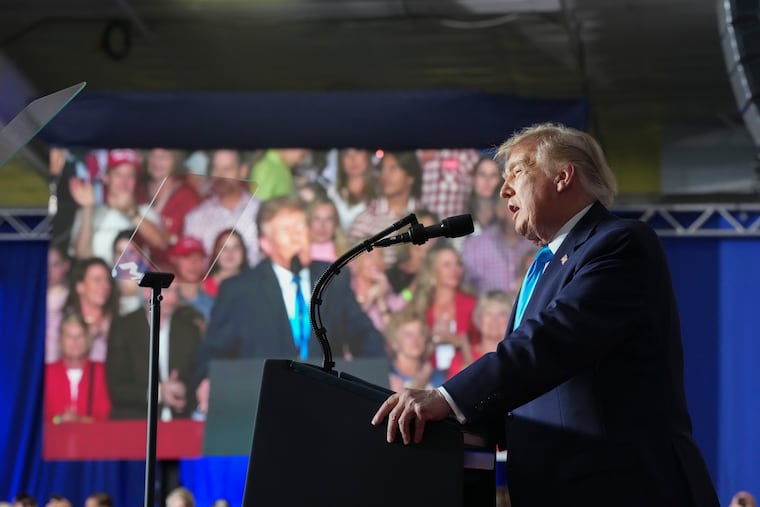
Democrats spent 10 times more than Republicans on ads that mentioned Trump, often aligning opponents with the president or his policies, making it the topic with the largest spending gap between parties. Trump was the fourth-highest spend topic for Democrats, accounting for $111 million, while Republicans spent $11 million.
Republicans are taking an unusual approach to campaign ads about Trump. Republicans are airing about half as many ads mentioning or showing Trump as Democrats. Trump appears in Republican ads in half the competitive races, while Republicans are aligned with him in advertising in less than half the races.
“Trump turns out a lot of Democrats, but he also turns out a lot of Republicans,” Conant said. “So, in districts where there’s more Republicans than Democrats, Trump can be an asset.”