Housing prices are out of control. How much will building more homes help?
The new book "Build or Die" explores the Yes In My Backyard (YIMBY) movement and argues that American cities need to build more homes.

As the housing shortage in the United States has become more acute, a political movement called Yes In My Backyard (YIMBY) has sought to promote policy solutions and advocate for more construction.
That idea cuts against the sense that many city residents have of how gentrification works. New buildings are often understood as driving nearby housing costs up.
Author Ned Resnikoff argues that new housing is, in fact, responding to gentrification that is already taking place, and without construction, neighborhood rents will get even more expensive.
While building more market-rate homes will not create affordability for those in the greatest need, YIMBY advocates argue that it will moderate prices — and prevent lower-income residents from being displaced.
Resnikoff, who was policy director for California YIMBY, has been on the front lines of housing policy fights in Sacramento. He uses that perch to explore why American cities have struggled with growth in the 21st century in his new book Build Or Die, which comes out Dec. 8.
Resnikoff also argues for renewed and more competitive local democracy in America’s cities and for a transportation system that doesn’t center on private automobiles.
This conversation has been edited for length and clarity.
Many people don’t believe that an abundance of new homes will lower prices the same way it does for other goods. What would you say to those skeptics?
Homes occupy a different space politically and emotionally than the vast majority of consumer goods. We’re in this weird situation where housing is very often primarily an investment vehicle for homeowners, but at the same time, it’s their actual home.
It’s not like a car or a phone that you expect to depreciate over time, and then you’ll drop it and get a new one. That personal connection can complicate our understanding of the underlying economics of housing and how it’s similar to other consumption goods.
Then there is the time scale that changes in the housing market operate on and the sequencing of when new housing starts to go up and what effect it is having on prices and what prices are having on housing construction. It makes the causality harder to see.
You argue that healthy cities need more housing development and that this would boost many progressive goals such as fighting homelessness. That’s a counterintuitive idea to many people.
If you live in a neighborhood that is getting more expensive, then you’re probably going to see new construction going up well before rents starts to go down. A lot of that new construction is probably going to be nicer and shinier than the existing housing.
And depending on how much new construction actually happens, it might not cause rents to drop. It might just slightly slow the rate at which rents would otherwise increase.
As a result, it’s very easy and understandable to say, “Oh, all these new buildings are going up, and my rent is going up.” So the causal connection must be that these shiny new luxury buildings are causing my rent to go up.
When, in fact, the causal relationship is more the reverse: The fact that an area is seeing more demand pressure creates a market opportunity for developers.
What about the sheer scale of construction that would be required to bring affordability to a city like New York? 700,000 new homes over the next decade sounds like an unimaginable number.
Sometimes people think, oh well, New York or San Francisco is always going to be expensive. But that wasn’t always the case with those cities.
Really high-cost cities for the foreseeable future are going to be more expensive than midsize cities in the United States, but the vast gulf in housing costs between, say, New York City and a Raleigh, N.C., is not a permanent fact.
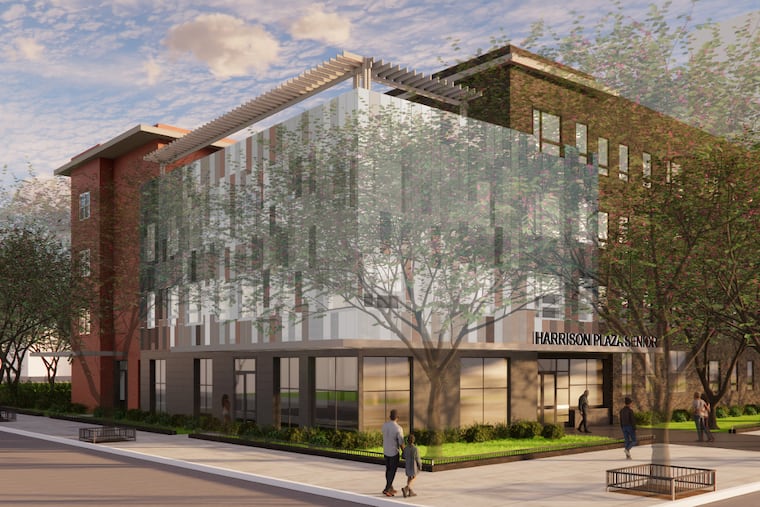
It’s hard to conceptualize the scale, and so as a result, when people, for example in New York, see new pencil towers going up on Billionaires’ Row, they think, Oh wow, that’s so much housing, and it’s clearly not having an impact on my rent.
But in the context of a metropolitan area the size of the New York, a handful of mega projects in Manhattan is actually not all that much housing.
How does the YIMBY theory apply in a city like Philadelphia, which is still 500,000 people under its 1950 peak? Some neighborhoods are seeing strong growth, but others are still losing population.
A couple other cities that come to mind in that in-between zone would be Pittsburgh and Chicago. These are dense, fairly vibrant cities with growing populations, but for better and for worse, they don’t have the “superstar” status.
The way to think about housing policy in those cities is with a combination of different interventions, some of which are more relevant to declining Rust Belt towns and some of which are more relevant to “superstar” cities.
With a growing population, the things that really help a city grow in a deliberate, net positive way are things like building more housing, continuously improving transit, making sure that there’s room for new amenities and small businesses to accommodate residents.
Then for the areas where you have declining populations, it’s a combination of focusing on housing preservation, so that the existing housing stock is not deteriorating.
And then, really thinking about economic development, and how can those areas benefit from the overall city growth?
What else could help?
To the extent that these areas are cut off by freeways, I’m a big proponent of tearing down all inter-urban freeways and making sure that there’s good transit connectivity to the central city for those areas and that there’s economic development happening there.
That could involve new housing construction, but it could also involve investment in local businesses and local amenities and trying to make sure that as the central city grows and becomes wealthier and denser and more affluent, that that has positive spillover effects for everyone else.