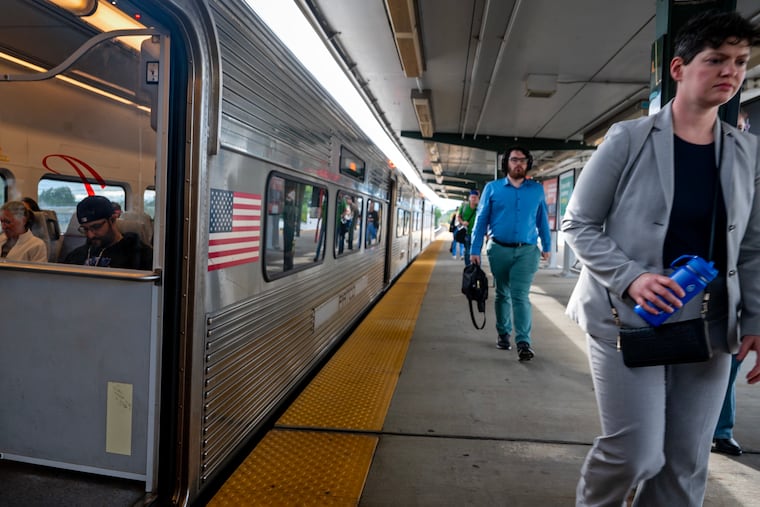
Rising water bills have added to the squeeze on American households
U.S. drinking-water bills rose about 62% over the past decade, according to a report. AI data centers are emerging as another potential expense for water utilities and ratepayers.
Water is becoming less affordable for American families as aging infrastructure, pollution rules, and climate change push household bills higher — with the artificial intelligence boom adding new pressure on some local water systems.
U.S. household drinking-water bills rose about 62% over the past decade, according to a report released Tuesday by Food & Water Watch, an environmental advocacy group. That increase compares with a roughly 39% jump in overall consumer prices and a 30% rise in grocery prices over roughly the same period, the report says. Water costs also outpaced growth in household income.
Food & Water Watch determined that water bills were unaffordable for low-income households in nearly all the systems it analyzed. “An unaffordable bill is often an unpaid bill,” said Mary Grant, water policy director at Food & Water Watch. Customers who fall behind can face shutoffs or, in some jurisdictions, liens on their homes, she said.
The group also found that charges varied enormously. Two large West Virginia systems — both owned by the same private company — billed customers for an average of $1,383 a year. But for customers of three large water systems in Idaho, the annual average was $286, about one-fifth as much.
Food & Water Watch collected rate information from 500 of the nation’s largest community water systems, serving 155 million people in total. The group then compared the results to those of its last water study, conducted a decade ago. It was able to do an apples-to-apples comparison between 452 systems in 2015 and 2025, after accounting for consolidations and other changes in the sector.
Differences in water sources, infrastructure age, and system size can contribute to the variation in cost. So can ownership. For-profit systems charged more than publicly owned utilities, the report authors found. Private systems — which accounted for about 11% of the systems studied — were disproportionately represented among the most expensive.
But private and public systems alike had common troubles: “It’s aging infrastructure. It’s federal disinvestment,” Grant said. Dealing with chemical contamination and adapting to drought, storms, and wildfires is expensive, she added.
A historic infusion of federal water money is set to run out: The 2021 Bipartisan Infrastructure Law provided roughly $50 billion over five years for U.S. water infrastructure. In the 2027 fiscal year, funding is expected to fall by about 63%, to $8.6 billion from $23.4 billion last year, according to an August report by Bluefield Research, a global water market-data firm.
The Trump administration is also proposing to sharply reduce the longstanding state revolving funds that help finance local water projects. Demand to access those funds already exceeds available money in some places, Grant said.
Roughly in line with the Food & Water Watch data, Bluefield Research found that combined water and sewer bills across 50 major U.S. cities rose 24.2% between 2020 and 2025 and that water bills alone rose 6% just from 2024 to 2025.
Food & Water Watch defines drinking-water costs as unaffordable if they reach 1.5% of household income. Megan Bondar, an analyst at Bluefield who specializes in U.S. and Canadian water utilities, noted there isn’t a standard affordability threshold. The Environmental Protection Agency, for instance, considers households that spend 3% to 4.5% on water and sewer services to have a “high water burden.”
Meanwhile, AI data centers are emerging as another potential expense for water utilities and ratepayers. However, Grant said her group hasn’t yet identified communities where data centers have demonstrably increased residential water bills.
Because water infrastructure is often financed over decades, “the impacts will be slower to hit than on the electricity side,” Grant said. Bondar agreed that the full effect will take time to emerge. More than 97% of the water used by major data center operators is purchased from municipal drinking water systems, according to Bluefield research.