Penn Medicine and Wills Eye Hospital in talks about forming an ophthalmology partnership
Aligning with Penn would be a significant change for Wills from its long affiliation with Jefferson. Wills, the only remaining independent eye hospital in the U.S., has been losing money for years.
Penn Medicine’s Scheie Eye Institute and Wills Eye Hospital — which has struggled financially for years — are in talks about forming an ophthalmology partnership, according to a message this week to employees from Wills CEO and ophthalmologist-in-chief Julia A. Haller.
The note to employees Tuesday said Wills and Penn had signed a preliminary deal for a joint operating agreement. The two sides will now “conduct due diligence, and evaluate opportunities to strengthen collaboration in patient care, research, education and training,” Haller’s message said.
“I want to assure you that this process will be very deliberate, and that Wills Eye Hospital will remain an independently licensed hospital, will retain its name and brand, and will remain a trust of the City of Philadelphia, with its current board leadership,” the employee message said.
Penn said in an email that the partnership talks will consider whether bringing Wills and Penn’s ophthalmology department “could expand access for patients, accelerate research and innovation, strengthen education and training, increase the organizations’ collective impact in ophthalmology.”
Wills and Penn both noted the possibility that they won’t reach a final agreement.
Haller’s communication with employees did not mention Wills’ long affiliation with Jefferson Health’s Thomas Jefferson University Hospital. Jefferson’s Sidney Kimmel Medical College sponsors Wills’ ophthalmology residency program, which has 24 participants, according to the Accreditation Council for Graduate Medical Education.
“We are disappointed that Wills Eye has decided to end our longstanding relationship and pursue a different path after more than 50 years of partnership,” Jefferson said in an email. Jefferson, the region’s largest health system, said it will “pursue partnerships and growth opportunities that expand access to high-quality eye care across the region.”
Potential turning point for Wills Eye
Wills, founded in 1832 and controlled by a board that oversees bequests to the city, has logged at least 11 straight years of operating losses. Its leading competitors nationally are owned by larger health systems or universities.
Wills reported $109. 8 million in revenue and a $15.9 million operating loss in the 12 months that ended June 30, 2025. Results for fiscal 2026 have not yet been made public.
An agreement with Penn would mark a significant turn for Wills, which has been affiliated with Thomas Jefferson University Hospital in Center City since 1972, according to a timeline on Wills’ website. It functioned as the hospital’s ophthalmology department, with Haller as chair, but that role for Haller has ended.
Jefferson said Thursday it appointed Robert Sergott, a neuro-ophthalmology specialist, as interim chair of ophthalmology at Sidney Kimmel Medical College at Thomas Jefferson University, effective immediately.
It’s not clear how other aspects of the Wills-Jefferson relationship will be impacted.
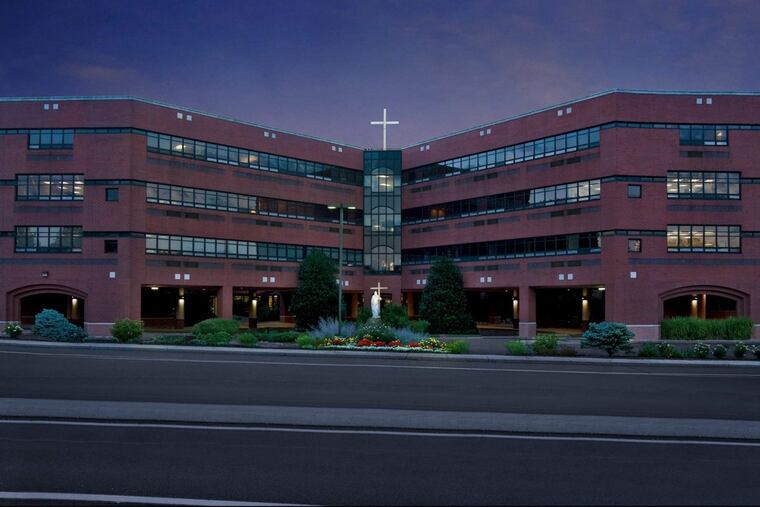
Patients who need a higher level of care than Wills can provide in its four-bed inpatient unit at 840 Walnut St. will stay at Jefferson. The Wills Eye emergency department is in the Jefferson Hospital for Neuroscience, a former Wills Eye Hospital location across Ninth Street from Wills.