Gov. Hochul declares a measles emergency as cases rise in rural New York
As of Saturday, 108 measles cases had been reported across the state this year, the most since 2019, when New York was the epicenter of a national outbreak.
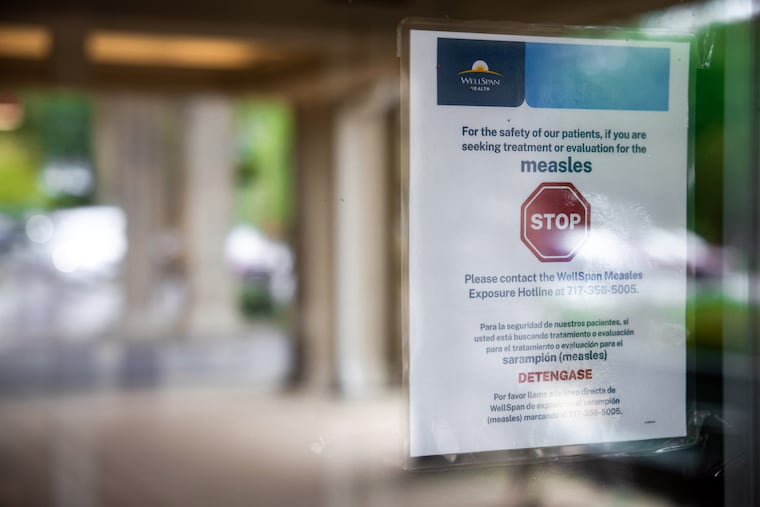
Gov. Kathy Hochul declared a statewide health emergency in New York on Monday as measles cases increased dangerously across rural counties where vaccination rates have lagged.
As of Saturday, 108 measles cases had been reported across the state this year, the most since 2019, when New York was the epicenter of a national outbreak. Most of the cases are in rural areas, concentrated in the Finger Lakes region.
Hochul’s declaration will relax rules about who can administer vaccines to make it easier for midwives, pharmacists and other healthcare workers to give shots to prevent measles.
“After reviewing the latest data on measles cases in New York state, I am declaring a state disaster emergency to strengthen our ongoing efforts to confront this disease,” the governor said. “No one should get seriously ill or die from a vaccine-preventable disease.”
The United States is experiencing a resurgence in measles, driven by declining vaccination rates, with case counts soaring in 2026. Across the nation, 3,887 cases have been recorded this year, by far the highest in more than 30 years. South Carolina and Utah have been especially hard hit, along with Pennsylvania, which has had more than 1,000 cases and five deaths, state officials say. The virus has torn through Amish communities where vaccination rates are especially low.
Three counties, including Seneca and Steuben, both in the Finger Lakes, account for about half of New York’s measles cases. Otsego County, best known for the National Baseball Hall of Fame and Museum in Cooperstown, has had 20 cases this year, the most of any county.
New York City has registered seven cases this year, which is not an unusually high number.
No one has died from measles this year in New York state, the state Health Department said.
In an August advisory, the Health Department said that a few cases involved New Yorkers who had traveled to other states but others were locally transmitted.
Measles is one of the most contagious diseases, spreading when someone who is infected coughs or sneezes. The virus can linger in droplets suspended in the air for up two hours indoors. Known for its telltale rash, measles can lead to pneumonia and swelling of the brain, resulting in blindness. Babies who are too young to be vaccinated are particularly at risk.
Measles was largely eradicated from the United States a quarter-century ago. Cases had begun to drop precipitously after a second vaccine dose became routine following a 1989 outbreak. But vaccination rates have declined amid fears that the MMR vaccine — which protects against measles, mumps and rubella — might be linked to autism. Dozens of scientific studies have debunked that claim, finding no association between the shot and autism.
The coronavirus pandemic and mandatory vaccination policies also fueled skepticism toward vaccines. Robert F. Kennedy Jr., the Trump administration’s health secretary, has waged a campaign against them that has further weakened public confidence in immunizations.
In the New York counties with the most measles cases, fewer than 80% of children had received their first dose of the measles vaccine by the time they turned 2. In most counties in the state, more than 80% of children had received their first dose by then.
In a few places, vaccine coverage is much lower, including in sparsely populated Yates County, where the rate is about 53%. Yates County has logged three cases this year.
The surge in cases appears to have led to a last-minute effort by some families to get vaccinated. A Health Department bulletin noted that reports of new infections “have prompted some previously unimmunized individuals to request vaccination.”
The U.S. Centers for Disease Control and Prevention recommends that children get their first dose of measles vaccine at 12 through 15 months, with a second dose between ages 4 and 6. Some families delay vaccination until children are older.
“This is entirely preventable, and we know the vaccine is safe,” said Dr. Howard Markel, a retired pediatrician and leading historian of epidemics and quarantines. As more families opt out of vaccinating their children — or delay it by a few years — communities grow more vulnerable to a measles outbreak.
“You’re seeing what happens when you start poking holes in the net,” said Markel, whose books include “Quarantine!” about New York epidemics.
New York’s rules that require vaccines for school attendance are among the strictest in the United States. They do not allow students to opt out of vaccinations for religious reasons. That may change. Last year, the U.S. Supreme Court signaled it may favor loosening New York’s requirements.
This article originally appeared in The New York Times.