Students who moved out of the country were put back on Philly schools’ rolls
The reenrollment came just before an important funding deadline, as the district was grappling with lower-than-projected enrollment citywide.
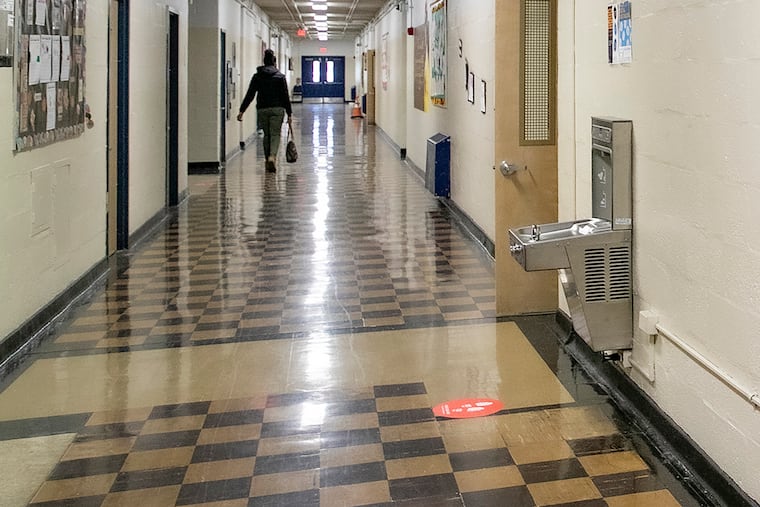
Just before an important funding deadline, the Philadelphia School District reenrolled students who had been dropped from school rosters — students who, in some cases, had moved out of the country months prior, and have not attended a single class this year.
The move came as the district grapples with lower-than-projected enrollment citywide. District schools were 4,236 students under their projected enrollment as of Sept. 17, according to internal documents obtained by The Inquirer.
It follows an extraordinary push last month: Superintendent Tony B. Watlington Sr. had some school and central-office staff, including assistant superintendents, knocking on doors to try to get pupils back.
Then, last Wednesday, several principals said, schools received an email from the district’s office of student enrollment and placement saying that some students were added back to their rolls. Numbers varied, but these were often children who had moved out of state or out of the country, and in many cases, their families had informed the schools they would no longer attend.
One principal said no student added back at their school had attended a single day of school this year.. The principal asked to have their name withheld because they were not authorized by the district to publicly discuss the matter.
The email, which came the day before the Oct. 1 deadline for reporting enrollment to the Pennsylvania Department of Education for funding purposes, said the students had been “improperly dropped” and to actually remove a pupil from the school’s rolls, more documentation had to be provided.
In the case of the principal’s school, virtually all of the students reenrolled have left the state or country, and their families have not responded to requests from the school to confirm their new placement, the principal said.
The principal, and others, said they believe a desire to stem the district’s enrollment loss is behind the new insistence on adding back these children. In the past, district officials did not push back when a principal said a child’s parent had said the student left the country but did not provide documentation supporting the claim.
“They’re just cooking the books,” the principal said of district officials. “They’re telling the state we have all of these kids enrolled that have not been to school a single day, and telling me to put them through truancy. If we weren’t missing 4,000 kids, all of this would be moot.”
District officials said in a statement Friday that 2,000 students citywide were wrongly dropped from school rolls this year, and that the office of student enrollment and placement worked to “re-enroll 720 improperly dropped students, in accordance with state guidelines.”
Watlington has ordered additional review of these 720 students’ records, said Alexandra Coppadge Wright, a spokesperson, while staff work to locate the students, “acquire correct documentation, or begin the truancy process.”
“I want to thank our educators for their hard and strategic work to account for children who were enrolled in district operated schools last year, but did not show up during the first 26 days of school, because dropping out of school is a life or death issue,” Watlington said in a statement. “I also expect our team members to follow the rules of the Commonwealth of Pennsylvania and our board policy.”
What do the state and school board say?
Pennsylvania requires students to attend school between the ages of 6 and 18.
According to the school board policy, “no student of compulsory school-age shall be permitted to withdraw without the written consent of a person in parental relation and supporting documentation."
Exactly what documentation is required is not spelled out, but confirmation from the student’s next school is the gold standard, along with a district form. In some cases, when a student moves out of the country, a copy of a plane ticket may be offered.
But some families don’t bother sending documentation — especially in cases where immigration status is an issue. In other instances, students may be enrolled elsewhere, but have not informed the school where, there’s no paper trail, and the families have stopped responding to requests for records.
Making sure every student is accounted for is a worthy goal, said the principal and a half dozen others who spoke to The Inquirer.
“It’s a fine policy to have, but what do you do with families that are noncompliant?” said the principal. “How on earth are you going to track down families that are afraid of ICE that may not even be in the country anymore? Do you want me to clean numbers, or do you want me to have kids on the books that aren’t there?”
All the principals who spoke to The Inquirer described similar circumstances. All asked to remain anonymous because of the sensitive nature of the matter.
No policies have changed, said another veteran principal. What’s changed is the practice.
“It used to be, if you got an email from a parent saying, ‘We’re moving,’ that was enough. Now they’re saying it’s not enough,” said the second principal.
The second principal said the reenrollment is worrying.
“This is bad,” the second principal said. “They know those kids don’t exist. They’re doing this so we don’t lose the funding.”
Adding students who have left the state or country affects schools’ attendance, a focus of Watlington’s, but it will also mean an additional burden for an already overtaxed truancy system, several principals said.
“Truancy court has too many students already,” said a third principal. “We’re going to clog up the process with kids who we know are in their home country.”