Jalen Carter, Jordan Davis and an Eagles D-line that was torn apart by the Cowboys
The early returns on the contracts that Carter and Davis signed in the offseason suggest that hubris might have prevented general manager Howie Roseman from realizing his mistake.
There’s an allegory about an old weaver who set out to create a tapestry that would last a thousand winters. He possessed the finest material to craft the fabric, but halfway into his weaving a single thread frayed.
He noticed the flaw, but rather than undo three days of work, he continued on. When the cloth was finished the pattern was beautiful, but when the weaver hung it, the weight of the air caused it to rip down the seam and fall apart.
» READ MORE: Eagles drop fifth straight; porous defense struggles to get off field in 38-21 loss to Cowboys
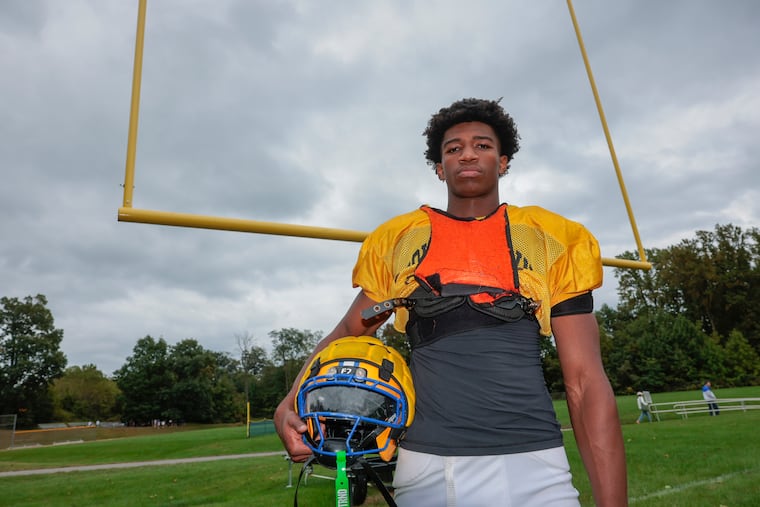
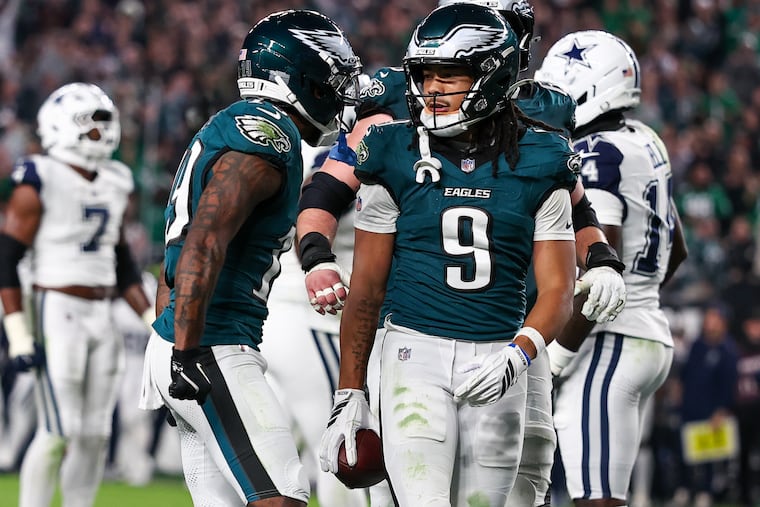
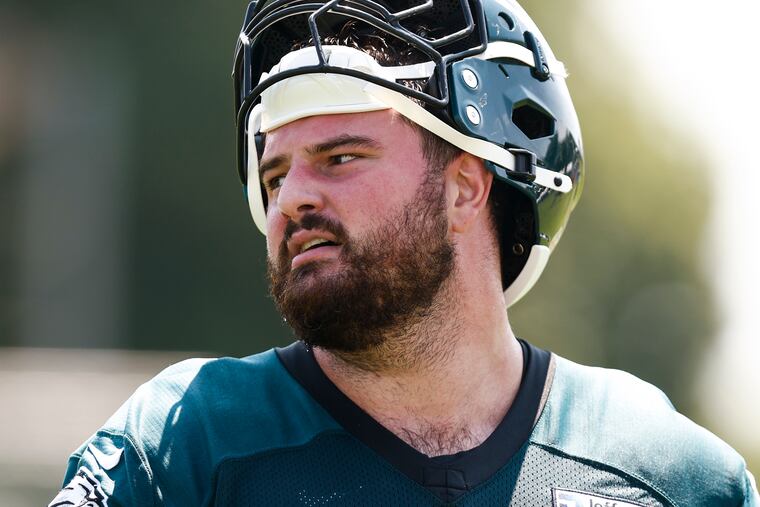
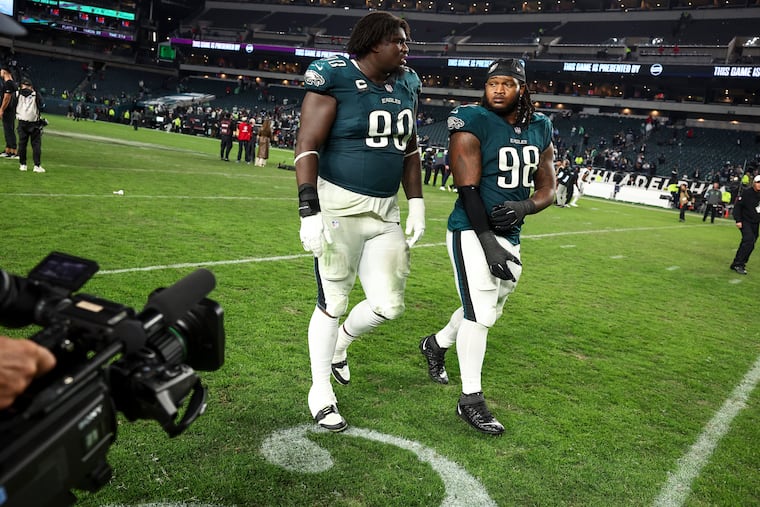
The performance of the Eagles’ defensive line vs. the Cowboys on Monday night wasn’t a sudden failure. The unit has been unraveling for some time now. Howie Roseman built its core through the first round of the draft and has since handed out massive extensions to defensive tackles Jalen Carter and Jordan Davis.
Both have been a significant part of the Eagles’ recent success and both may end up justifying Roseman’s confidence in their futures. But the early returns on the contracts that Carter ($152 million) and Davis ($78 million) signed in the offseason suggest that hubris might have prevented the general manager from realizing his mistake.
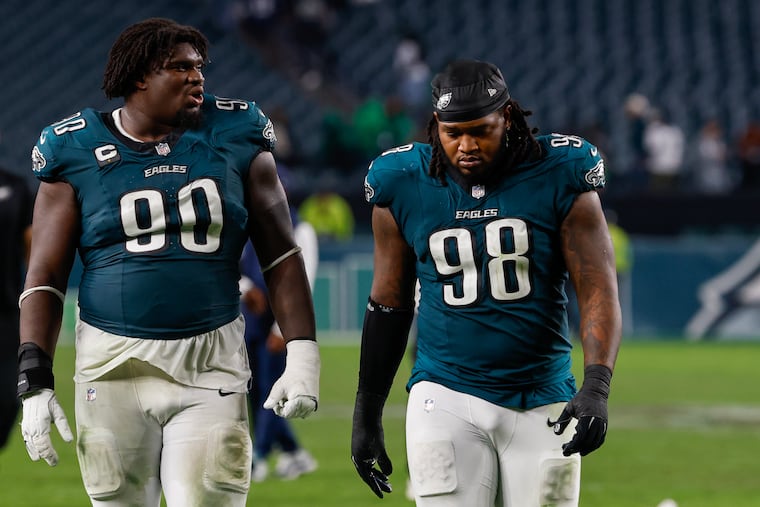
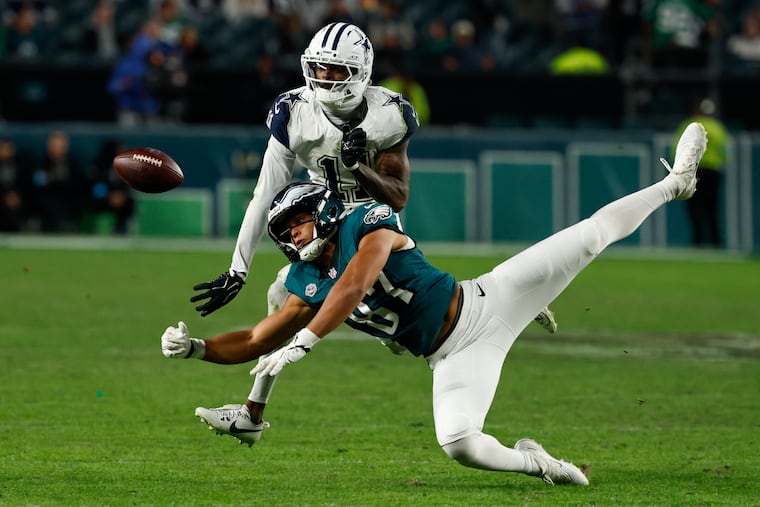
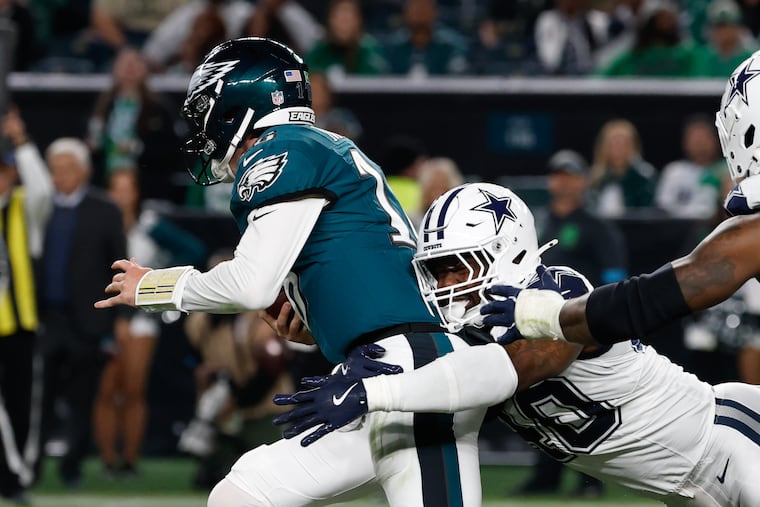
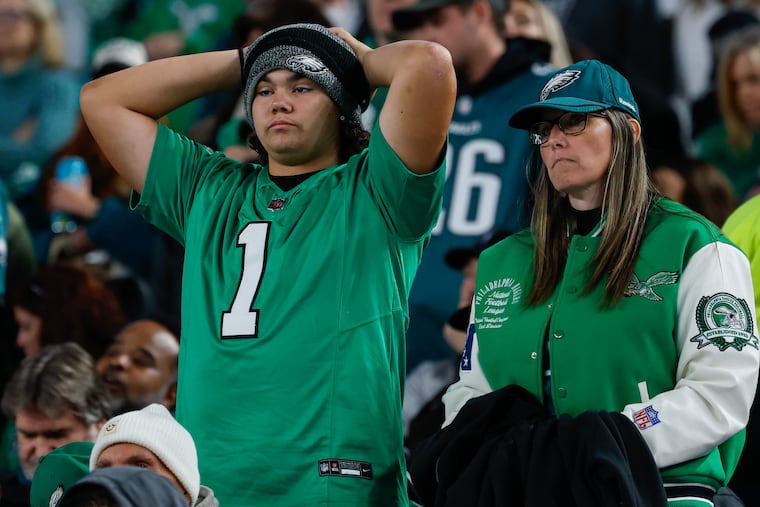
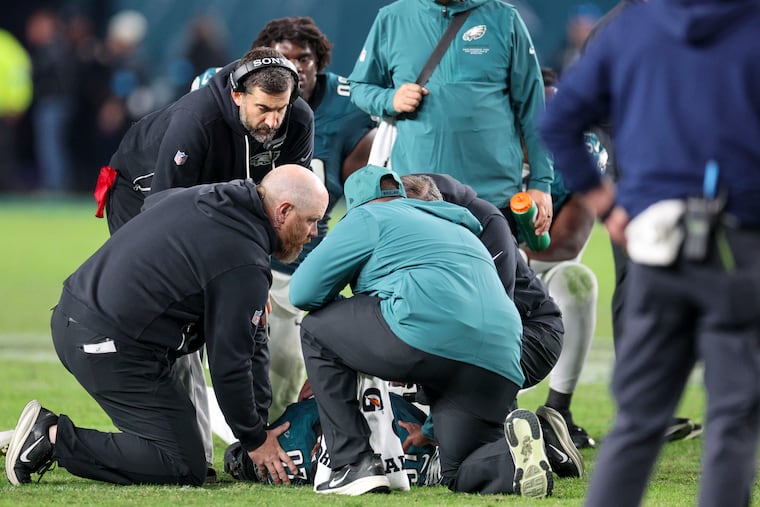
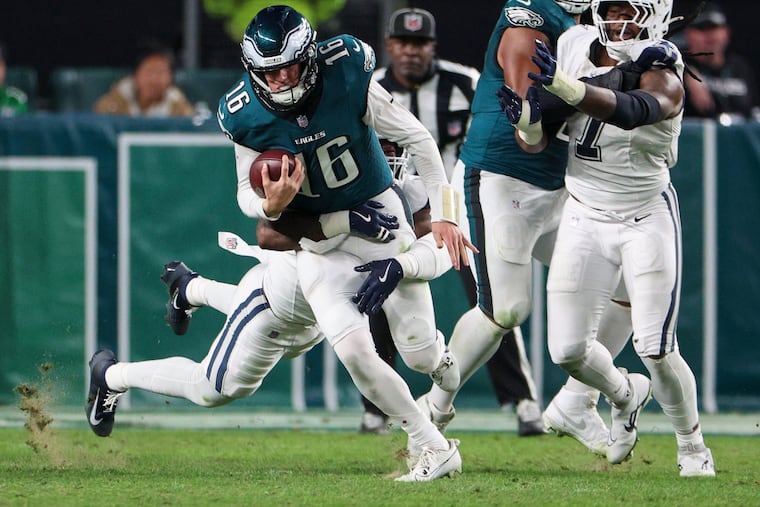
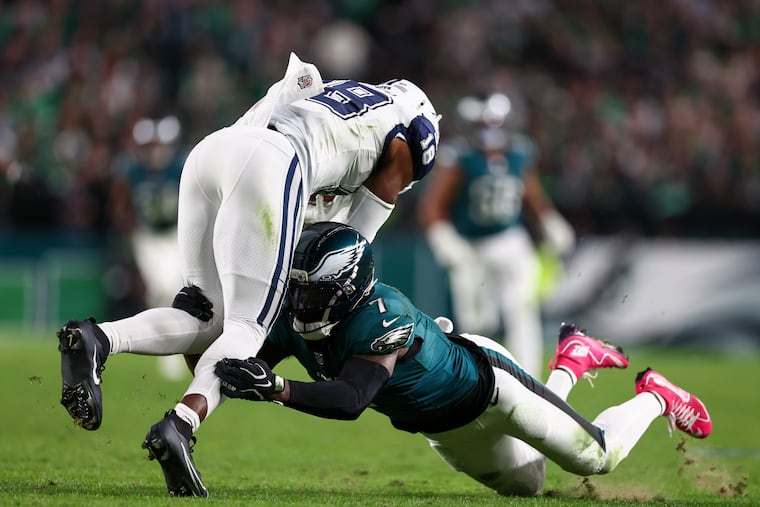
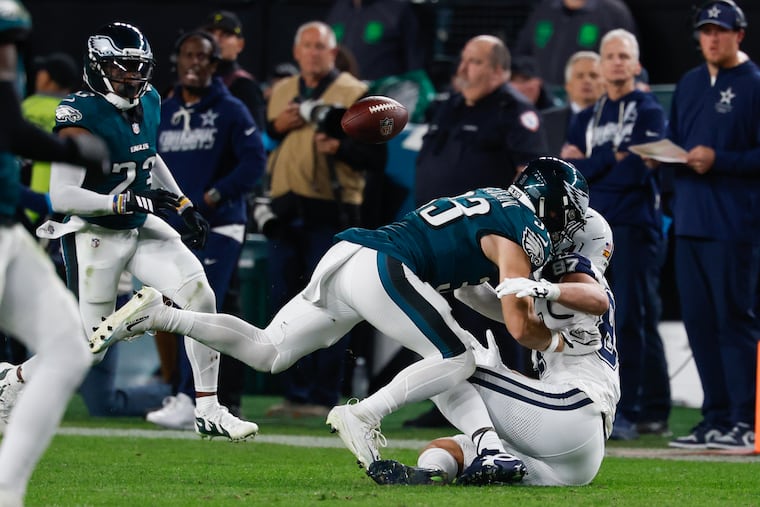
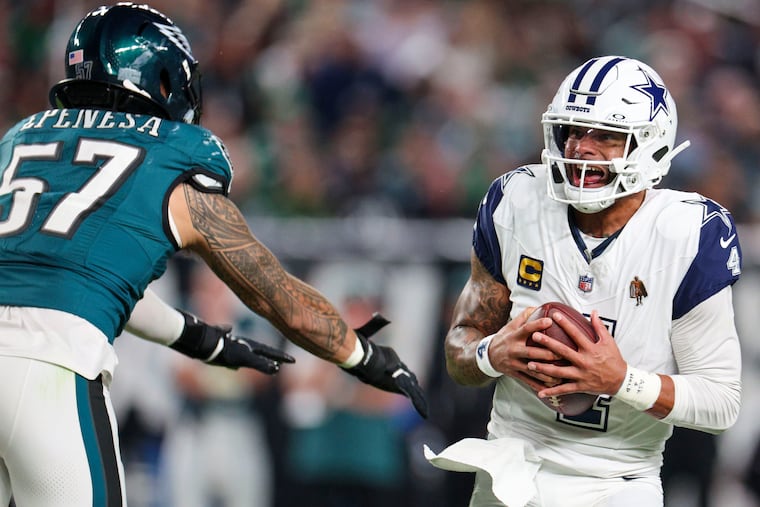
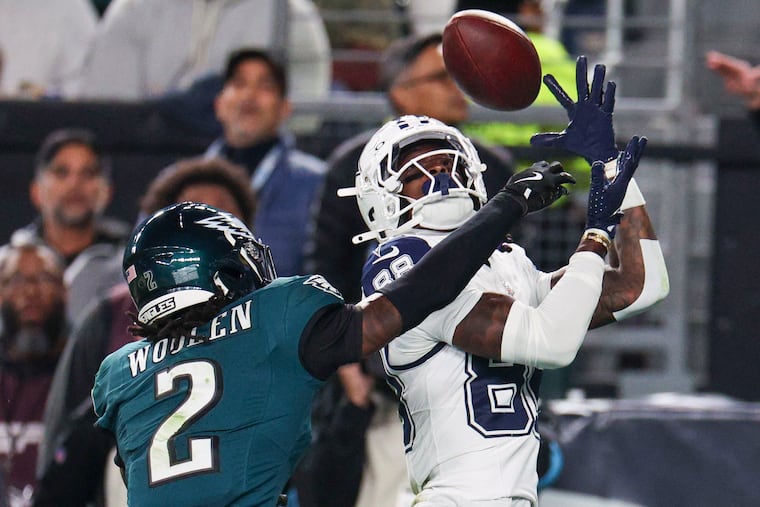
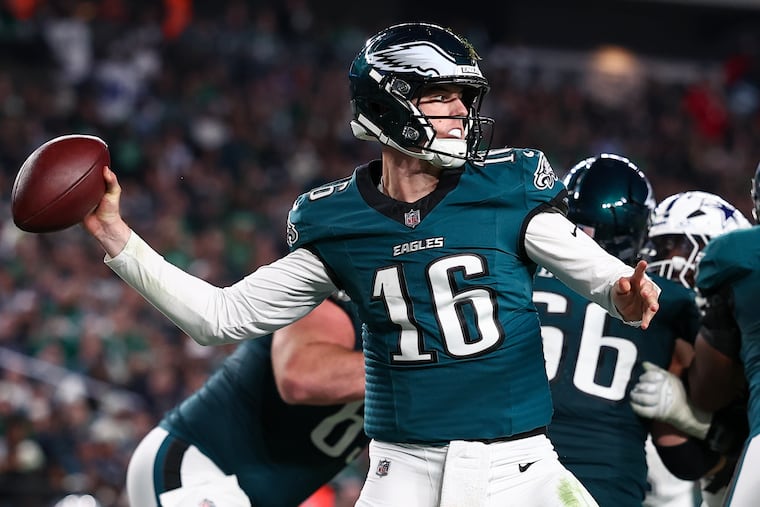
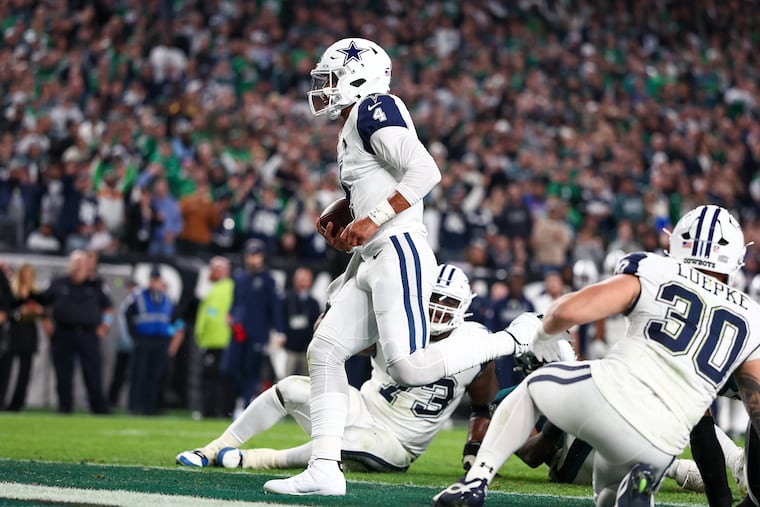
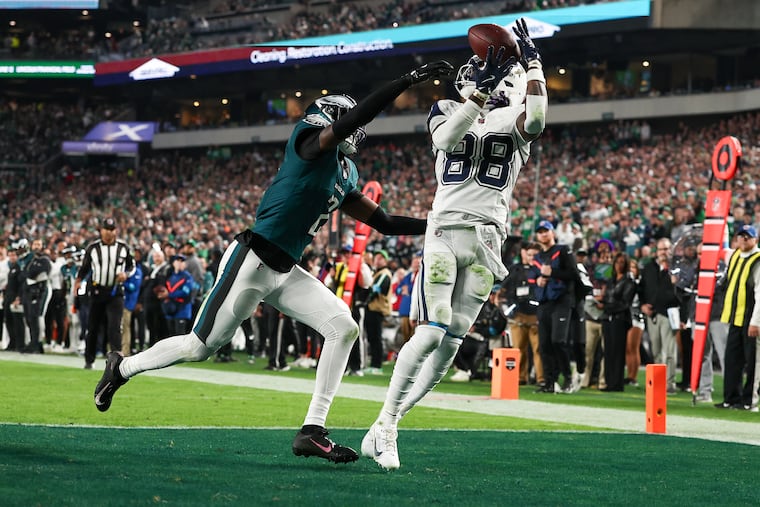
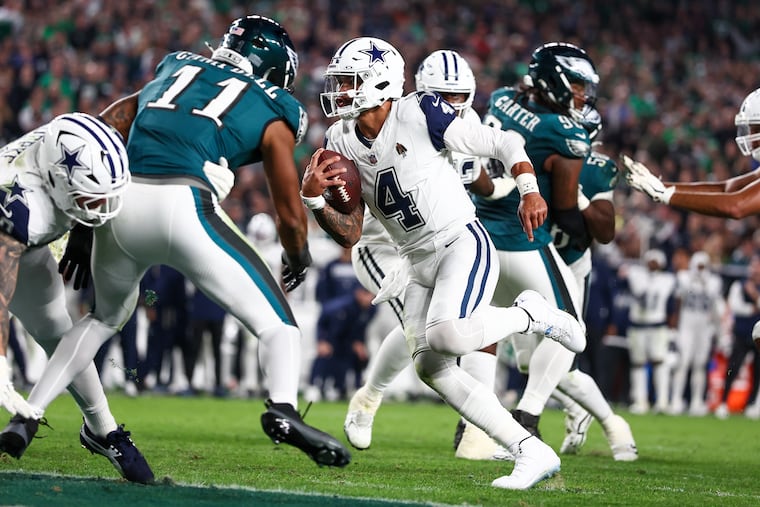
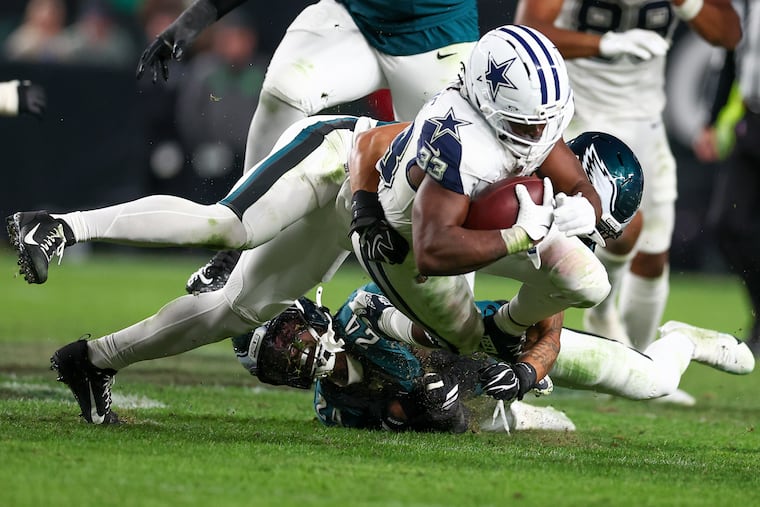
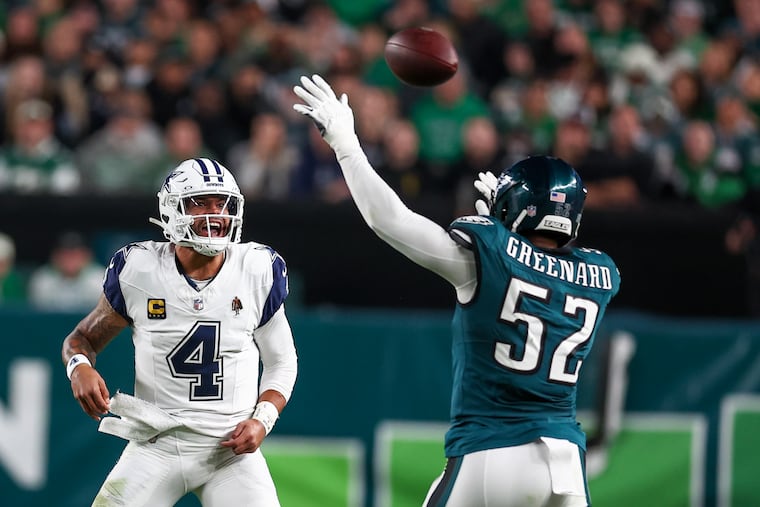
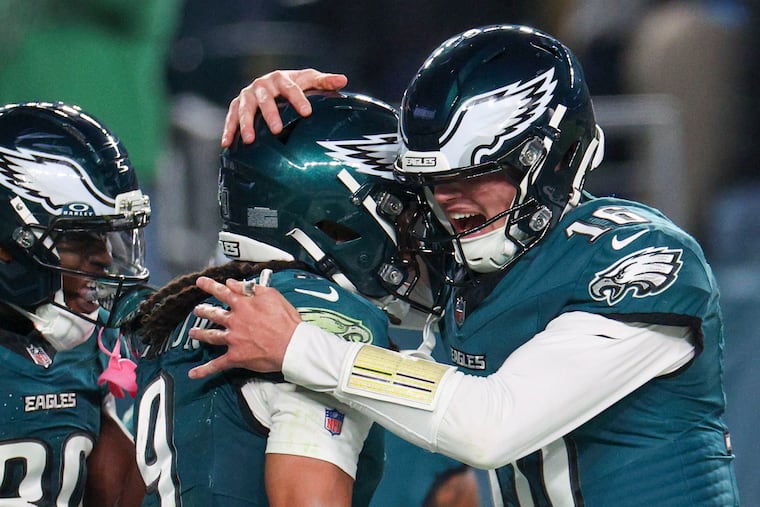
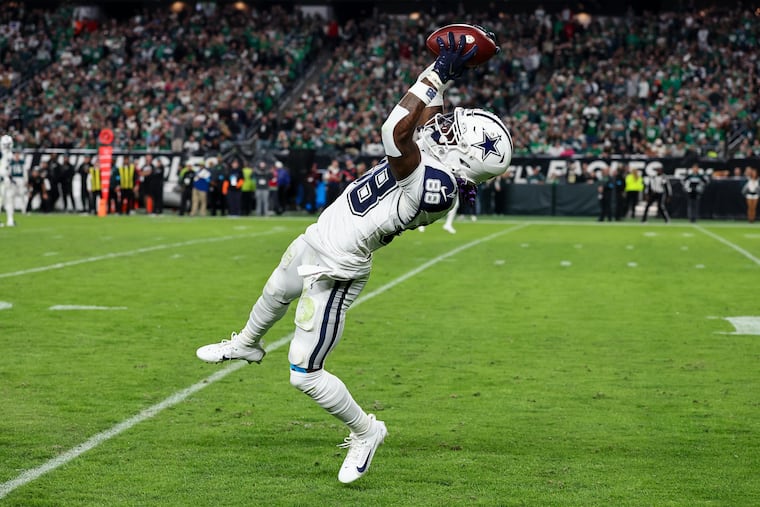
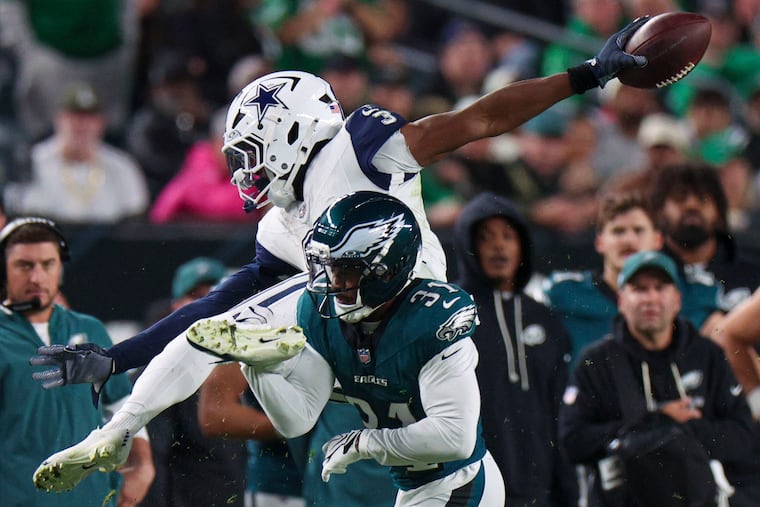
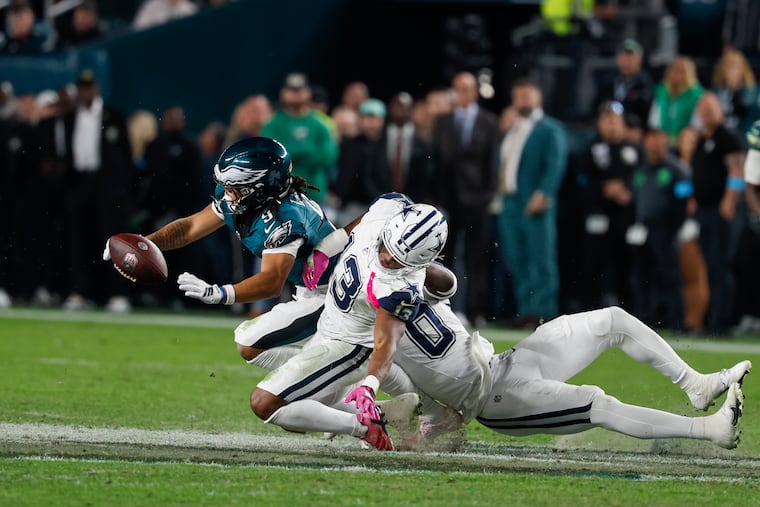
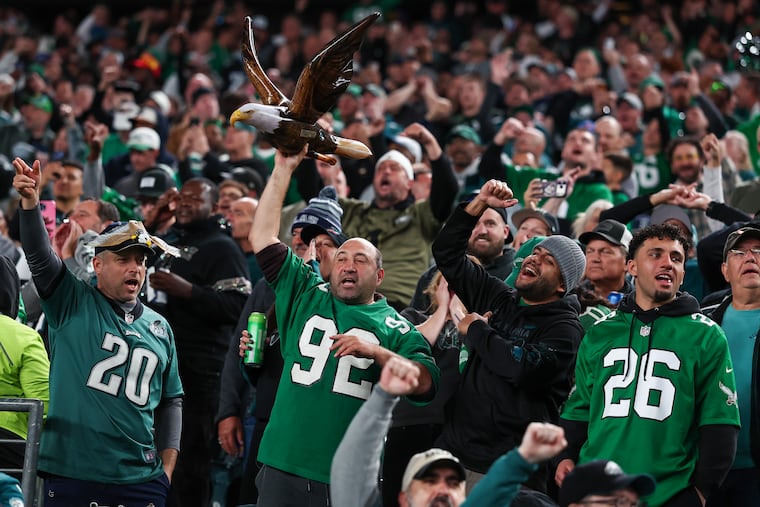
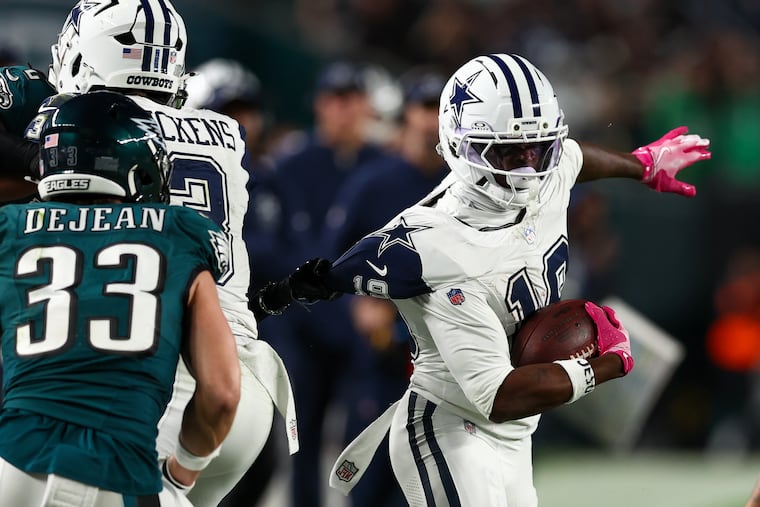
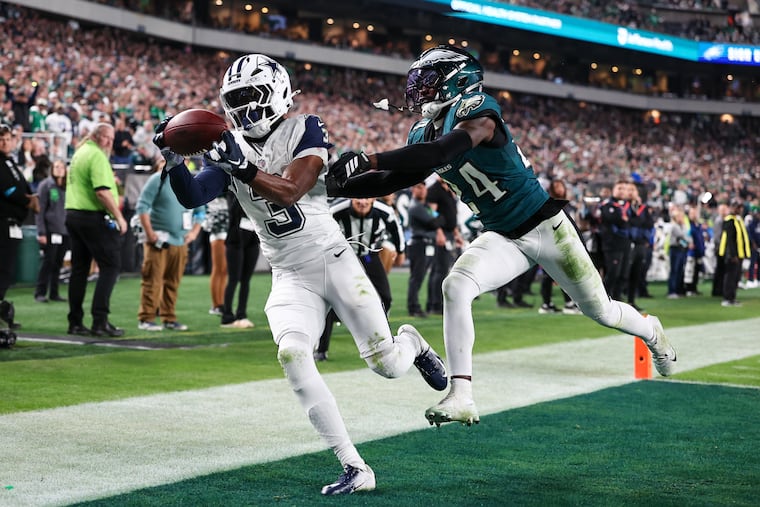
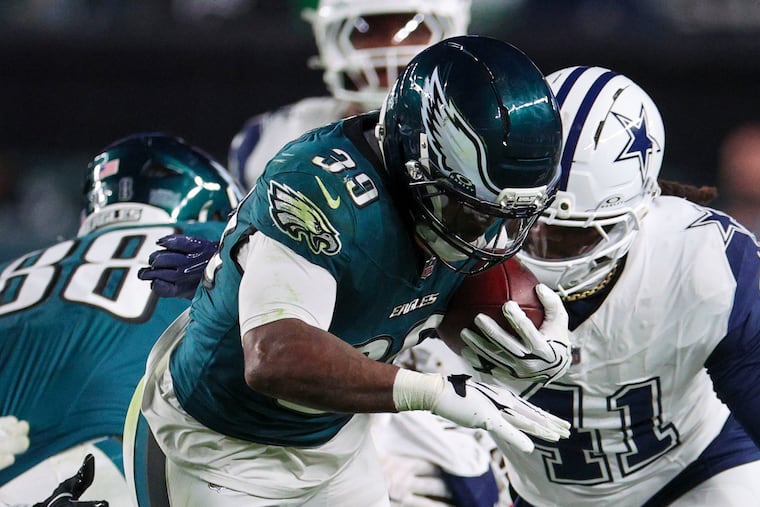
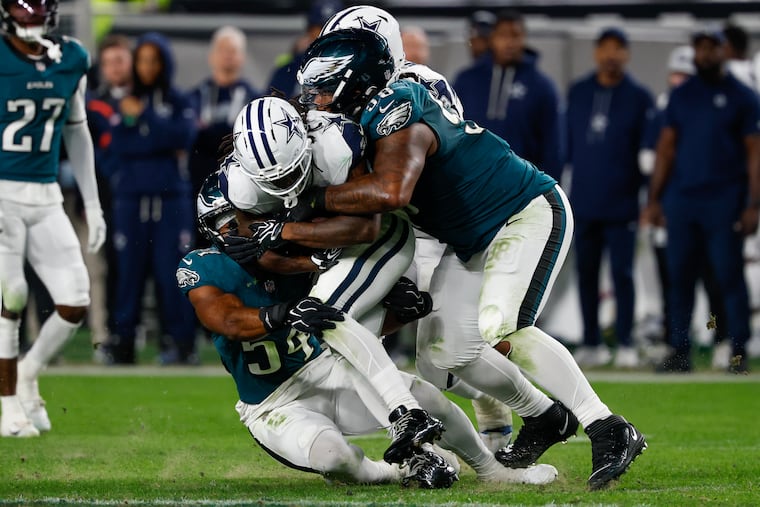
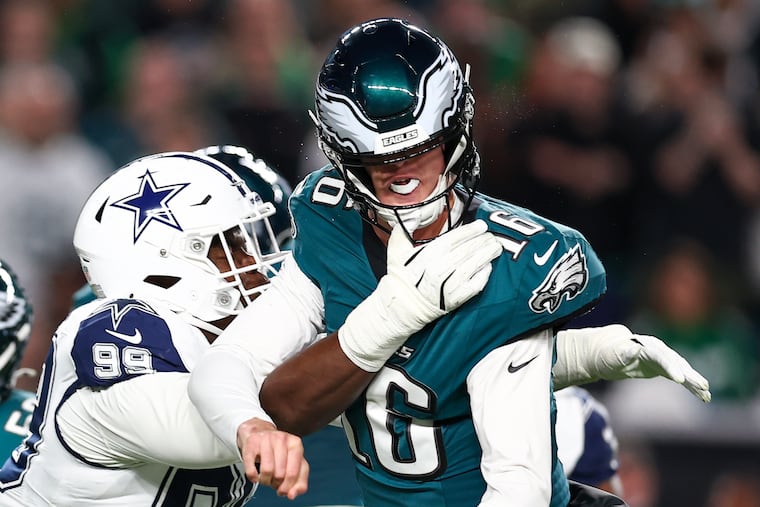
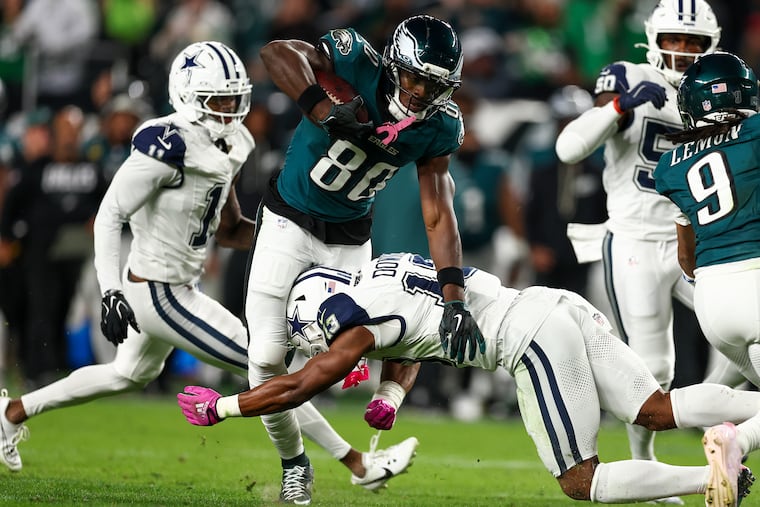
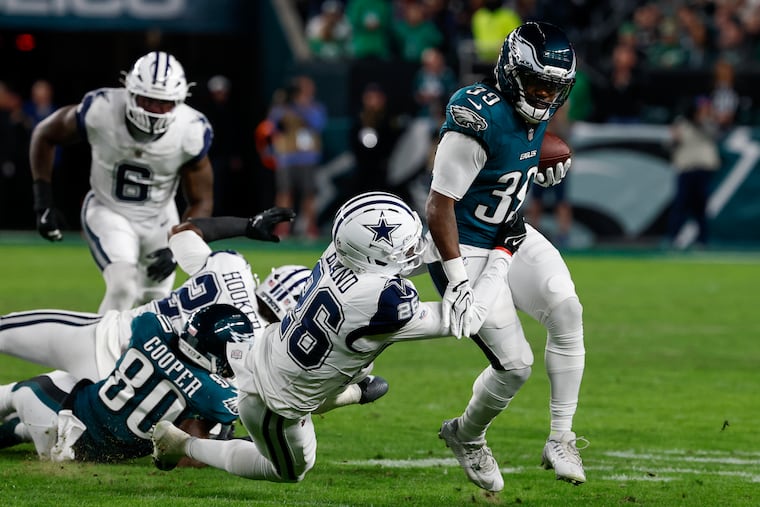
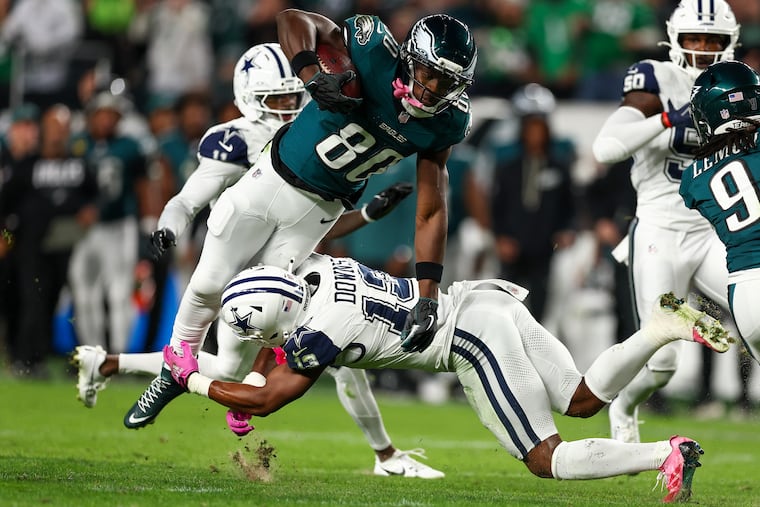
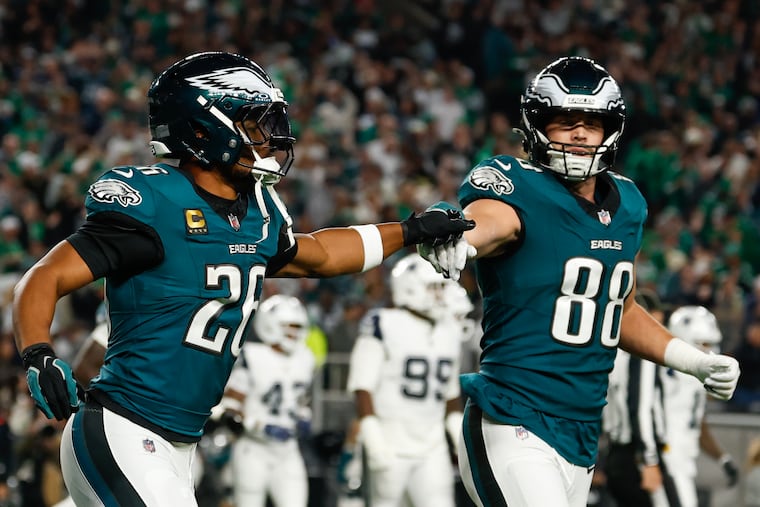
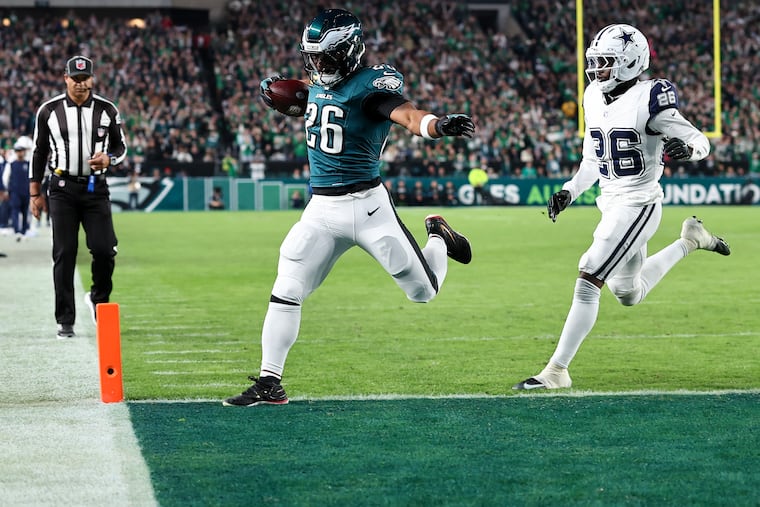
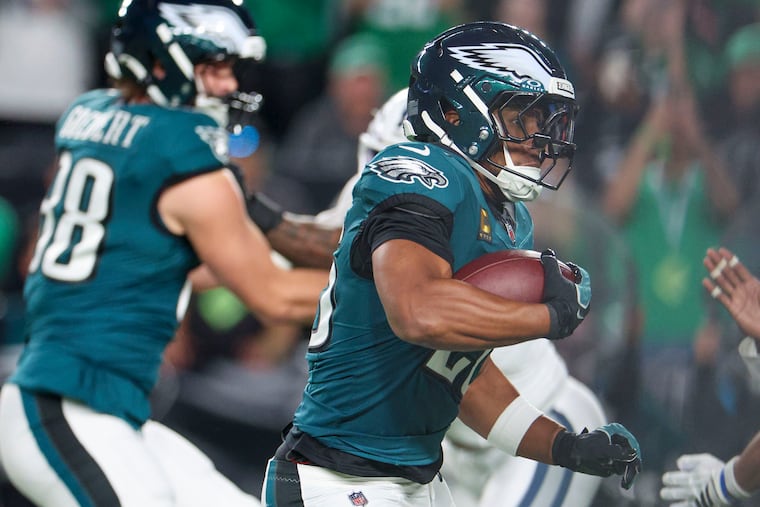
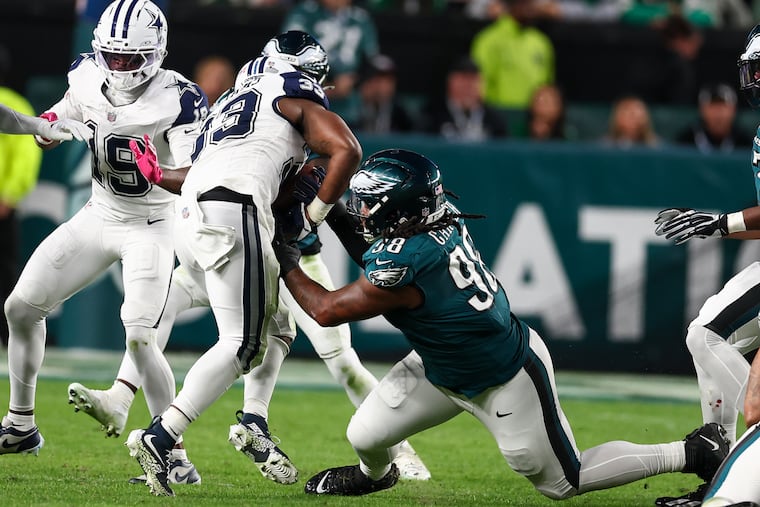
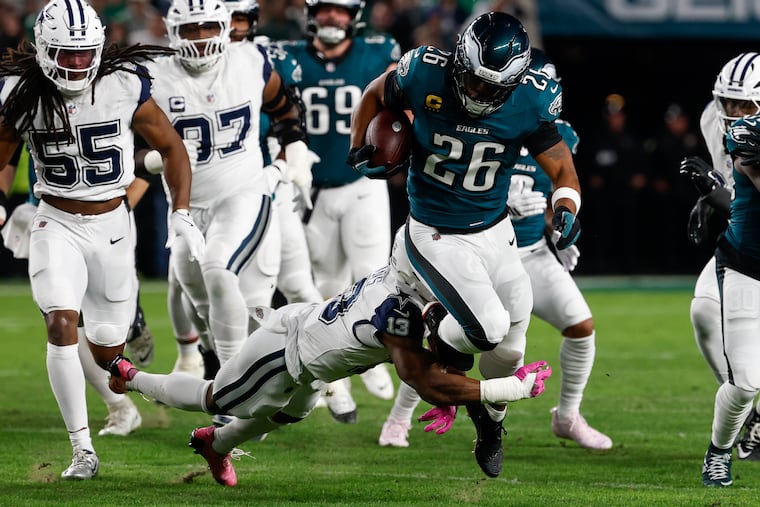
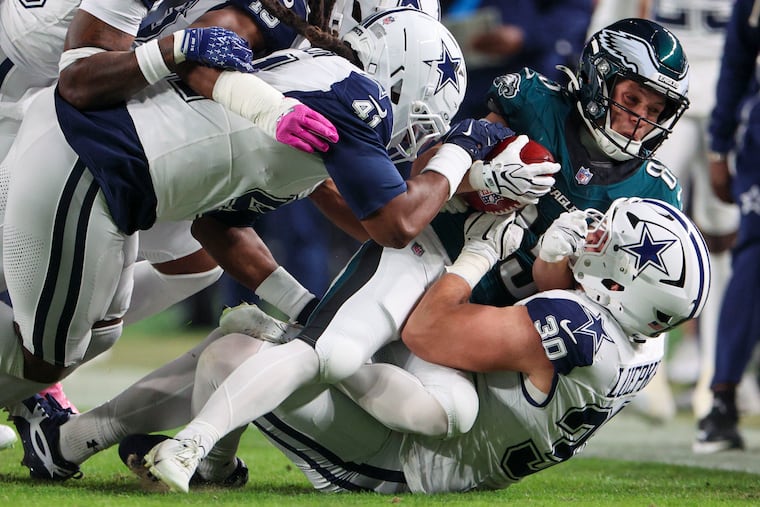
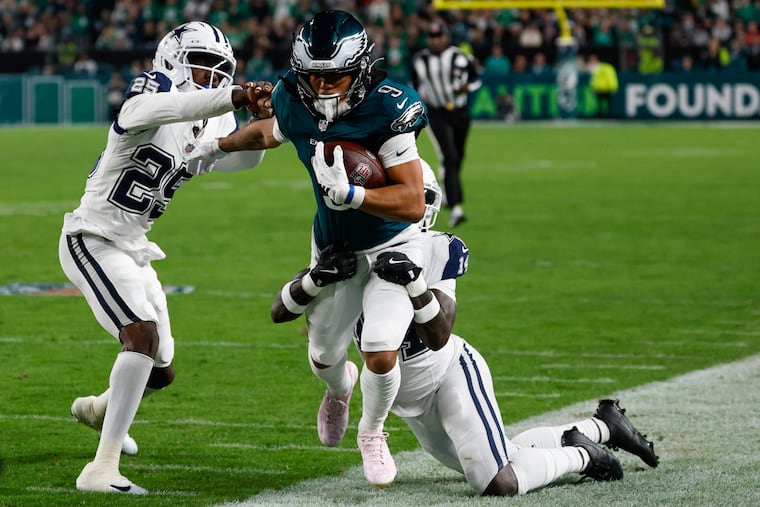
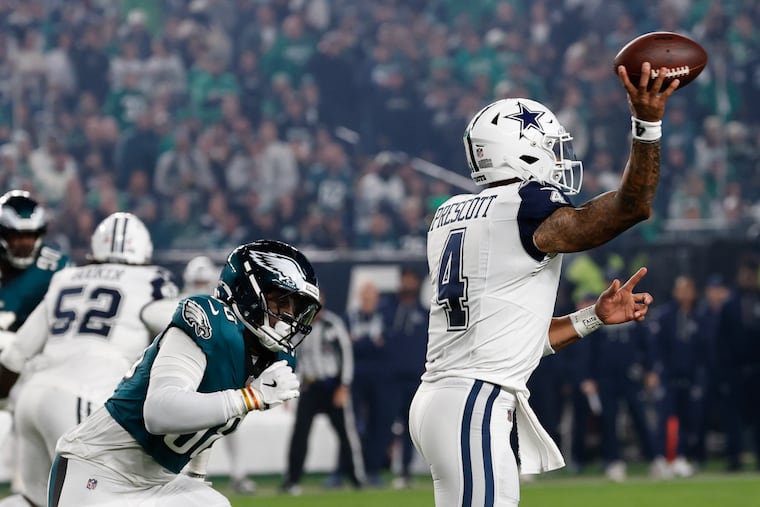
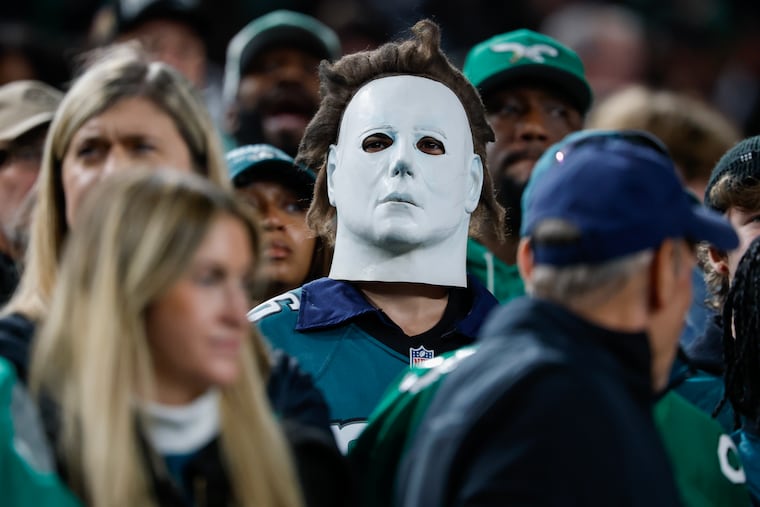
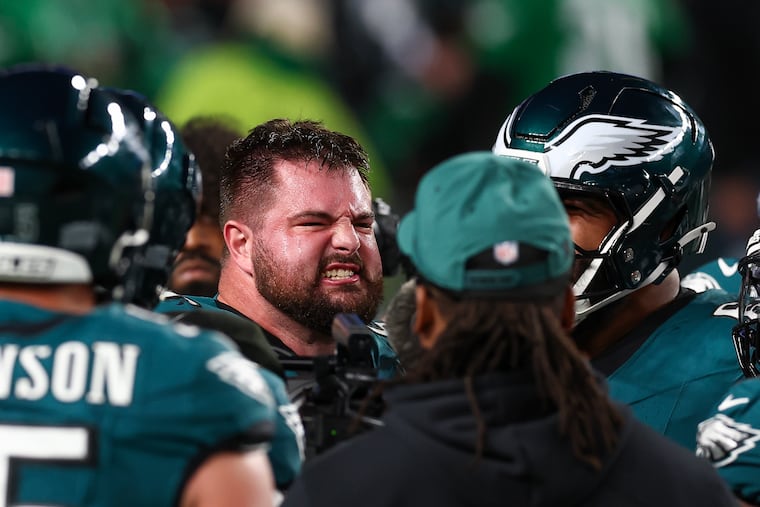
The 38-21 loss to Dallas in which the defense allowed 204 yards on the ground and didn’t lay a single hand on quarterback Dak Prescott was just the most obvious manifestation of the Eagles’ underperforming D-line. But the pass rush has been anemic dating back to last season, and the run defense isn’t close to what it was just two seasons ago.
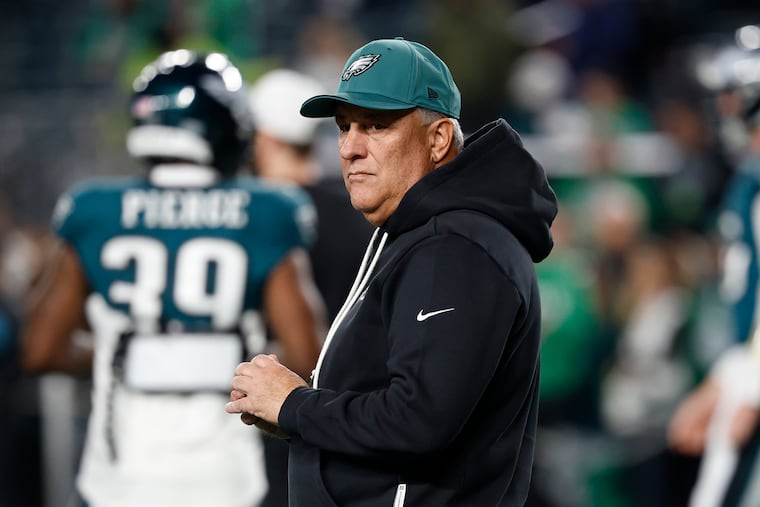
Carter and Davis may be the poster boys for a defense that hasn’t come close to living up to expectations. But the ineptness of coordinator Vic Fangio’s group extends beyond just the two biggest pieces.
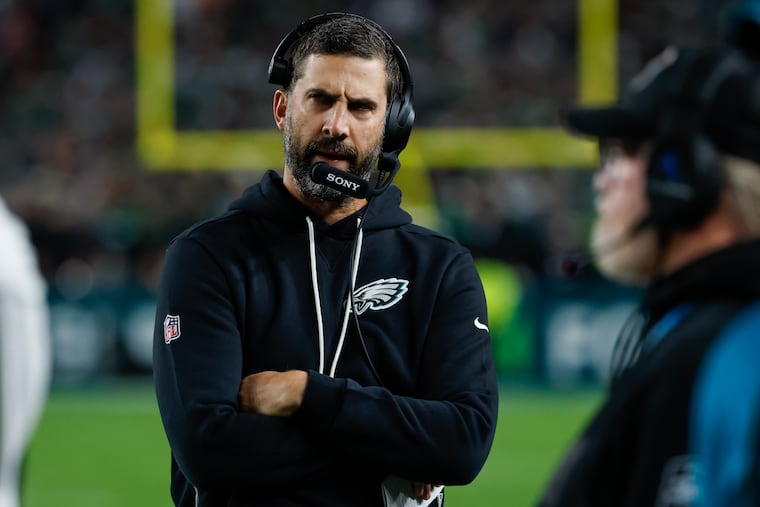
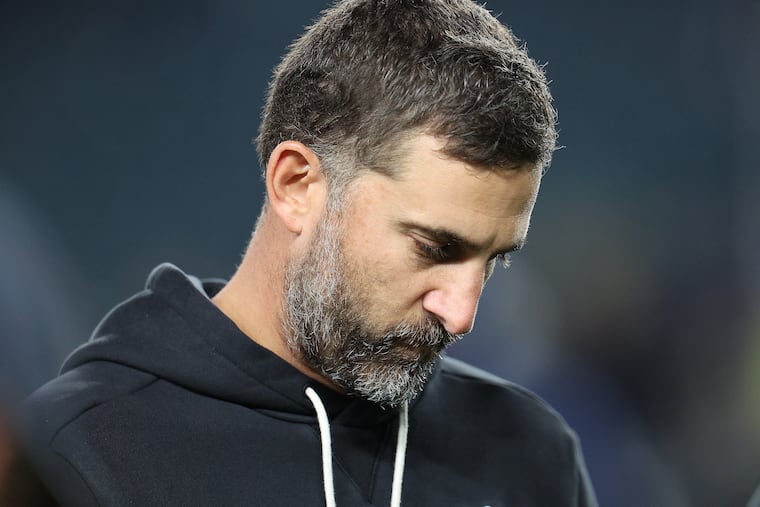
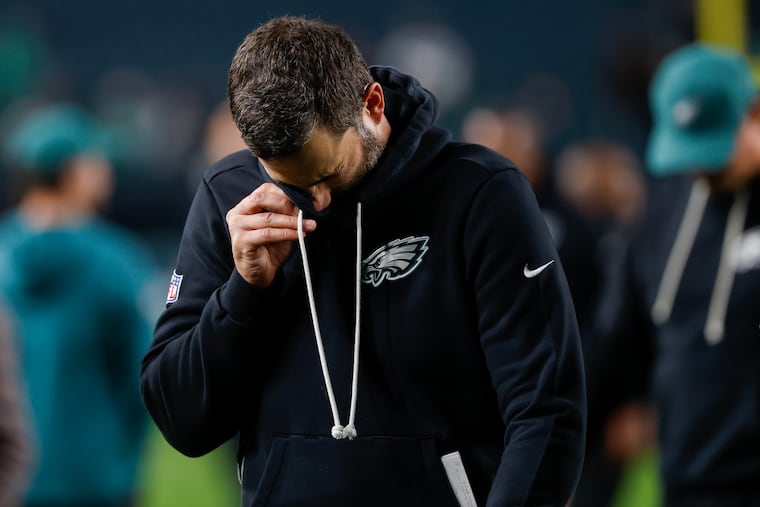
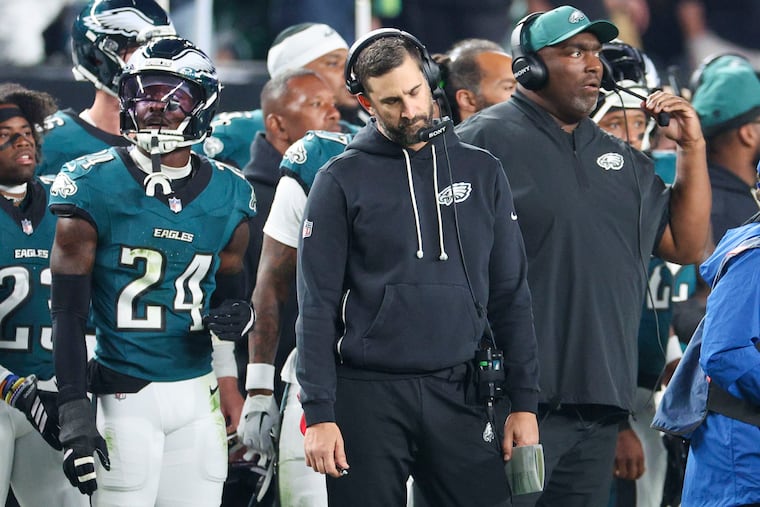
“I think you’ve seen those guys be disruptive and you’ve seen those guys make quite a bit of plays,” coach Nick Sirianni said of Carter and Davis. “Obviously, we’re all going to want plays back from tonight and moments back from tonight.”
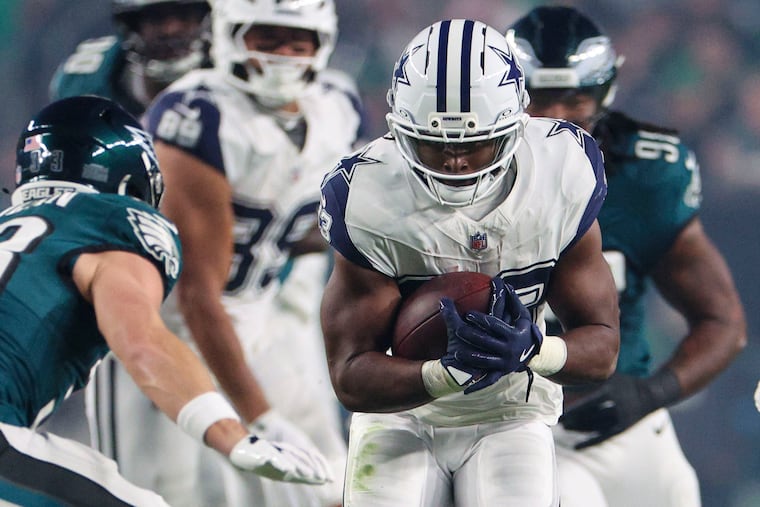
Where to start? On the very first few plays from scrimmage, it was clear the Cowboys were going to try and establish their ground game. Duo blocks sealed off Davis and Carter and running back Javonte Williams ran through a gaping hole up the middle for 15 yards.
» READ MORE: Nick Sirianni has lost five straight games, maybe the Eagles locker room, and without a miracle, his job
The Eagles forced Dallas into settling for a field goal. But after Sean Mannion’s offense finally opened with two imaginative drives and scored touchdowns, Fangio’s defense allowed the Cowboys to match the Eagles.
And coach Brian Schottenheimer did so by mostly running behind the strength of his offensive line: guards Tyler Smith and Tyler Booker. It’s shocking that it took him seven games to figure it out. Schottenheimer had neglected his run game and the Cowboys were 2-4 coming in partly as a result.
He saw an opportunity against an Eagles defense that had been relatively stout on the ground despite Fangio’s penchant for having the lightest box rate in the NFL. Carter and Davis normally prevent him from having to steal from the back seven.
But Smith, Booker and Co. beat them at the point of attack and the interior linemen became disorderly in their gap assignments.
“We knew it was kind of going to be this game,” Davis said. “Their coach challenged them and they took it to heart and they ran the ball. Unfortunately, it’s not a game that we wanted to play, but you know we have to answer the call when we know it’s coming.
“And that starts from me and that starts from everybody in the room.”
» READ MORE: Eagles grades vs. Cowboys: Defensive line invisible, tough night for Riq Woolen
Stopping the run takes all 11 players. There were missed tackles throughout the lineup. But Williams (25 carries for 155 yards) and Tyler Goodson (10 carries for 38 yards) kept pecking away until the former exploded for 34 yards in the fourth quarter.
The Eagles defense had typically waited until the last frame to fold, weighed down by a historically wretched offense. But they were beaten at the first bell. Could it have been all the previous snaps the unit played in the first six weeks?
“I’m not a sports scientist. I can’t say, ” Davis said. “I just know when we go out there, we have to answer the call.”
Even in earlier games in which the defense kept the Eagles within striking distance, there were signs that indicated Roseman’s roster construction was faulty. Turnovers and sacks were scarce, while missed tackles and busted coverages were plentiful.
The most damning indictment has been the lackluster pass rush. The Eagles entered third-to-last in pressure rate and last in quick pressure rate, which is mostly a D-line metric. It confirms what has become obvious on film: they don’t have pass rushers who can win consistently with explosiveness or physicality.
Carter has shown he is capable. He did so just two weeks ago against the Jaguars. But when a bully gets bullied, as Carter did against Booker and Smith, he often becomes undisciplined. Carter finished with just two assisted tackles and zero pressures.
“Y’all have a good night and get home safe,” Carter said after he declined to talk with reporters in the locker room at Lincoln Financial Field.
» READ MORE: Saquon Barkley isn’t throwing in the towel on these Eagles, or his injuries: ‘I’ve seen seasons like this flip’
Carter giving the media the Heisman postgame — and often in the weeks leading up — has become a regular occurrence. It’s far down the list of concerns about the fourth-year D-tackle, but franchise cornerstones can only shirk responsibilities for so long.
He wasn’t the only player to dodge answering questions. Jonathan Greenard, among others, bowed out. Greenard played (although an empty stat line suggested otherwise) despite a nagging ankle injury that has limited his playing time since returning from a pectoral injury.
Greenard was another of Roseman’s high-priced signings this offseason. He sent two third-round picks to the Vikings for the outside linebacker and then inked him to a contract worth $98 million. He has just one tackle and one quarterback hit in three games.
The 29-year-old Greenard was supposed to be the linchpin ahead of youngsters Jalyx Hunt and Nolan Smith Jr. on the edges. But he’s starting to fall into the category of another recent failed acquisition to improve the pass rush (see: Huff, Bryce).
The Eagles had zero sacks and hits on Prescott. Fangio dialed up a few simulated pressures and blitzes to compensate for his enfeebled pass rush. Smith was out with a concussion and Hunt, like Greenard, had a questionable status after missing a game with knee and ankle injuries.
But the Cowboys, who had struggled vs. the blitz this season, had answers for Fangio’s early pressures. And when the coordinator rushed just four — which is often his preferred method — Prescott had time and picked the Eagles secondary apart.
“When you’re not getting pressures, you’ve got to try to simulate them in some way,” Sirianni said. “It’s always a version of, how are we executing, how are we putting them in positions to succeed?”
» READ MORE: Eagles rookie receiver Makai Lemon shows promise in Cowboys loss: ‘He’s a gritty player’
That might be as close as Sirianni has ever gotten to calling out Fangio, however tame it might have been. But he’s been riding the longtime defensive coach’s coattails for most of their two-plus years together. Fangio might now regret holding off retirement.
Roseman strayed from the Eagles’ long-held philosophy of building from the trenches out in crafting a defense to suit Fangio’s needs. He let both defensive tackle Milton Williams and defensive end Josh Sweat walk in free agency after Super Bowl LIX, and re-signed and drafted off-ball linebackers Zack Baun and Jihaad Campbell, respectively.
In a vacuum, these weren’t egregiously bad decisions. But Williams, a homegrown former third-rounder, would have been far cheaper had Roseman had the foresight to sign him earlier. And even as a free agent, he would have been more affordable than Carter ended up costing.
There had been reports that Carter, who requires additional maintenance, was on the trade market. Roseman denied them, but those instincts might have been right in this case. He might have felt pot committed, but Carter had only one great season that delivered on his draft pedigree, out of three.
Shoulder injuries certainly played a role in last year’s regression. Some of the best signings are good players coming off bad seasons, although Carter has to yet to realize his potential as the highest-paid defensive tackle in the NFL.
Davis had just one good season out of his first four. He’s still a dominant run-stopper, in spite of Monday night. But he’s not close to a real factor as a pass rusher despite the expected future value that an extension often represents.
Carter and Davis are far from finished products, however. Roseman may have woven together a roster that is falling apart from a mass of injuries combined with some of his dubious decisions. He may start a fire sale, but the two stalwarts in the middle aren’t likely going anywhere.
“Right now, it’s just refocus,” Davis said. “I know it kind of seems redundant, but right now it’s just refocus.”
Can the Eagles see where it went wrong?

The Eagles seem reluctant to address the handling of the Jalen Hurts blood clots saga, but the key questions involved in the story aren’t going anywhere. Throughout the week, in the absence of remarks from general manager Howie Roseman or team medical personnel, head coach Nick Sirianni was peppered by reporters. He’s offered few details in return. After speaking with high-ranking medical officials currently or previously employed by NFL teams, The Inquirer’s Jeff McLane frames four central issues that remain unanswered, while also looking at what this situation means for Hurts’ future in Philadelphia. Listen here.
Listen to all episodes here or wherever you get your podcasts.