Ahead of London game, Eagles owner Jeffrey Lurie announces major donation to support autism research in the UK
The Eagles Autism Foundation also held an all-abilities clinic on Wednesday in the United Kingdom.
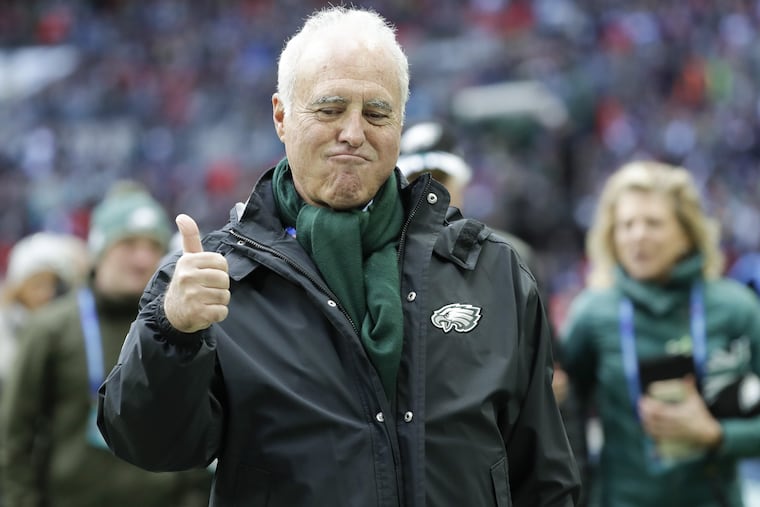
As the Eagles travel to London to take on the Jacksonville Jaguars at Tottenham Hotspur Stadium, they’re bringing more than American football and Philly culture to the United Kingdom. Eagles owner Jeffrey Lurie and the Eagles Autism Foundation also brought their work with them internationally.
During a symposium on Friday in London, Lurie announced a donation totaling $670,000 to support London-based autism research. The donation includes a $500,000 pilot grant as well as a $170,000 two-year postdoctoral fellowship that will fund research at the Lurie Autism Institute in Philadelphia.
The symposium featured panel discussions, which included two researchers on the autism spectrum. The second half of the day was led by the Lurie Autism Institute.
Ryan Hammond, the Eagles Autism Foundation’s executive director, said the foundation’s international work is about meeting the communities where they are and addressing their needs as necessary. The NFL’s initiative to expand globally gives the Eagles Autism Foundation an opportunity to mobilize its mission, whilealso exemplifying Lurie’s goals of excellence on and off the field, Hammond said.
“I think the important thing is it’s about legacy,” Hammond said. “It’s about, when we have these moments of time where we’re playing abroad, and a big stage and in a new country, and we have the chance to amplify what’s important to the team, that we really are intentional in a way that we make sure that not just are we bringing our team and our fans, but we’re bringing our mission and we’re able to elevate and have this conversation.”
When the Eagles opened their season in São Paulo, Brazil, in September 2024, the groundwork for this international expansion was laid. The foundation hosted a similar program, and Lurie donated a $400,000 two-year pilot grant for Brazil-based autism research and care.
Hammond and her team had to adapt to working with researchers who have cultural differences in their methodology in Brazil and again in the U.K. Hammond said they’ve been working since June to identify cultural differences in approach and have built the symposium accordingly.
Differences include the ethics of data sharing and technology in the U.K. as well as how families and self-advocates can determine what scientists are researching in the U.K., compared to the United States, where the scientists themselves are frequently setting themes and researching accordingly. Hammond said learning about and acknowledging these differences allows her to look at the applications from a new perspective. The application process will begin in spring 2027. Approved projects will be announced in February 2028.
“The fact that we can invest in an up-and-coming researcher from the U.K. and bring them to Philadelphia, I don’t know any other way that you want to leave a lasting mark,” Hammond said. “So we’ll have on-the-ground support to advance someone who’s further along in their career, and then we’ll have a new investigator who’s energized by this day, energized by this conversation and an opportunity to come to Philadelphia and study with what we consider some of the best scientists in autism.”
The Eagles Autism Foundation’s work in the U.K. included more than Friday’s symposium. An all-abilities clinic welcomed around 80 participants ranging from young children to young adults on Wednesday and offered the opportunity to learn about and play American football.
Hammond said the volunteers and leaders in the clinic were trained over Zoom ahead of the event as part of regular meetings between the London-based and United States-based groups. For some of the researchers, it also was their first time working hands-on in the community they’ve been working to serve.
Hammond said the Eagles Autism Foundation’s work offers anopportunity to bring more people into the Eagles fandom.
“Everyone left saying ‘Go Birds,’” Hammond said. “So my hope is not just the fact that everyone loves and bleeds green, but I think seeing what we do off the field is definitely a driver for engagement and more importantly connection and fandom.”

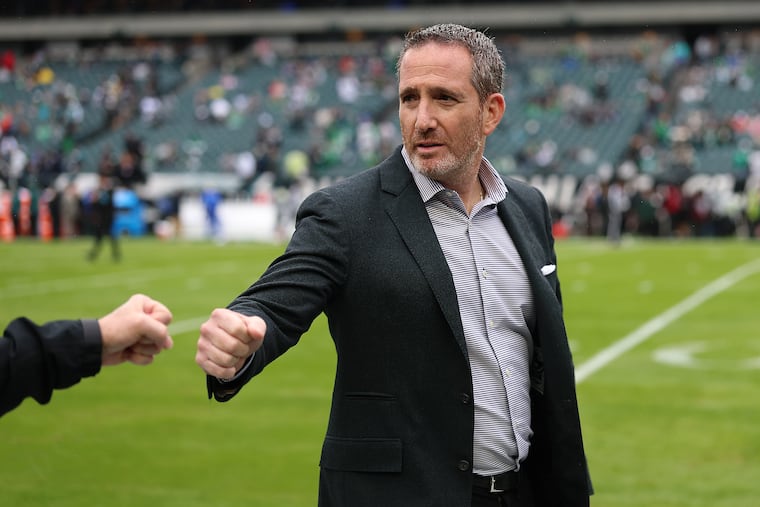
For over two decades, one of the guiding personnel principles of the Philadelphia Eagles organization has been to prioritize the offensive line. Through four games, and this past week in particular, the group has undergone dramatic turnover. Hall of Fame-caliber tackle Lane Johnson retired. Cam Jurgens was shipped to Baltimore in a trade. Their respective replacements have potential, but, compared to how general manager Howie Roseman has stockpiled talent on the line in the past, the options now seem less optimal. Did Roseman and the Eagles stray from a long-held philosophy? The Inquirer’s Jeff McLane retraces key decisions that brought the team to this point. Listen here.
Listen to all episodes here or wherever you get your podcasts.