Unanswered questions in the Jalen Hurts saga with the Eagles | Best of unCovering the Birds
These are the items to watch in the coming weeks as the Jalen Hurts matter moves forward.
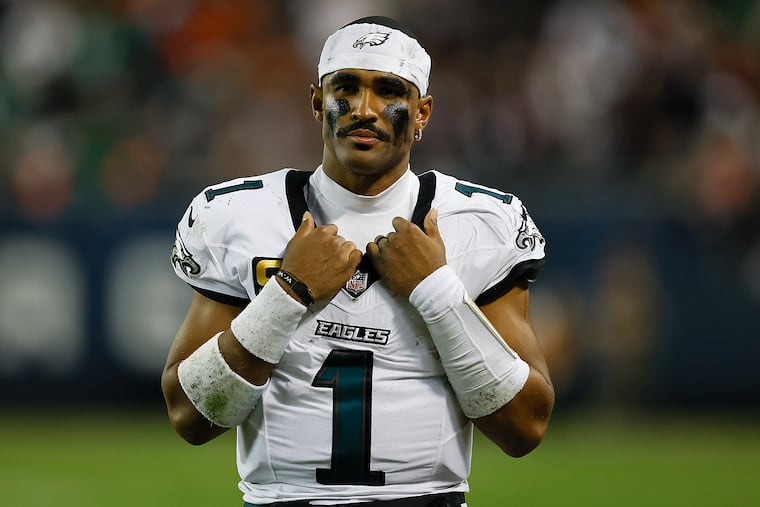
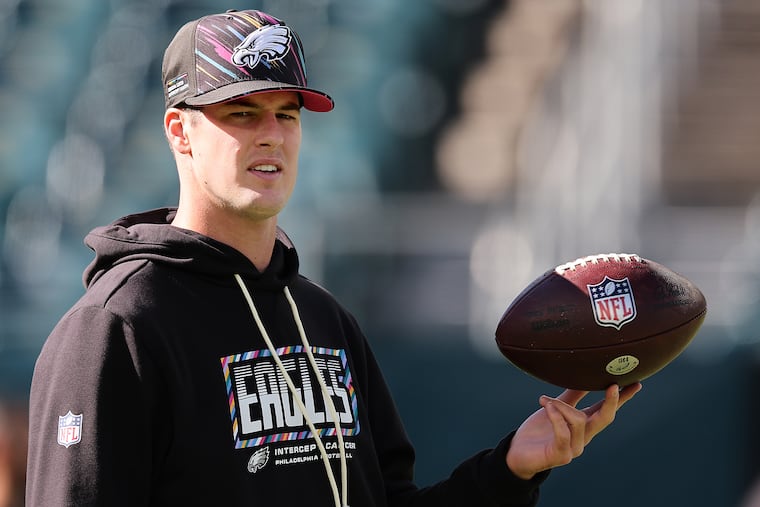
The Eagles seem reluctant to address the handling of the Jalen Hurts blood clots saga, but the key questions involved in the story aren’t going anywhere. Throughout the week, in the absence of remarks from general manager Howie Roseman or team medical personnel, head coach Nick Sirianni was peppered by reporters. He’s offered few details in return. After speaking with high-ranking medical officials currently or previously employed by NFL teams, The Inquirer’s Jeff McLane frames four central issues that remain unanswered, while also looking at what this situation means for Hurts’ future in Philly.
Watch the full episode below and subscribe to the audio podcast.
As many unanswered questions about Hurts’ care remain, the Eagles have issued two statements. The second was released because they said it was in the interest of full transparency, but they left a lot of information out and didn’t make available anyone from their medical staff — which is led by Dr. Arsh Dhanota — or general manager Howie Roseman, who oversees that department, not to mention all of the Eagles’ football operations.
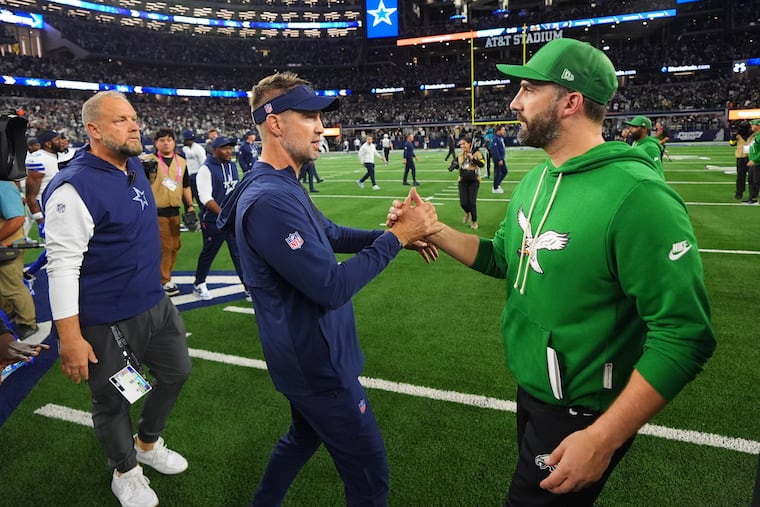
Instead, coach Nick Sirianni has had to handle any questions about Hurts. During his regularly scheduled news conferences, Sirianni has generally deferred to the statements or to the team’s medical staff, and offered very little explanation for the Eagles’ handling of their quarterback.
On Monday, he was asked twice, in various ways, why the Eagles thought it was safe to allow Hurts to play, and he gave virtually the same response.
“Guys, I’m not a medical expert.” Sirianni said. “I lean on our guys in all those situations. I’m a football coach. I lean on our medical experts in every situation. I have full trust and full faith in them. It’s not just me that has major care for our players; it’s them as well. We are all there, and I’m glad to be part of an organization that cares about the guys the way our guys do.”
I spoke to three high-ranking medical officials that either currently work for an NFL team or did at some point in their careers. They all requested anonymity to speak freely on the topic, and readily admitted they can only go off their experiences with treating players with blood clots. They felt that there were several key pieces of information missing from the Eagles’ 220-word and 178-word statements:
No. 1: Why didn’t Hurts get the first ultrasound in Philadelphia rather than in London? The Eagles had more than 24 hours between Hurts reporting to trainers on Thursday that he had been cleated in the Rams game, and their Friday evening departure.
One of my medical sources said even if he downplayed the symptoms, Hurts’ importance and the looming international flight would have made getting an immediate ultrasound imperative
“That part makes no sense to me,” the source said.
No. 2: Why did the Eagles then decide to get the ultrasound in London? In the statement, they said it was “out of an abundance of caution,” but shouldn’t that have come before the flight? Long-distance flights lasting over four hours increase the risk of deep vein thrombosis due to low cabin pressure, limited movement and cramped seating. The Eagles chartered a plane larger than their normal domestic flights so that most of the players could spread out and sleep — it’s likely Hurts was given ample space.
But after landing in London, and a team walkthrough, the Eagles said they performed an ultrasound, which revealed a superficial blood clot. My medical sources all agreed that players they have treated have played through the inflammation which often happens in the leg area, but they also added that if the pain in Hurts’ calf had gotten worse that should have likely been enough after the diagnosis to take precautionary measures. The Eagles in their initial statement — that Hurts’ agent, Nicole Lynn, wasn’t a part of — said their medical staff and doctors in London “concluded that activity and mobility were important and that Jalen could safely play.”
Hurts had spent much of the night before the game at the Cleveland Clinic. There were initial reports from The Ringer and NFL Network that he hadn’t slept for 36 hours before the game vs. the Jaguars, partly because doctors had told him not to sleep. Those reports were later retracted and clarified — there was probably some confusion over the fact that team doctors had told players not to sleep until later, so that they remained on East Coast time. If Hurts had followed that advice and then spent hours in the hospital, he might have been exhausted.
But he had gotten about an hour or so of sleep at the clinic, a team source told me, and after getting discharged around 4 a.m. went back to the team hotel and presumably got more sleep until it was time to depart for Tottenham Hotspur Stadium around 10 a.m. The Eagles and Jaguars would kick off at 2:30 p.m.
Hurts, as far as I could tell, participated in all the warm-ups. But after the Eagles were introduced and the national anthems played, my colleague Olivia Reiner noticed Hurts wasn’t on the field. The week prior before the Eagles played the Rams at Lincoln Financial Field, I had noticed Hurts jogging out to the field after the anthem and wrote it down in my notes because I had never seen him do that before. When he finally did come out in London just before the coin toss, I told Olivia that he must have a new ritual. But in actuality he was late because he was napping
Before the blood clot had become public, Hurts was asked about his calf injury.
“It was a very unique experience to say the least,” Hurts said. “I don’t want to get into the details of leading up to the game and whatnot. Got nicked up in the Rams game.”
That’s when I asked Hurts if the injury had anything to do with his late arrival.
“I was trying to rest,” he said.
There’s little doubt Hurts wanted to play — he’s played through multiple injuries already in his career. He is like many NFL players who play through the pain for the competition, for their teammates, for fear of losing their jobs and for so many other reasons. The Eagles’ medical experts have to navigate this terrain constantly when it comes to injuries, but this wasn’t some soft-tissue injury or broken bone.
And even if doctors cleared Hurts to play, doesn’t the team and the league have an obligation to protect him from himself, and really, also protect their own interests? NFL chief medical officer Dr. Allen Sills called the notion that team officials could pressure their doctors “nonsense.” But even if the Eagles had Hurts’ best interest in mind — which I assume they did — that doesn’t mean mistakes were not made.
And that brings me to my third unanswered question: why did the Eagles allow Hurts to fly home, on an even longer flight, after knowing that he had a blood clot?
Listen to the full episode of unCovering the Birds below:

The Eagles seem reluctant to address the handling of the Jalen Hurts blood clots saga, but the key questions involved in the story aren’t going anywhere. Throughout the week, in the absence of remarks from general manager Howie Roseman or team medical personnel, head coach Nick Sirianni was peppered by reporters. He’s offered few details in return. After speaking with high-ranking medical officials currently or previously employed by NFL teams, The Inquirer’s Jeff McLane frames four central issues that remain unanswered, while also looking at what this situation means for Hurts’ future in Philadelphia. Listen here.
Listen to all episodes here or wherever you get your podcasts.