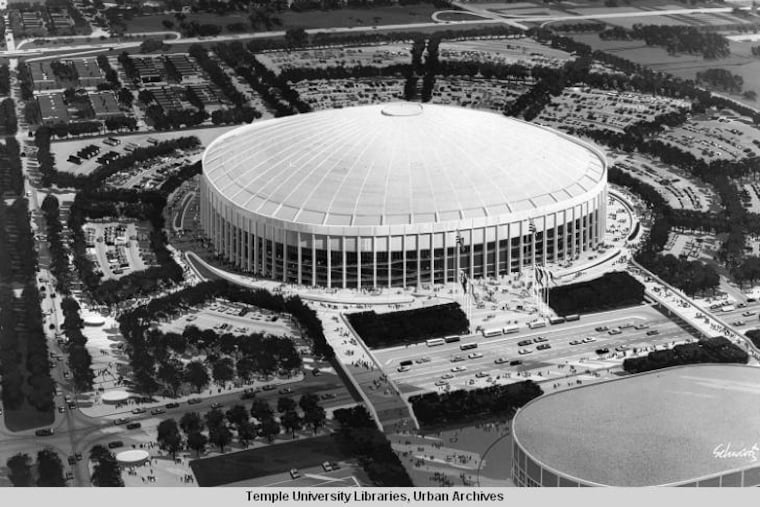
The Vet was almost a dome. Would public sentiment for the next Eagles stadium be different if it had been?
Philly fans are conditioned to outdoor football, a fact that colors discussion around a potential new stadium. The conversation would have been very different if The Vet had a roof.
It was March of 1966 when Philadelphia City Council president Paul D’Ortona, arguably the biggest proponent of putting a roof on the new stadium being proposed for the Eagles and Phillies in South Philadelphia, met some resistance during a Council meeting from Ed Snider.
Before Snider became the longtime owner of the Flyers and the chairman of Comcast Spectacor, he was a vice president with the Eagles, and during the mid-60s, there were few topics in local sports bigger than the new stadium project that eventually became Veterans Stadium as we knew it.
To dome, or not to dome was the key question.
“Fans might not like it,” Snider said, according to a story in The Inquirer. “In nice weather, they want to be outside.”
At that point, the Eagles, according to Snider, had not taken a position.
“We would have to take the time to find out what the public wants,” he said. “We would have to look into it long and hard. Conceivably, a permanent dome could bring another white elephant to Philadelphia.”
Sixty years later, the city is on the precipice of another stadium debate. The Eagles are in what Jeffrey Lurie earlier this year called their “exploratory research” phase when it comes to their future home. They could renovate the 23-year-old Lincoln Financial Field, or they could build a new stadium altogether. The Eagles’ lease at the Linc does not expire until 2032, but a discussion about the future certainly will play out long before then.
There will be plenty of D’Ortonas, probably as many devil’s advocates like Snider, and others like the 1966 editorial staff of The Inquirer, who wrote that “there is still something to be said for fresh air and sunshine.”
One present-day reader commented on a recent Inquirer story about why the Eagles would be paying close attention to Tottenham Hotspur Stadium in London and said “Philadelphia should pass a law that Eagles home games must be played outside.”
In response to a July article that said extreme weather during the World Cup at Lincoln Financial Field would be useful data to Lurie that, a reader emailed that “the blue collar element of Philly wants outdoor football.”
The reader reminded the author that the NFL doesn’t play in the summer. And while that’s mostly true, the roof, no-roof, or retractable roof conversation will center on the things the stadium can be used for outside of the normal course of a regular football season. Things like hosting a Super Bowl, a Final Four, and year-round concerts.
Which is why it’s fair to wonder, had things gone differently 60 years ago, if public sentiment on the topic would be different.
The Eagles play on Christmas Eve later this year, which probably will invite way too many tired references to snowballs being hurled at Santa Claus. Events like that one never would have happened in a dome but provided thousands of fans with a lifetime of memories.
And what if the Eagles, already playing in a dome for decades, built a stadium with a roof in the early 2000s? How attached to football in the elements would the people of the Delaware Valley really be?
How close was the Vet to having a roof?
Philadelphia voters in 1964 approved a $25 million bond issue for a new stadium.
The Houston Astrodome was being built at the same time, and Philadelphia leaders thought they needed to follow the trend.
A Daily News editorial in 1965 fully endorsed putting a roof on the building in an effort to keep up with the neighbors in New York, where officials were considering putting a roof over Shea Stadium.
“There is an understandable reluctance to let New York get ahead of us in any area,” commentary from the Daily News read.
No, the $25 million would not be enough to cover the costs of a roof, but provisions needed to be put in place to build a cover at a later date, according to the Daily News.
“If the domed stadium in Houston is the success that its backers expect it to be and there are no major problems, domes will be a ‘must’ on stadiums of the future.”
One of D’Ortona’s arguments at the time was that the cost of the dome would be offset by the added uses an indoor stadium could provide as well as the elimination of financial losses if events were canceled because of weather.
D’Ortona spoke publicly in 1965 that building a stadium without a dome would quickly make it obsolete. A year later, he argued that Philadelphians wanted it. One resident wrote in to The Inquirer in a letter to the editor that a dome-less stadium would be outdated in a period of five years and that “a retractable dome is the ticket!”
A retractable roof was discussed back then, too, but mostly in the hypothetical. In August of 1966, five months after D’Ortona and Snider gave counterpoints during a Council meeting, architect Hugh A. Stubbins touted the advantages of a removable roof vs. a retractable roof, but he did not explain the difference between the two.
Details of a possible removable dome would remain “a trick up my sleeve,” he said.
The original estimates on how much it would cost to build Veterans Stadium proved to be far too low. Voters approved another $13 million bond in 1967 to help cover the rising costs of building a stadium that eventually ended up costing more than $50 million.
Alas, putting a roof on the stadium proved too costly.
What’s next?
If the forward-looking conversations about the future home of the Eagles sound hypothetical right now, it’s because they are. The lease at Lincoln Financial Field doesn’t expire until 2032, and the exploratory phase the Eagles are going through is only an initial portion of what will be a lengthy process.
How much will fans be involved in the decisions?
The Eagles last year sent season ticket holders a survey about the potential for a new stadium. It asked fans to rank five options in order of preference: open air, open air (but covered), canopy, fixed (natural light/glass), fixed (fully closed).
The results of said survey haven’t been made public, and it’s unclear how much the Eagles will weigh those preferences, if at all.
For some Eagles fans, there’s almost a resignation that the future home of the team will include some sort of roof.
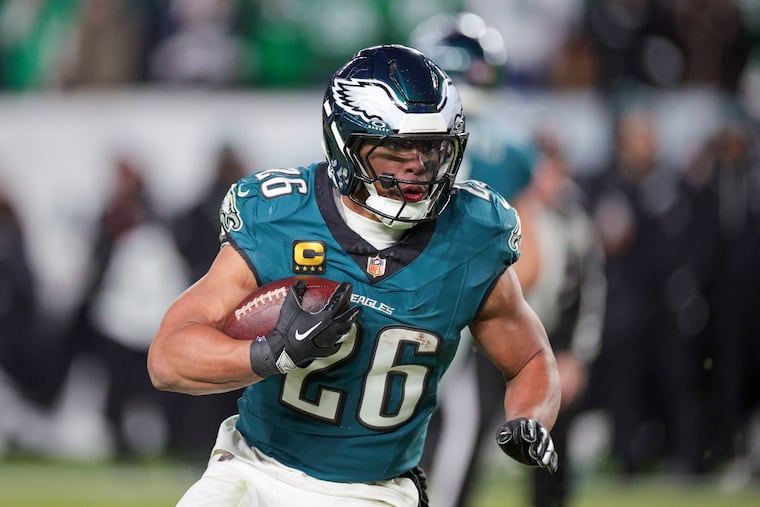
Outside Lincoln Financial Field on a scorching hot Fourth of July holiday, Mount Laurel’s Graig Weidinger, tailgting before a World Cup game, lamented a future where LeSean McCoy doesn’t dash through the snow for 217 yards on a day when the snow accumulation outpaced the predictions. Or a future where Saquon Barkley isn’t running through a snow globe-like scene pushing the Eagles to the NFC championship game two seasons ago.
“It gives you the memories,” Weidinger said. “You’re not going to have that.”
But the reality of what may happen is hard to escape. Covered stadiums are on the way in NFL markets including Cleveland, Chicago, Denver (retractable), Kansas City, Tennessee, and Washington. By the time those projects come to life, the number of teams playing home games indoors will outnumber those playing in the elements.
“For the city, with what they can do, you see the college playoffs going places, the Super Bowl,” Weidinger said. “If you’ve got a roof you can do it all.”