Philadelphia lost $811 million in sales to ‘ICE tax,’ Penn professor finds
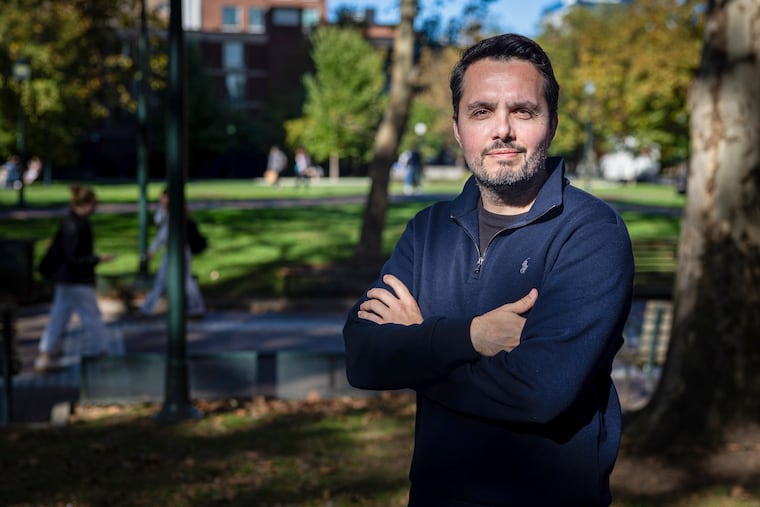
“This new approach to enforcement,” said Zeke Hernandez, a scholar at the university’s Wharton School, “has real consequences.”
Some people call it the “ICE tax,” the higher costs and labor shortages attributed to stricter enforcement by U.S. Immigration and Customs Enforcement.
University of Pennsylvania professor Zeke Hernandez studied one particular aspect — the price paid by local businesses and communities in the aftermath of ICE activity and arrests, events that are often sudden, public, and violent.
The cost, Hernandez found in a new study, “ICE-ing the Economy,” is big and lasting, dramatically pronounced under President Donald Trump’s mass-deportation agenda. One voice in the research compared an immigration raid to a hurricane, where the impact reverberates long after the event itself has ended.
“This new approach to enforcement,” Hernandez, a scholar at the university’s Wharton School, said in an interview, “has real consequences.”
Hernandez found that foot traffic and spending in targeted metro areas fell significantly where ICE activity and arrests occurred — a 2.9% drop in foot traffic and a 6.9% drop in consumer spending. That amounts to 8.1 billion fewer visits to businesses and workplaces, and up to $14 billion in forgone spending during the first year of Trump’s second administration.
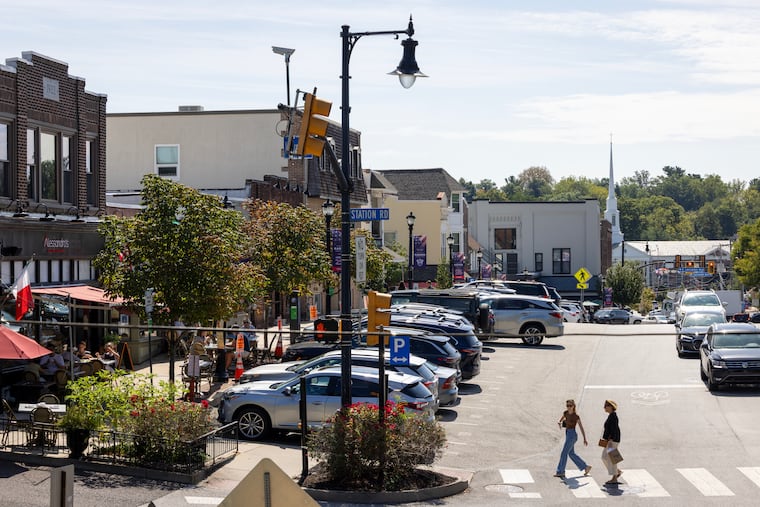
He estimated Philadelphia saw a 193 million decline in visits to stores and workplaces and about $811 million in lost sales.
The drops occurred regardless of neighborhood demography. They affected multiple industries. And the impact did not dissipate over time — fear kept shoppers and workers away.
“The breadth of the local economic damage,” Hernandez wrote in the study, “mirrors the breadth of the enforcement approach.”
The Department of Homeland Security, which oversees Immigration and Customs Enforcement, disputed the study’s findings.
“Let’s be clear,” a DHS spokesperson said when asked about the study, “if there was any correlation between rampant illegal immigration and a good economy, Biden would have had a booming economy. Removing these criminals from the streets makes communities safer for business owners and customers.”
The agency cited several immigrant “public safety threats” whom ICE has arrested in Pennsylvania, including men from Guatemala, Haiti, and China that it said were convicted of crimes including kidnapping, aggravated assault, rape, terroristic threats, and weapons offenses.
In Philadelphia, evidence of an ICE tax has shown up at places like the Italian Market, where rumors of impending ICE raids emptied stores and sidewalks last year, as worried workers and customers stayed away.
Gerardo Flores, who operates a food truck in North Philadelphia, says he sees the proof with his own eyes. He works near the Maria De Los Santos Health Center, at Fourth Street and Allegheny Avenue, where worries around ICE are constant.
“Families have been scared, and there has been a decline in the business,” Flores said in an interview. “We have felt that.”
Hernandez examined how ICE arrests and visibility increased dramatically during Trump’s first year.
The professor used data on 5,388 geocoded ICE arrests or places of documented activity, combined with foot-traffic and spending data for 5.4 million retailers or workplaces, everything from coffee shops to gas stations.
One way to think of it, Hernandez said, is to view each geocoded ICE event as a little earthquake, the ripples expanding outward. Businesses closest to the epicenter are the most impacted, but others farther away also feel the ground shake.
He found that economic activity decreased both on the supply side, with workers not showing up, and on the demand side, with customers not visiting and spending less when they did.
Hernandez, author of The Truth About Immigration: Why Successful Societies Welcome Newcomers, became interested in the topic as he watched the news. He noted that the fatal January shooting of Minnesota nurse Alex Pretti, killed by immigration officers who were trying to arrest him, took place outside a doughnut shop.
He wondered, “What happens to that doughnut shop, that butcher shop, that supermarket? What is the local economic effect on this street of ICE showing up, and showing up in a very different way than they did before?”
In its first year, the Trump administration’s tough enforcement tactics produced “significant and persistent negative economic spillovers for virtually all residents and types of businesses in targeted areas,” he wrote.
That raises important policy issues for governments, Hernandez said, matters that reach beyond the humanitarian. Lost business activity falls on workers, customers, and business owners regardless of their immigration status or political beliefs.
Local economies depend on small, independent businesses that have limited capacity to absorb sustained shocks to demand or supply. And state and local governments that rely on the economic vitality of neighborhoods should see that enforcement decisions made elsewhere have measurable local implications.
”This approach to enforcement is doing a lot more than affecting people who they have a right to arrest,” Hernandez said. “It’s clearly creating fear among people who have no reason to be detained.”
The professor did not invent the term “ICE tax.” It’s often used by immigrant-advocacy groups and Democratic elected leaders to describe the economic costs of the Trump administration’s deportation efforts, the dollars lost or demanded by labor shortages and the higher prices attributed to the targeting of farmworkers, construction laborers, and health aides.
During the first 18 months of the president’s second term, DHS completed about 980,000 deportations — a faster pace than under the Biden and first Trump administrations, though still below early-2000s levels, according to a new analysis by the Migration Policy Institute in Washington.
The administration was on track to complete about 660,000 deportations in fiscal year 2026, up from 620,000 during the first year of the current administration.
The study showed that a growing share of immigration arrests have taken place in communities within the interior United States, increasing from 28% in 2025 to 39% in July 2026. The pace of interior arrests has more than doubled from an average 8,000 per month to 19,000 per month.
Critics of the concept of an ICE tax say enforcement is legal and proper, that people in the country without permission have violated U.S. immigration laws and it’s up to the government to make them go.
Some argue that undocumented immigrants create hidden costs to society by straining local resources such as schools and hospitals. And that an oversupply of low-wage foreign workers hurts the pay of native-born workers and legal residents.
However, the America’s Voice Education Fund, a pro-immigrant nonprofit group, said its research showed a drop of 1.2 million people in the foreign-born workforce in the last two years, accompanied by cost increases in foods and goods that are often produced by immigrants. For instance, the cost of building homes jumped nearly 11% in states most reliant on foreign-born workers, compared with 5.8% in other states since the start of the Trump administration, the group said in a new report.
The Trump administration says it’s focused on arresting and deporting the “worst of the worst,” criminal immigrants who are wanted for violent offenses, though the most recent data shows more than 70% of those held in detention had no criminal convictions.