After decades of partnership, Trump’s policies have decidedly pushed away U.S. allies
Post World War II, Germany and the rest of Europe knew they could count on the United States, and America was guaranteed devoted partners across the pond. Then came Trump, writes Wim Orth.
Wim Orth is a journalist with WELT in Berlin and an Arthur F. Burns fellow at The Inquirer.
For generations of Germans, the United States had always felt like the slightly cooler cousin from overseas. In culture, there were icons like Coca-Cola, denim jeans, fast food chains, rock and roll — and, of course, Hollywood — that shaped culture not only in America but across the Atlantic as well.
Politically, the U.S. helped West Germany get back on its feet after World War II had left it in rubble. The Marshall Plan, signed by President Harry S. Truman, helped Germany and other European governments rebuild, and the trust shown by America toward the German people would frequently overrule the doubts that British and French forces had toward their former enemy.
That trust went so far that just a few years after the war, the U.S. stationed nuclear warheads in bases in Germany and encouraged the Adenauer government to set up its own army again. To guarantee a contained German military, the Bundeswehr became part of NATO right after its founding. Additionally, government and military leaders worked closely together with the U.S. to prove that the days of aggressive German militarism were a thing of the past.
From then on, Germans and Americans in particular — and Western Europe and Americans in general — would work in unison to counter aggression by the Soviet Union and its proxies, defend West Germany against the constant threat of Soviet invasion, and eventually bring down the Berlin Wall and shred the Iron Curtain.
For decades, Germany and the rest of Europe knew they could count on the United States, and America was guaranteed devoted partners across the pond. In case there was any doubt, this partnership and its steadfastness was proved when Article 5 of the NATO treaty was invoked for the first and only time so far on Sept. 12, 2001.
After the terrorist attacks on New York City and Washington, it was America’s NATO partners who helped patrol the American skies and were part of the war on terror, commanding several missions in Afghanistan and Iraq.
Now, take all that shared history and goodwill and put it in the trash.
Today, not even two years since Donald Trump returned to the White House, there is painfully little trust left between the United States and its NATO partners — only plenty of doubt that if the situation were reversed, and Europe were attacked, that America and its NATO allies would step side by side into the breach.
After months of being battered and bruised by Trump and his administration, most Germans aren’t even mad about the situation anymore. Some are disappointed, others have simply moved on from the cooler cousin who grew up and grew distant. In the regions formerly under Soviet control, people may even turn to a bit of “I told you so” thinking.
When Trump was first elected in 2016, his presidency was regarded by many Europeans as an “accident” of the country’s curious electoral system, where having the most votes does not automatically equal victory. After all, how could the same voters who made history when they sent Barack Obama to the White House (twice!) now support a bigoted charlatan?
» READ MORE: Trump’s open alliance with Putin betrays the United States and helps Russia kill Ukrainians | Trudy Rubin
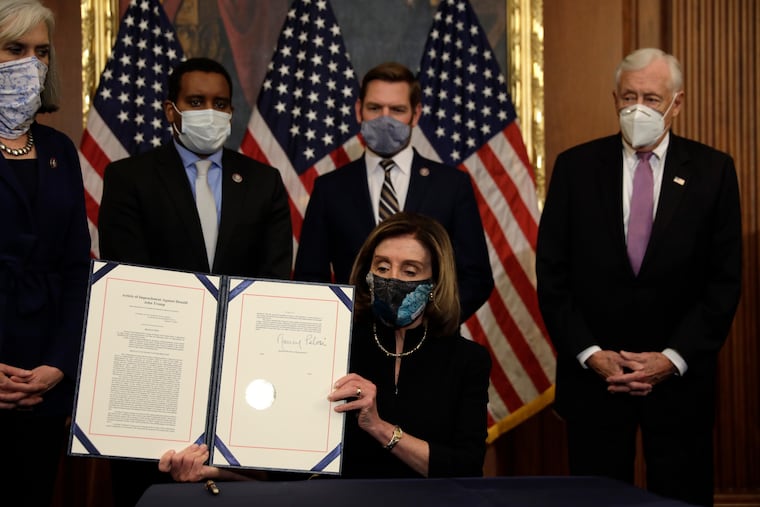
Europeans were convinced that it was over for Trump after he lost the 2020 presidential contest against Joe Biden and lied about the election being stolen, with his falsehoods culminating in the assault by Trump supporters on the U.S. Capitol on Jan. 6, 2021. Trump then went on trial several times and was found liable for sexual abuse and was convicted of 34 felony counts.
And yet … when Americans went to the polls in 2024, Trump defeated Kamala Harris. There were no Electoral College excuses as he won the popular vote by more than two million votes. That Election Day result was the moment when many Europeans shifted from hope to utter disbelief.
Unlike the eye rolls that greeted much of Trump’s ridiculous rhetoric during his first term, the president’s words and deeds the second time around have seriously damaged the relationship between Europe and America.
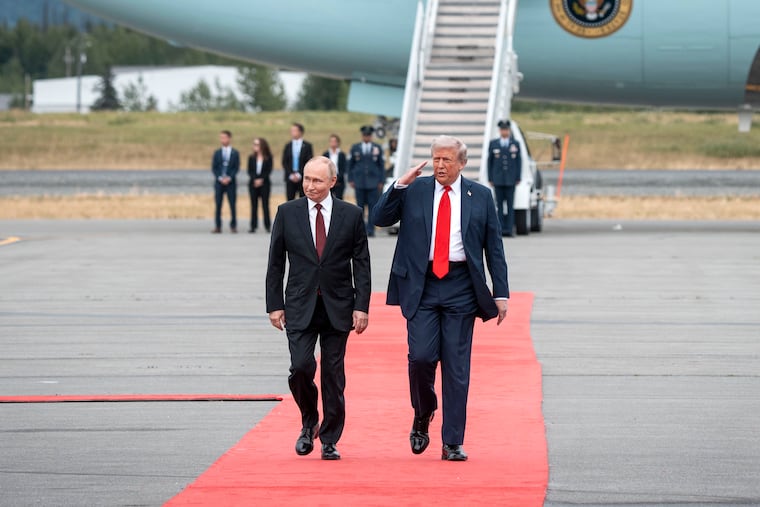
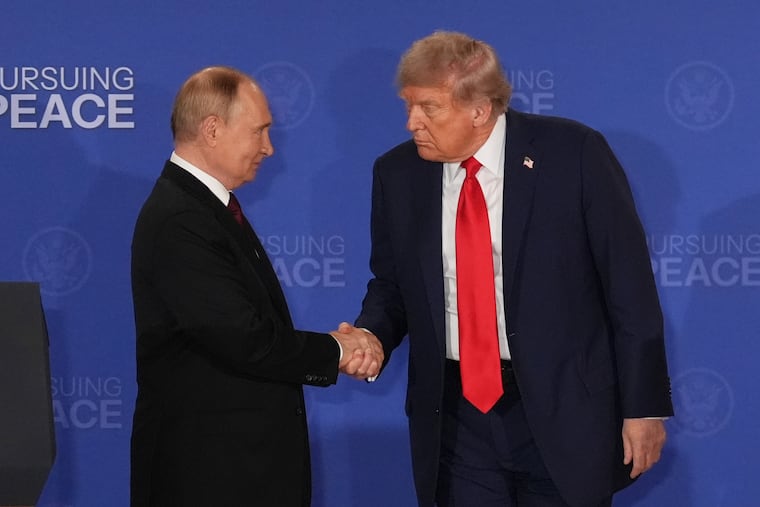
Incidents like Vice President JD Vance supporting far-right extremists under the guise of lecturing Germans on free speech at the Munich Security Conference, the scandalous treatment of Ukrainian President Volodymyr Zelensky, and Trump’s apparently unwavering support of Vladimir Putin, even as Russia continues to target Ukrainian civilians and play with provocations toward NATO — including a failed drone attack on a German airport.
Europe was used to having a bad partner in the White House during Trump’s first term. Now, we wonder if the term partner can even be applied anymore.
Threats of annexing Greenland or Canada, withdrawing the U.S. from NATO altogether, and even the thought that Trump is considering a three-way summit with China and Russia to determine Ukraine’s fate have only added to the estrangement.
(And that’s not even considering the Trump administration’s assault on human rights as it deploys immigration enforcement agents — who have so far killed nine people and shot at least a dozen more — and detains people indefinitely in substandard conditions over civil immigration offenses.)
While some podcasters and journalists in Europe seem to embrace the president’s sillier shenanigans — think renaming the Gulf of Mexico and Lake Ontario — many people I’ve spoken with in Europe have lost faith in the United States.
A recent study conducted across Europe found 73% of respondents agreeing to the question whether they “think it’s time for Europe to go its own way.” In Germany, just 27% see the U.S. as a “trustworthy partner” anymore.
Polling in the U.S. finds that Americans themselves are repudiating Trump’s policies and there is hope that the midterm elections will provide a critical check on the president’s rampant abuses and ill-advised positions.
But it may be too little, too late.
After Trump’s defeat in 2020, Europeans thought that America had come to its senses. Seeing Trump being not only reelected, but cheered on as he berated partners, allies, and friends across the globe, had an impact.
The damage has been done, and one or two elections won’t be able to erase the doubt that lingers.
About guest essays
Guest essays, or op-eds, are commentary pieces that present the opinion or perspective of the author. Many are submitted to us by Inquirer readers and writers with insight on the news, but we also solicit op-eds from authors on specific topics. For more information visit our guidelines.