What if we gave all Philly students the opportunity to contribute as full citizens?
School is where most young people first discover their place in civic life, yet their voices are rarely taken seriously there. Students have little say in what they learn or how their schools are run.
AJ Ernst worked as a teacher and administrator in Philadelphia for 13 years and holds a doctorate in educational leadership from the University of Pennsylvania’s Graduate School of Education.
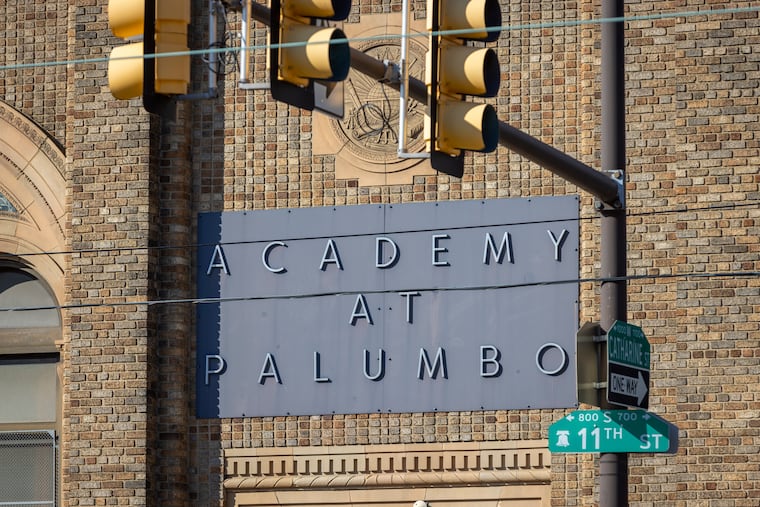
Seniors in a social science class at the Academy at Palumbo spent a school year asking why young people in Philadelphia have so few free public spaces. They examined the Parks and Recreation budget, presented their findings to City Council, and made their case.
In June 2025, Council adopted a resolution urging the Office of Youth Engagement and Parks and Recreation to include youth voices in the city’s decisions.
The students learned that government can respond and that the city was theirs to care for. That is what civic education is supposed to do.
Unfortunately, most Philadelphia students will never sit in a class like that.
With the midterms imminent, the fight for democracy is focused on the ballot box — mid-decade redistricting, a narrowed Voting Rights Act, and new limits on mail-in ballots. Those fights matter, but more attention needs to be paid to young Americans who are opting out on their own.
Fewer than half of Americans ages 18 to 29 voted in the 2024 presidential election, and in the 2022 midterms, more than three-quarters stayed home, according to the Center for Information & Research on Civic Learning and Engagement (CIRCLE) at Tufts University.
The disengagement runs deeper than voter turnout alone.
This spring’s Harvard Youth Poll found that only 13% of young Americans think the country is headed in the right direction, just 15% trust the federal government to do what is right (the lowest in more than a quarter century of polling), and half say people like them have no say in what the government does. Last fall, the same poll found that nearly 40% believe political violence is acceptable under certain circumstances.
Washington has earned much of that cynicism. But part of the problem lies along the path to adulthood, within the institutions responsible for preparing citizens.
School is where most young people first discover their place in civic life, yet their voices are rarely taken seriously there. Students have little say in what they learn or how their schools are run. Instead of equipping every student to sustain a democracy, schools have become efficient at sorting students, rewarding self-advancement and zero-sum competition.
Students are ranked on tests that measure a narrow band of content, and the results, heavily shaped by access to resources, steer them toward or away from college and career. The stakes are enormous: By 2021, Americans with a bachelor’s degree could expect to live 8.5 years longer than those without one.
Schools have become proving grounds, not training grounds for self-government.
The founders, flawed as they were, imagined something else. In 1749, Benjamin Franklin, laying out his plan for the Philadelphia academy that became the University of Pennsylvania, wrote that true merit consists in “an Inclination join’d with an Ability to serve Mankind, one’s Country, Friends and Family,” and that this “should indeed be the great Aim and End of all Learning.”
Today, civics is an afterthought.
Only 22% of eighth graders scored proficient on the most recent national civics assessment. Thirty-six states and the District of Columbia require a civics course for graduation, and for most students that means a single semester, often focused on memorization.
Students are rarely asked to apply what they learn and have the opportunity to contribute as full citizens.
While Palumbo’s civics course should be spread throughout the city, the structure of magnet schools should not.
That exclusionary practice teaches students a different type of civics lesson.
A City Council resolution adopted in January found that 14 of the district’s 21 magnet high schools lost Black enrollment over the past decade. At Palumbo, the share of Black students fell from 47.4% in 2014-15 to 24.5% in 2024-25. The sorting starts long before high school, driven by school funding tied to property wealth and private tuition that approaches six figures.
When opportunity belongs to a few, the needs of the many go neglected, and democracy frays.
The British sociologist Michael Young, who coined the word “meritocracy” as a warning, predicted the resulting society would split between people “disengaged, and disaffected to the extent of not even bothering to vote,” and those who “feel they deserve whatever they can get.”
We are living in it, governed by the second group and abandoned by the first.
So, what should change?
First, what we ask of students. Pennsylvania’s main civics proposal, House Bill 776, would require students to pass a civics test to graduate.
A test is not participation.
Any civics bill that moves next session should require every student to complete a student-led civic action project. Chicago Public Schools already requires two service-learning projects to graduate, including one in a civics or government course.
The Palumbo seniors proved that young people will show up when schools treat them as citizens.
Programs like these work when students choose the problem, partner with real community organizations, connect the work to coursework, and reflect on what they did.
Second, invest in the people who make that work possible.
When the Trump administration terminated AmeriCorps grants in April 2025, Pennsylvania lost 655 members across 41 counties, including programs that placed teachers with more than 7,700 Philadelphia-area students.
Pennsylvania sued, and the settlement protects funding only through this fiscal year. The White House’s 2027 budget proposes eliminating AmeriCorps outright and requests $107.7 million for an “orderly” shutdown.
Harrisburg should stop waiting on Washington and fund service as civic infrastructure, not charity.
Third, stop rationing access to good schools. Philadelphia children compete for criterion-based seats because there are not enough well-resourced schools.
In 2023, a state court ruled Pennsylvania’s school funding system unconstitutional. The state’s own framework estimated the adequacy gap at about $4.8 billion. Three budgets in, Harrisburg has closed roughly a third of it. Meanwhile, Philadelphia’s school board just adopted $225 million in cuts to plug a $300 million deficit. Every candidate on the Nov. 3 ballot should answer to whether they will speed up or slow down that timeline.
The Palumbo seniors proved that young people will show up when schools treat them as citizens. Every Philadelphia student deserves that class, not just those who win a seat. Until schools reward civic duty over personal advancement, we should not be surprised when young people decide democracy isn’t theirs.
About guest essays
Guest essays, or op-eds, are commentary pieces that present the opinion or perspective of the author. Many are submitted to us by Inquirer readers and writers with insight on the news, but we also solicit op-eds from authors on specific topics. For more information visit our guidelines.