Pope Leo has support for his lung cancer care and recovery. Every patient deserves the same.
As we wish Pope Leo well, let’s think about the patients whose diagnoses will never make the news. Practical support should be part of how we care for people with lung cancer, writes John Matthews.
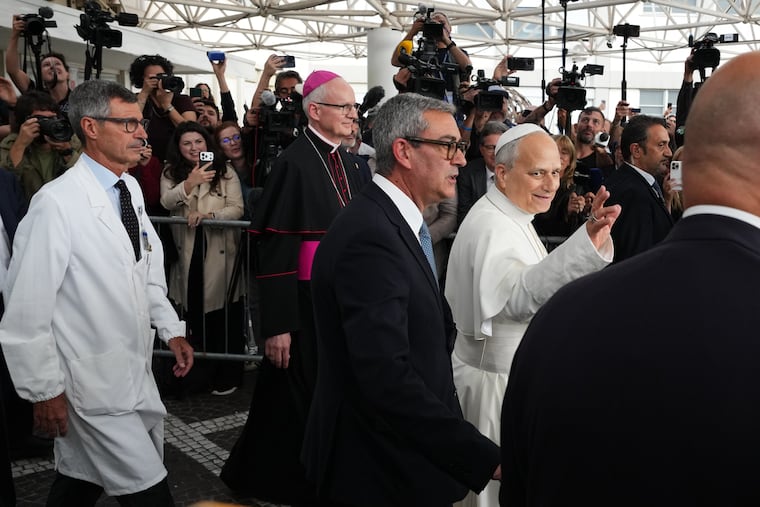
John Matthews is the founder of Ride Hard Breathe Easy, a nonprofit providing financial support to lung cancer patients and their caregivers. He founded the organization in memory of his mother, Kathleen Matthews, who died of lung cancer.
Pope Leo XIV’s lung cancer diagnosis has brought international attention to this disease. As people around the world wish him well, I keep thinking about the support available to someone in his position: medical care, help with daily needs, and people making sure he can focus on recovery.
But what happens when you have lung cancer and don’t have that support? When getting to treatment means finding a ride, missing a paycheck or falling behind on your electric bill? When asking for help means admitting you’re struggling with a disease people may blame you for having?
Those are the patients I think about. And they are the reason I made a promise to my mother.
The last time I spoke with her, she was dying of lung cancer. I felt helpless sitting beside her knowing I could not change what was happening. I could not take away the cancer or the pain, so instead, I promised my mother I would do something to help other people facing lung cancer. How? I had no idea.
That promise eventually led me to start Ride Hard Breathe Easy, a nonprofit that financially supports people impacted by lung cancer.
Years of listening to patients have taught me that access to treatment is only part of what people need. They also need to get to appointments, pay their bills, and feed their families.
I think about a patient we helped recently. He arrived at his oncology appointment carrying more than his cancer diagnosis. He also had a shut-off notice for his electricity. Before his diagnosis, he worked two jobs. As his illness progressed, he had to leave one job and reduce his hours at the other. His electric bill fell further behind, and he was overwhelmed and embarrassed to ask for help.
Practical support should be part of how we care for people with lung cancer.
His care team connected him with us to keep the power on.
A patient needs a ride to an appointment. Another needs help putting food on the table. These needs may not appear on a medical chart, but they can become enormous obstacles for someone fighting cancer.
Practical support should be part of how we care for people with lung cancer.
Because the disease is strongly associated with smoking, a diagnosis can come with an unspoken question: Did you do this to yourself? Patients may feel they have to explain both their illness and why they cannot manage its costs.
The shame surrounding lung cancer can create barriers even before treatment begins. Research done by the National Institutes of Health shows that smoking-related stigma can be a barrier to lung cancer screening, and delaying care.
And according to Lung Cancer Foundation of America, early detection means a 65% five-year survival rate. Late detection? Just 9%. The U.S. Preventive Services Task Force recommends annual lung cancer screening with a low-dose CT scan for adults ages 50 through 80 who have a history of smoking at least 20 packs a year and currently smoke or quit within the past 15 years.
Smoking cessation remains critically important, but prevention and blame are not the same thing. No cancer patient should have to earn compassion.
As we wish Pope Leo well, let’s also think about the patients whose diagnoses will never make the news. Talk with your doctor about screening if you may be eligible. Check in on someone facing lung cancer. Offer a ride, bring a meal, or simply listen.
I couldn’t save my mother. But as she was dying, she gave me a reason to try to help others. Every time we help someone get to an appointment, put food on the table, or keep the lights on, I think about her.
The promise I made to my mother began with wanting to help and not knowing how. You don’t need all the answers, either. Start with a question: “What do you need?”
About guest essays
Guest essays, or op-eds, are commentary pieces that present the opinion or perspective of the author. Many are submitted to us by Inquirer readers and writers with insight on the news, but we also solicit op-eds from authors on specific topics. For more information visit our guidelines.