After heavy strikes by Iran, U.S. naval base in Bahrain faces uncertain future
Damage to the base — which has gone largely unacknowledged by the Trump administration — is likely to cost more than $400 million, according to the Congressional Research Service.
MANAMA, Bahrain — Before the Iran war, U.S. military personnel at Naval Support Activity Bahrain enjoyed Wednesday movie nights, stretching blankets out with their families on the grassy grounds in front of a projector.
Life near the base, which served as the headquarters for U.S. Naval Forces Central Command and U.S. Fifth Fleet, also featured Sunday brunches and a string of nearby bars and restaurants — many of them American franchises, such as Texas Longhorn, Chili’s, and Fuddruckers. There were sports leagues for children, an American school, and Saturday morning shopping for Persian carpets and custom-made suits.
Today, many of the neighborhoods around the base feel deserted. Only a tiny fraction of the more than 8,000 personnel who were once stationed here remain, and the future of the U.S. presence here and across the Gulf is uncertain, with the Pentagon considering moving its forces from the region to Israel and Jordan.
Within hours of the U.S. and Israeli forces bombing Iran on Feb. 28, this tiny island country, along with the rest of the U.S.-allied Gulf nations, was targeted by Iran.
Videos showed Iranian drones crashing into the base, causing massive explosions. In the months that followed, two civilians were killed and dozens wounded, including two Defense Department employees, as Iran continued to fire hundreds of drones and missiles that hit not only NSA Bahrain but also nearby energy infrastructure, residential buildings, and data centers.
Damage to the base — which has gone largely unacknowledged by the Trump administration — is likely to cost more than $400 million, according to the Congressional Research Service.
Nine months into the United States’ war with Iran, the future of the base remains uncertain, with U.S. military officials acknowledging that it is not clear when, or if, NSA Bahrain will return to prewar operations. The reality in Bahrain, where the U.S. military presence for generations went largely unquestioned, offers a window into both the hidden toll for U.S. forces and their families on the front lines of the war — and also the complex legacy they have left behind.
Despite its proximity to Iran — just 125 nautical miles away — Bahrain had always been a place that was known for its safety, Americans who lived there said, and where they felt welcomed.
“It felt like a small town, except you were living overseas … everyone knew everyone,” said one sailor’s wife, who spoke on the condition of anonymity because of the sensitivity of her husband’s job. “Those were the best years of my life.”
On the ground, where damage to the base is still visible from major highways, some Bahrainis — including business owners who counted on the base for their livelihoods — say they want the U.S. sailors and their families to return.
But there is also an increasingly vocal part of the population now questioning what purpose the Americans served — and whether their presence actually made Bahrain more vulnerable rather than more secure under U.S. protection.
In recent weeks, Iranian strikes against Bahrain have resumed, with the regime making clear that Bahrain and other Gulf nations will pay the price until Tehran’s demands — including the departure of U.S. forces from the region — are met.
“This is happening to us because of what the U.S. is doing in the region,” said Bahraini human rights activist Mohammed Abdallah, during an interview in Manama. “Why are we even involved? They are messing around in the region, and we are suffering.”
Warm ties
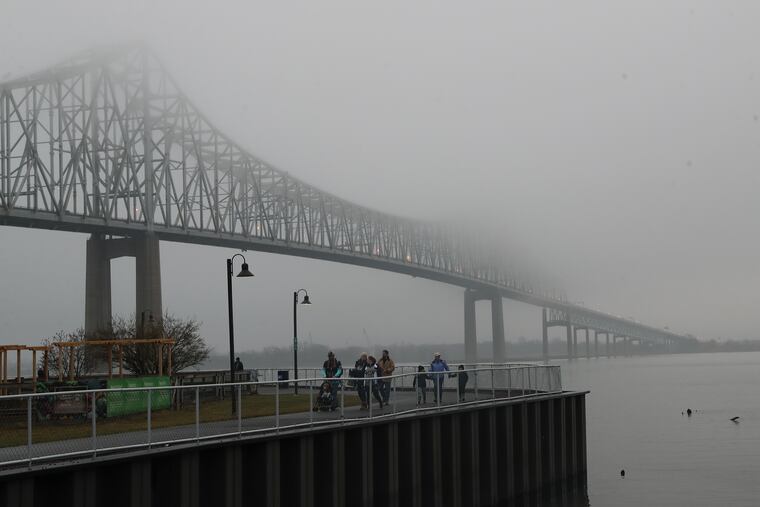
Flying into Bahrain, turquoise waters almost seem to engulf the country, which has a land mass smaller than Rhode Island. For centuries, the territory was part of various Persian dynasties, and it has long maintained strong geographic, cultural, and religious ties with Iran. The majority of both populations are Shiite Muslims.
But Bahrain, which, like most Gulf nations, is governed by a Sunni ruling family, has over the years maintained closer ties with the West, first as a British protectorate and then as top U.S. security partner.
The base, which the U.S. took over when the British left in 1971, served as the main naval hub for the Gulf War in 1991 and the Iraq War, beginning in 2003.
In recent years, it became the hub for a variety of missions to deter Iran and its proxies. As the only U.S. military post in the region where families were allowed to live, it grew to include more than 8,000 military personnel, dependents, and civilian contractors.
Most Americans lived in villas and apartments in neighborhoods around the base, which included a movie theater and grocery store.
The local school run by the Defense Department counted members of Bahrain’s royal family among its alumni. Restaurants and shops catering to the expat Americans proliferated.
On a day-to-day basis, the threat from Iran felt relatively far away, Americans who lived near the base said. Relations with locals were warm.
“We went everywhere and did everything,” said a teacher who worked at the school, and who spoke on the condition of anonymity because of concerns about her job. The teacher said she felt safer in Bahrain than in her new posting in Europe.
“We felt welcomed,” said the sailor’s wife, who has relocated to the U.S. “We would have wanted to stay.”
The prospect of Iranian attacks on Bahrain were so off her radar, she said, that she had planned to attend a children’s birthday party on the base on Saturday, Feb. 28, which was canceled only hours before the explosions started, following warnings from U.S. personnel at the base.
An uncertain future
Officials were always aware of the base’s vulnerabilities, especially as Iranian targeting capabilities improved, said John W. “Fozzie” Miller, a retired U.S. Navy vice admiral who served twice in leadership roles on the base.
The base was responsible for managing the U.S. military’s relations with Iran, he said, but it was widely understood that a war with Iran would not be fought from Manama. Before Feb. 28, the vast majority of personnel stationed at the base had already deployed across the region.
But their families, like the teachers and civilian contractors, had little warning. After days of explosions and drones and missiles pummeling the base, the State Department on March 2 declared an ordered departure for all nonemergency U.S. government personnel and family members.
The sailor’s wife applied for visas to Saudi Arabia for herself and her children and drove across the 15-mile causeway between the two nations. The teacher was allowed one bag and told to get to the airport, unsure where the evacuation flight would go. Pets were abandoned, and the vast majority of belongings were left behind.
Today, the future of the base is an open question. The acting navy secretary acknowledged in a September interview with the Epoch Times that Iran “blew the hell out of Bahrain,” and Chief of Naval Operations Adm. Daryl Caudle said in an August town hall that the Navy is “not getting back in there anytime soon.”
Only recently has the Navy begun to consider what a future presence at the now badly damaged facility would look like, two Navy officials said, speaking on the condition of anonymity because of the sensitivity of the situation, but there are no specific plans.
“Until all of this is resolved, we’re not going anywhere near there,” said one of the officials, referring to the base and recent Iranian attacks on Bahrain. “It just doesn’t make any sense.”
In a statement to the Washington Post on the base’s future, the Navy said that it had “nothing to announce at this time. We cannot speak to internal deliberations.”
The primary mission of NSA Bahrain, to serve as the Navy’s Middle East headquarters, can be done in the U.S. — just as Central Command is run in Tampa and the Air Force’s Middle East operations are run out of Shaw Air Force Base in South Carolina, one of the Navy officials said.
The main advantage of being there was to show the U.S. had skin in the game and to make it easier to meet face to face with Gulf allies, the official said. But going forward that could be accomplished by flying into the region, without fully rebuilding the base, the official said.
Bahrain’s government declined to respond to specific questions about plans for NSA Bahrain but said that the two countries “share a strategic partnership spanning eight decades.”
“Our governments maintain close and continuous consultations on defense and security matters, including the U.S. naval presence,” the spokesperson said in a statement. “This partnership remains strong, built on mutual trust, shared interests, and a common commitment to regional security and stability.”
Loss and anger
For many Bahrainis, the effects of the American departure were felt almost immediately.
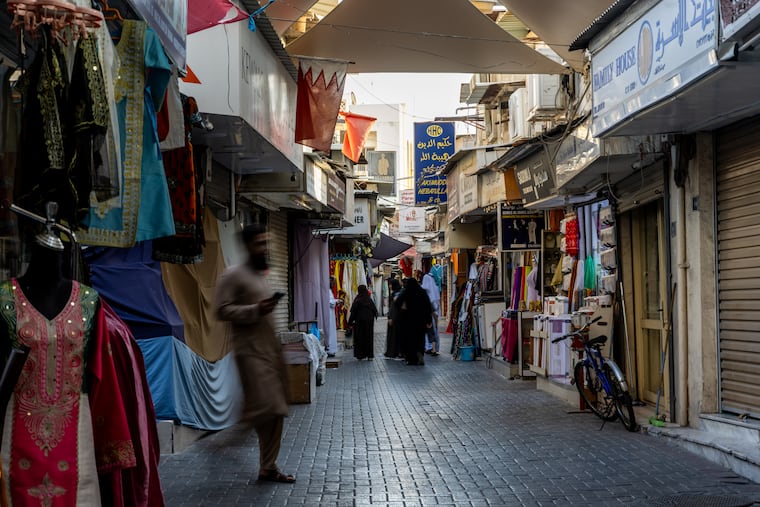
An artist who used to sell souvenirs to the Americans closed his shop. A trio of tailor brothers — all with the first name Ali — known for making custom-made suits for the Navy saw their business shrivel. A father and son running a Persian carpet store found themselves wondering about the future.
“They were our family,” Ali Asgar, 42, said of the Americans, for whom he made his first suit in 2000. In the years since, he said during an interview in his store, which is filled with signed Navy hats and challenger coins, he has made more suits than he can count. “We miss them, and we want them to come back.”
Sitting in a nearly empty gold souk on a recent day, Karim Al Sayegh, a gold-maker and artisan who estimates he is in his 80s, likened the war with Iran “to a can of Pepsi that has exploded and cannot get back in the bottle.”
Sayegh, whose business has also dwindled, said he is not sure whether the Americans or Iranians are to blame for the current situation. But he said that he would still prefer that U.S. personnel, who used to gather outside the market on Saturdays to buy gold, return.
“I would just like things to go back to the way that they were,” he said. “There is a cycle of things, and this cannot last forever.”
But there was also an undercurrent of anger. For decades, a small number of opposition activists and parties warned that “having a U.S. base on Bahraini soil means any war that the U.S. is involved in, we are as well,” a Bahraini opposition leader said.
“There is a danger there,” the opposition leader said, speaking on the condition of anonymity because of fear of retaliation. “We know we don’t choose the wars we enter.”
But the government, the opposition leader said, is “addicted to Western foreign presence” and fearful of Shiite communities loyal to Iran.
In the initial days of the war, small protests broke out in those communities, where many mourned the death of Iran’s supreme leader, Ayatollah Ali Khamenei, who was considered a spiritual leader of the faith. In videos of drone strikes on the U.S. base, shared widely on social media, some people were cheering.
“It is a drone, guys, a drone, a drone, strike, strike, strike,” one man shouts excitedly as a drone barrels toward the base before smashing into its target, setting off a fire.
Bahraini authorities cracked down quickly, arresting protesters and banning footage of strikes.
They rounded up some of the country’s most prominent Shiite clerics shortly after the war began, accusing them of collaborating with Iran to undermine Bahrain’s national security, and last week sentenced scores of them to life in prison. The clerics’ families and lawyers have rejected the charges, saying they have become pawns in the wider war.
The reactions of many Bahrainis after the withdrawal made clear that many in Bahrain “do not feel the U.S. presence offered them safety,” said Sayed Ahmed Alwadaei, director of advocacy at the Britain-based Bahrain Institute for Rights and Democracy. “Instead, it did the opposite.”
“But people have no say in it,” he added. “Anyone who is going to criticize the war is accused of committing treason.”