The real question about faculty activism at Haverford: Are professors doing their jobs?
Guangtian Ha’s arrest after months of sending antisemitic threats to a Jewish colleague may obscure a broader faculty problem at Haverford and other colleges.
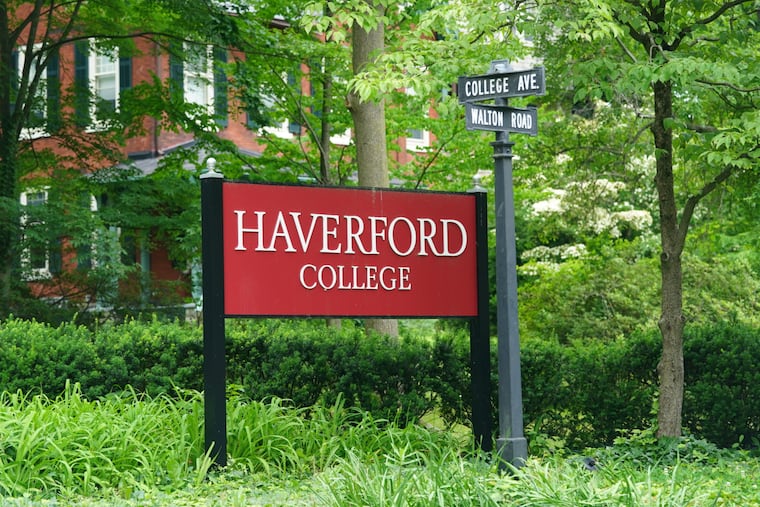
The recent arrest of Haverford College professor Guangtian Ha on a federal cyberstalking charge has understandably drawn national attention. Authorities allege Ha spent months anonymously sending antisemitic threats to a Jewish colleague, including: “Run. Flee. Leave,” “You and your family have no future here,” and get “out of my country.”
But Ha’s arrest may obscure a broader faculty problem at Haverford. Only weeks before his arrest, Bi-College Faculty and Staff for Justice in Palestine — the anti-Zionist faculty group for Haverford and neighboring Bryn Mawr, with Ha among its members — had openly challenged the college’s settlement of a major lawsuit alleging antisemitic discrimination.
The agreement specifically prohibited faculty from refusing recommendation letters based on a student’s Jewish, Israeli, or Zionist identity. Bi-Co FSJP responded by insisting its members “would never” discriminate based on identity, while saying they “reserve[d] the right” to refuse a recommendation for study at an Israeli university when writing it would conflict with their “own political principles” and academic-boycott commitments.
That position fits a broader National FSJP strategy. Bi-Co FSJP is part of that network, which explicitly calls on its chapters to push universities to suspend study abroad programs in Israel and urges faculty, students, and staff to refuse cooperation with the campus processes that enable such programs, including advising, registration, credit approval, and departmental participation.
When faculty political activism like this comes under scrutiny, professors typically invoke free speech and academic freedom, while critics turn to antidiscrimination law. But both frames can obscure a more basic professional question: Are professors carrying out the jobs they were hired to do?
Faculty are hired to advance the university’s academic mission. Academic boycott does the exact opposite: It restricts study, scholarly collaboration, academic relationships, and educational opportunities in service of a political cause. A professor who refuses a recommendation to enforce that boycott turns a faculty responsibility meant to support a student’s education into a means of obstructing or censuring it.
But academic boycott is only the clearest manifestation of a broader pattern. At Haverford, it was already visible in November 2023, when 14 faculty members — about one in 10 of the college’s full-time instructional faculty — signed an FSJP statement speaking “as faculty and staff at Haverford College.” Beyond promoting an academic boycott, they declared solidarity with Palestinian, Arab, Muslim, and anti-Zionist students; blamed the “long-standing efforts of Zionists” for creating a hostile campus climate; and backed Students for Justice in Palestine. The signatories included department and program chairs and directors and a member of Haverford’s psychological counseling staff.
» READ MORE: How the Haverford antisemitism settlement harms free speech | Jonathan Zimmerman
The problem was not that these professors held personal political views. It was that they organized as faculty and used their professional standing to align themselves with some students while stigmatizing and marginalizing students on the other side of the conflict. In doing so, they put the aims of a political movement ahead of a basic responsibility of their jobs: to serve all students fairly.
Haverford is not an isolated case. National FSJP boasts more than 130 North American chapters.
At the University of California, Berkeley, FSJP helped produce a tool kit instructing faculty how to bring Palestine advocacy into their courses and evade restrictions on political indoctrination. At the University of Minnesota, the network’s faculty affiliate helped organize a disruptive protest outside Chabad during a student event. At the University of Pittsburgh, FSJP challenged antisemitism protections while opposing academic collaboration with Israeli institutions. At New York University, FSJP created a faculty tribunal to contest discipline and Title VI scrutiny of pro-Palestinian activists.
Across these campuses, though the conduct differs, faculty roles and institutional standing are being used to advance a political movement, even when doing so conflicts with responsibilities to students and the university’s academic mission.
In virtually any other profession, failing to perform the responsibilities for which one was hired has serious consequences.
In virtually any other profession, failing to perform the responsibilities for which one was hired has serious consequences. Academia should be no different. Colleges and universities should not treat political advocacy undertaken as faculty — including taking sides in campus conflicts — as professionally irrelevant simply because it involves protected expression or association.
Organizing as faculty in a movement that puts political aims in conflict with the school’s academic mission should matter in hiring, promotion, tenure, and continued employment. When that advocacy shapes teaching, advising, recommendations, or educational opportunities, the breach is clearer still.
Institutions that refuse to apply those standards should expect others to notice. Students and families should think seriously before choosing a college that treats organized faculty political activism as protected expression while ignoring its professional consequences. Donors, public funders, and other supporters should likewise ask why they should continue backing institutions that refuse to hold faculty accountable for doing their jobs.
Haverford’s settlement may strengthen protections against discrimination. But if the college assesses FSJP-affiliated faculty only through free speech and antidiscrimination law, it will still miss a critical issue: whether those professors are fulfilling their professional responsibilities.
The question is not how far professors may go as activists. It is whether colleges and universities will still require them to meet the responsibilities of being professors.
Tammi Rossman-Benjamin is the director of AMCHA Initiative, a nonpartisan, nonprofit organization dedicated to combating antisemitism at colleges and universities in the United States. She was a faculty member at the University of California for 20 years.