What could happen if we fail to properly regulate AI? A ’90s law meant to rein in the internet may hold a clue.
The Communications Decency Act of 1996 included a provision exempting tech companies from liability for content on their platforms. It’s past time for Congress to overhaul the measure.
You don’t need a crystal ball to predict that unintended consequences will occur if steps are not taken now to better regulate the increasing integration of artificial intelligence into almost every aspect of human life, not just here in the United States, but worldwide.
Need proof? Just look at how inadequate regulation of the internet has affected politics in America. So much of the campaign rhetoric online is filled with half-truths and outright lies because too much digital content is exempt from the more stringent legal standards long applied to print and broadcast media.
That happened because 30 years ago Congress never envisioned that people one day would use phones carried in their pants pockets or purses to not only read or hear the news, but find internet content that makes it easier to subscribe to your own “truth.” That lack of vision then is similar to some responses to warnings about AI now.
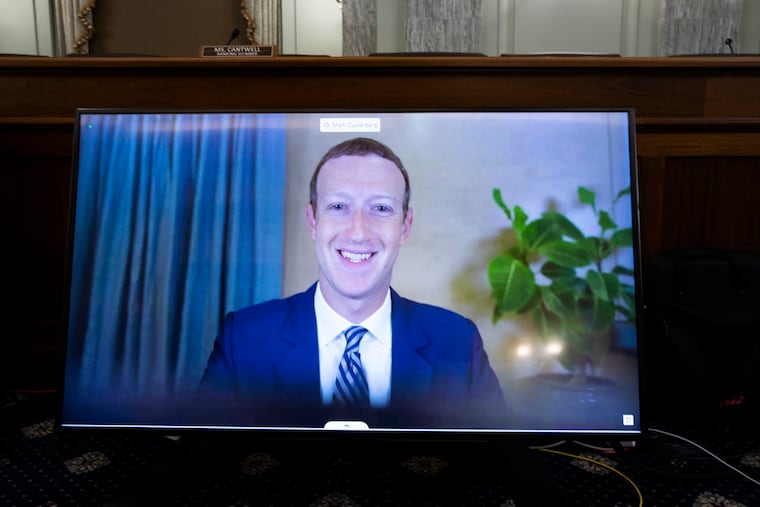
Too many lies are spouted online because the Communications Decency Act of 1996 too broadly exempts internet platforms from liability for content posted by their users. The law wrongly treats websites like libraries or bookstores, which aren’t held liable for loaning or selling books they claim they did not know included false content.
Some challenges to Section 230 of the Decency Act have argued that platforms such as YouTube and X, formerly Twitter, should at least be held liable for content that may foment violence by terrorists. But not even that argument moved the U.S. Supreme Court, which thus far has left the 1996 law intact.
That means it’s up to Congress to do the right thing and refresh the law, which was the same conclusion reached six years ago by, unbelievably, President Donald Trump’s then-attorney general, Bill Barr. In a letter to Congress recommending revisions, Barr pointed out that much of the legal latitude provided to digital content is no longer necessary.
» READ MORE: Is AI’s authoritarianism a bigger threat than Trump’s? | Will Bunch
“Many of today’s online platforms are no longer nascent companies but have become titans of industry,” Barr said. “They no longer function as simple forums for posting third-party content but use sophisticated algorithms to suggest and promote content and connect users.”
Barr, however, quit his job a few months after sending Congress his recommendations. The attorney general abruptly resigned rather than wait for his tenure to end after Trump publicly chastised him for refusing to go along with the lie that Joe Biden stole the 2020 election.
Don’t hold your breath waiting for current Attorney General Todd Blanche or anyone else in the Trump administration to recommend making internet content more trustworthy. After all, the president seems to have little regard for truth, especially when sticking to facts might interfere with his frequently expressed notion that he is never wrong about anything.
CNN political analyst Daniel Dale documented more than 8,500 lies made by Trump during his first presidency. “If he delivers a story featuring an unnamed person calling him ‘sir,’ it’s often fiction,” Dale said. “Even when an accurate statistic would make him look good, the businessman who used to inflate his reality show ratings tends to choose an inaccurate statistic that would make him look a little better.”
Lying politicians are nothing new, but the internet has made it easier for them to lie to audiences who prefer to believe whatever supports their versions of reality. Further abetting that crime is the dwindling number of old-fashioned sources of information that Americans traditionally relied upon to find and reveal the truth.
Yes, I’m talking about newspapers.
Having worked for newspapers in five states for more than 45 years, it is disheartening to see so many fail to attract the necessary volume of digital readers to produce enough advertising revenue to pay their bills. Newspaper circulation was 55 million readers in 2000, but has dropped to 15 million today, and 3,000 newspapers have gone out of business during that time.
» READ MORE: It’s time for a law promoting a local news revival in Pa. | Opinion
That’s all the more reason to pass legislation that will make it easier to find the truth online. But a more challenging task will be trying to restore the sense of community that was lost each time a local newspaper folded. Newspapers printed on paper provide a public forum where people can’t help but share the same information. Online readers are more likely to get stories curated to appeal to a specific audience.
That’s fine if your primary goal is to cultivate a loyal website audience that becomes a market for products sold on your platform that an algorithm says they are more likely to buy. But if your goal is to build community by providing equal access to factual information so people with different opinions can at least try to better understand each other, you won’t be bound by algorithms.
It will take more time in this brave new world to get it right. Reasonable restrictions must be placed on internet purveyors of information who will otherwise keep milking money from supporters and advertisers by providing receptive audiences only what they want to see and hear. Meanwhile, it’s up to each of us to resist online manipulation and seek the truth — even when we know it’s not going to make us happy.
Harold Jackson, who served as editorial page editor for The Inquirer from 2007 to 2017, was awarded the Pulitzer Prize for editorial writing in 1991 and retired from the Houston Chronicle in 2020. His memoir, “Under the Sun: A Black Journalist’s Journey,” was published by the University of Alabama Press.