Phillies’ weaknesses on display in season-ending loss to Braves: ‘Just as frustrating as last year’
It was the Phillies’ roster construction that led to their demise in their wild-card series, from the lack of starting depth, a competent bullpen, and reliable right-handed hitters.
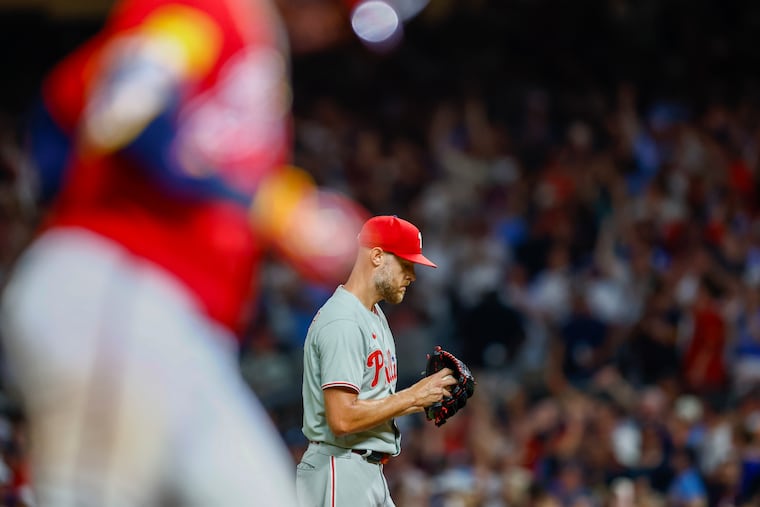
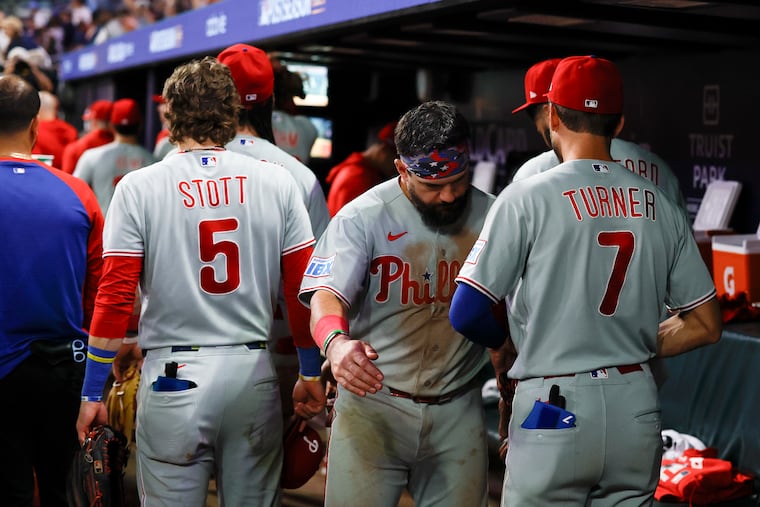
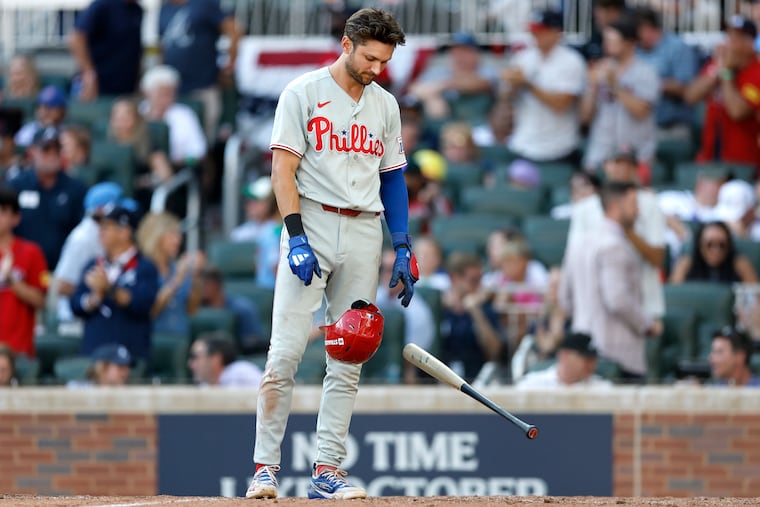
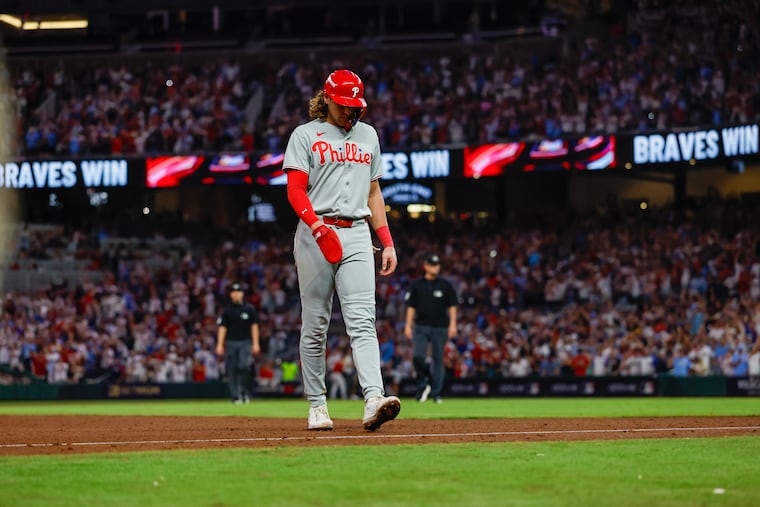
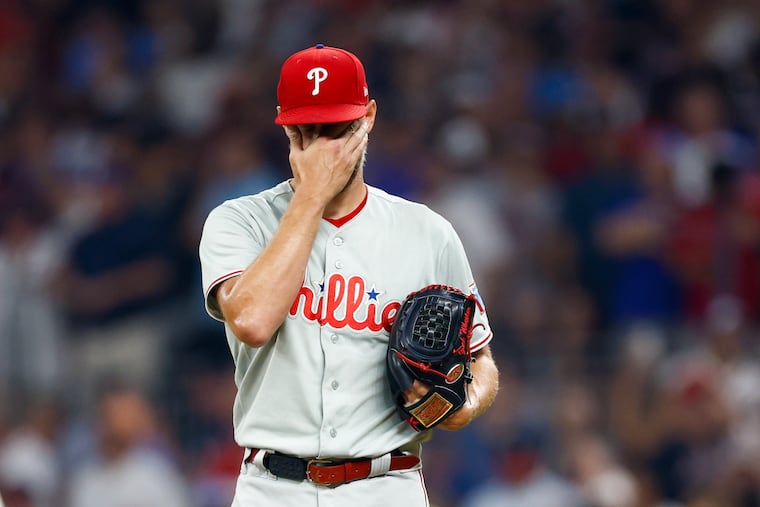
ATLANTA — Like statues, there they stood, this Phillies team. Leaning against the dugout railing, chins resting on their crossed arms as they watched it all slip away once again.
This one was a slow death. But the end could have been discerned a mile away.
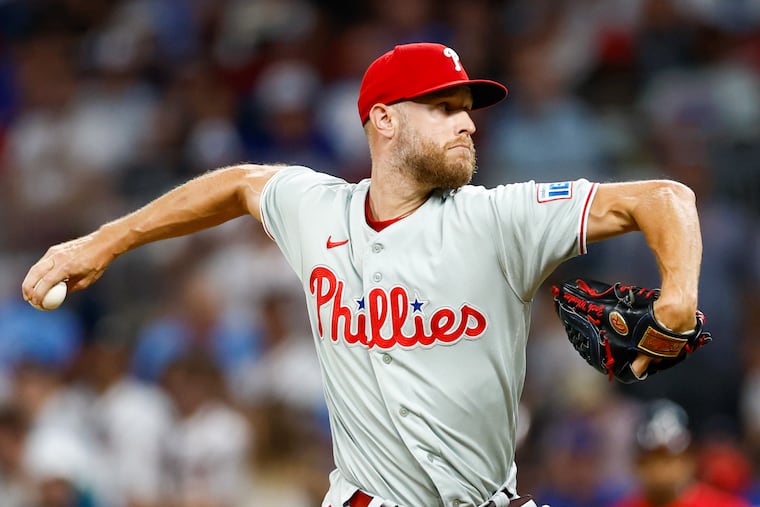
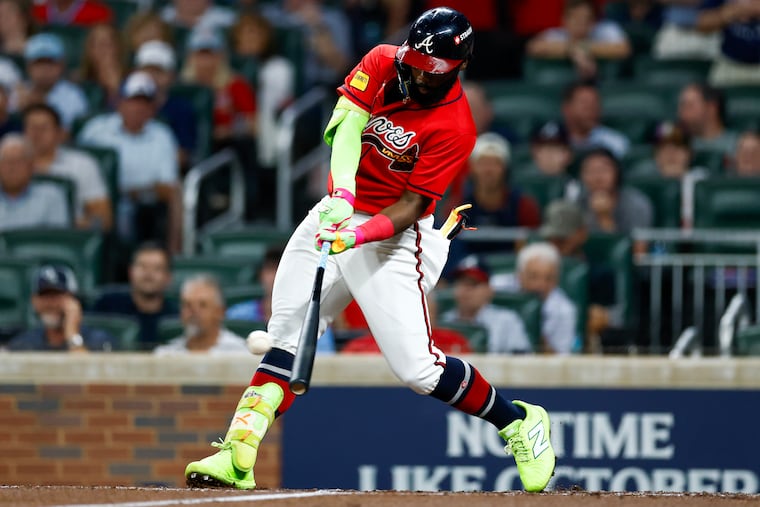
Even before Michael Harris II’s first-inning homer off Aaron Nola that gave Atlanta a lead it would not surrender. Even before Ozzie Albies’ fourth-inning homer off Zack Wheeler, which might have been the mortal blow.
» READ MORE: The same structural failures cost the Phillies again in the playoffs. The onus falls on Dave Dombrowski
It was the Phillies’ roster construction that led to this, a 6-2 loss to the Braves on Thursday night, the end of their season in Game 3 of the wild-card series. It was the lack of starting depth, the lack of a competent bullpen, the lack of reliable right-handed hitters. The weaknesses that at times the Phillies had been able to paper over were all amplified by the way their regular season ended, and directly led to their demise Thursday.
“It’s just as frustrating as last year, and the year before that,” said Kyle Schwarber.
The four consecutive games lost in the final week, delaying a postseason clinch until the very last possible moment, loomed incredibly large. The Phillies used Nola on two days’ rest in Game 161 as a desperate attempt to secure a playoff berth — and it failed. They were then forced to use Wheeler in Game 162.
“Looking back, having your pitching set up is really important this time of year,” Trea Turner said. “We didn’t do a good job playing down the stretch to have that happen.”
Instead of being able to line up the top three arms in their formidable rotation for this three-game series, the Phillies had to cobble together a precarious plan. Jesús Luzardo, who returned from injury to also pitch in Game 162, could cover only five innings on Tuesday. Cristopher Sánchez started Wednesday, and the Phillies leaned on Andrew Painter in relief rather than their unstable bullpen.
» READ MORE: The booth remembers the 1993 Phillies, Joey Votto’s possible jinx, and other highlights from the Game 3 broadcast
That left Nola, who has struggled to keep the ball in the park all season, and Wheeler on short rest for Thursday’s elimination game.
None of president of baseball operations Dave Dombrowski’s trade deadline acquisitions — not Brooks Raley, nor the injured Luis Arraez and Caleb Kilian — were on the wild-card roster.
“We didn’t play as well as we wanted down the stretch, especially right there at the end, and we kind of had to piece it together,” Wheeler said. “This series, not ideal, but we’re all pros here, and when we get the ball, it’s time to compete, and it’s up to us at the end of the day.”
When both pitchers gave up blasts to the Braves over the right-center field wall on Thursday, there were endless “what ifs.” What if Wheeler wasn’t pitching on three days’ rest? What if he had started the game instead of Nola, who has historically been hit hard by the top of Atlanta’s order? What if the Phillies’ bats could have picked up their overworked pitchers?
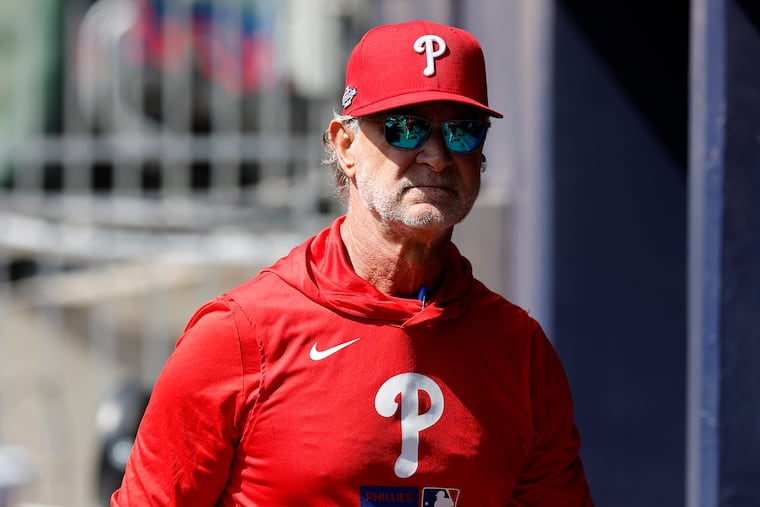
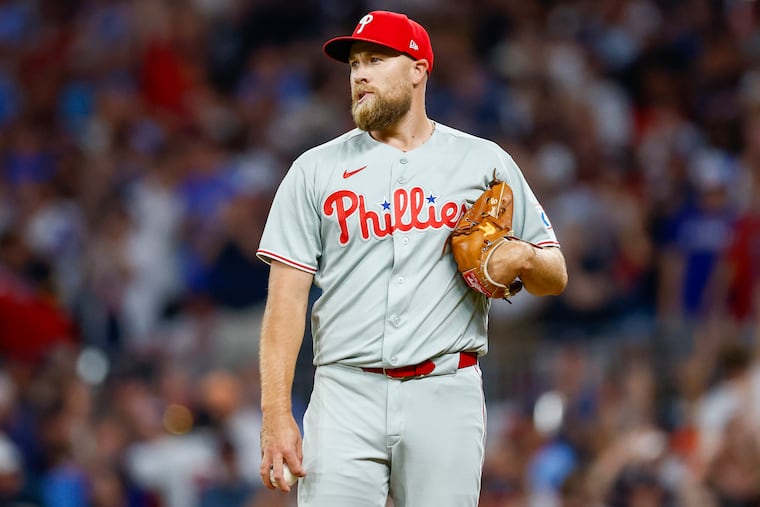
Interim manager Don Mattingly said the Phillies decided to start Nola because he was more rested than Wheeler, and they hoped he would be able to keep them in the game for a few turns through Atlanta’s batting order. Nola had also authored a notable turnaround in his regular season, with a 2.77 ERA in his final 10 starts.
“He was one of our best guys down the stretch,” Mattingly said.
It was a nightmare scenario for the Phillies early, and a best-case scenario for the Braves. Less than two months ago, Atlanta opener Ray Kerr had been a minor leaguer. But he did his job by handling the Phillies’ lefties — excluding Schwarber, who singled and then drew a walk — while their righties failed to carry the load.
From the leadoff spot, Turner went hitless against the lefty Kerr. He finished the series 1-for-11 in three games.
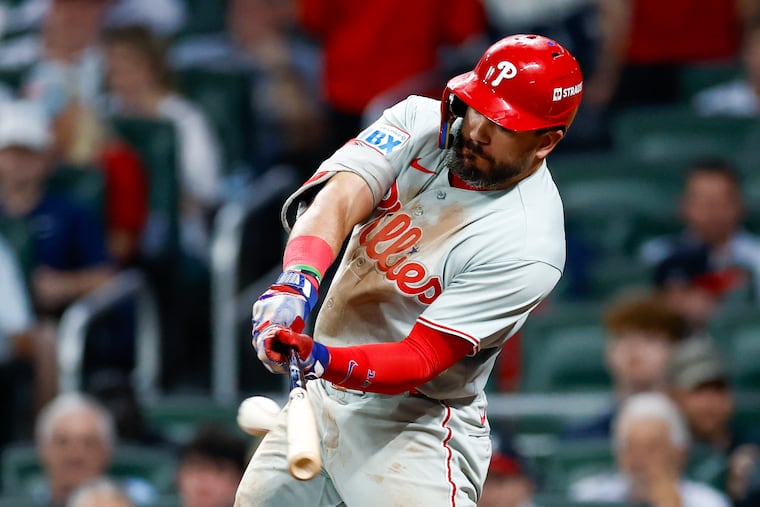
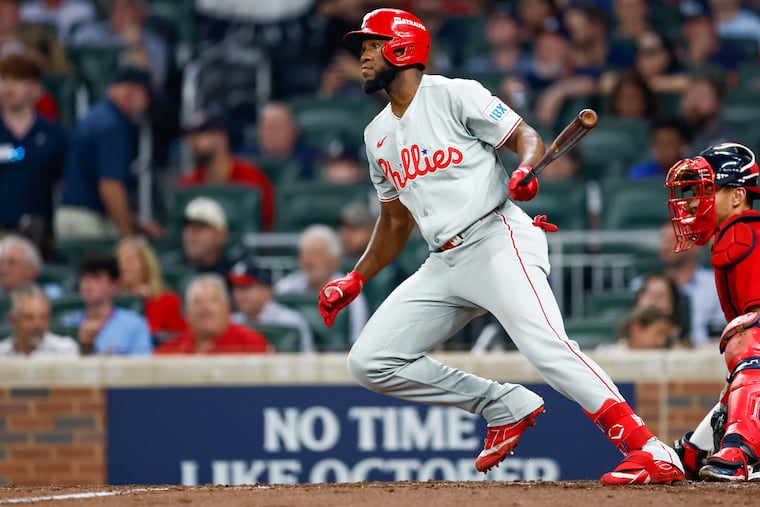
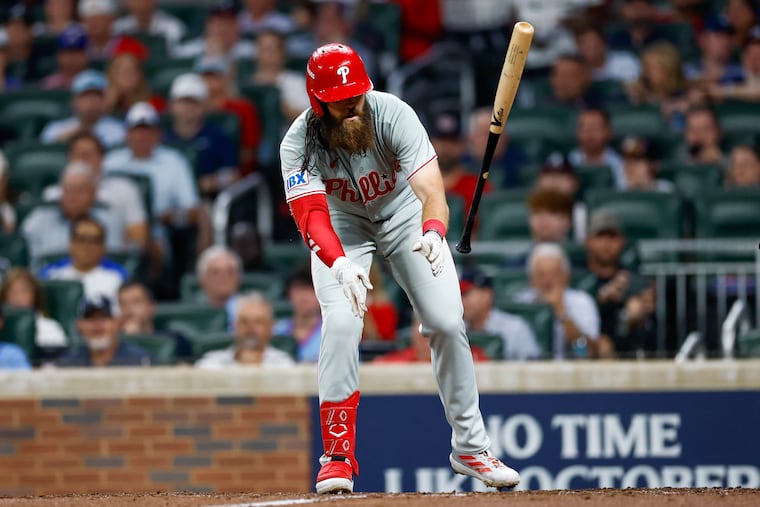
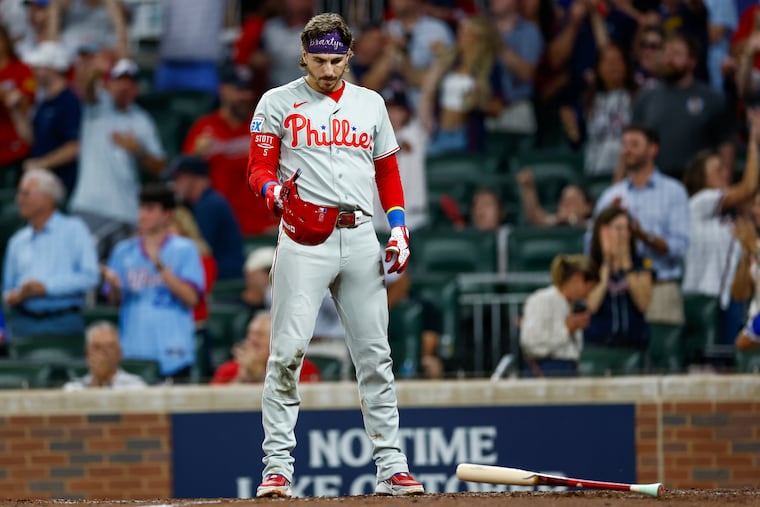
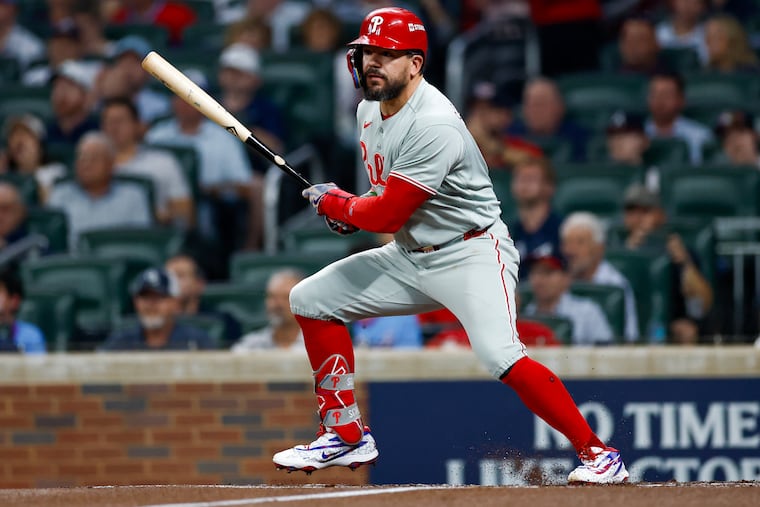
“I think this year was the biggest question mark for me offensively in a long time, and I got to figure that out,” Turner said. “So definitely gonna have a lot of work to do there, and I’ll do it.”
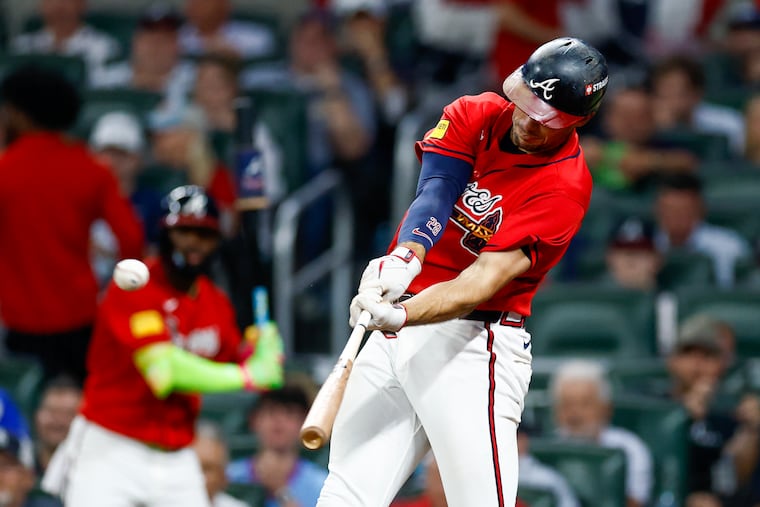
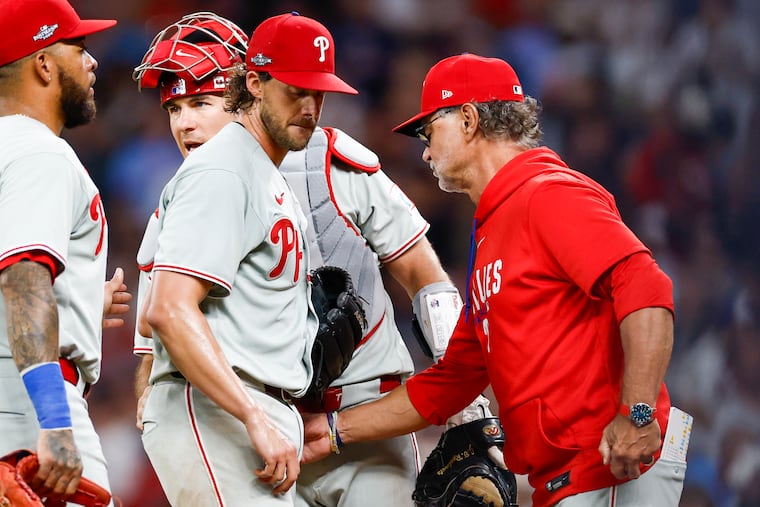
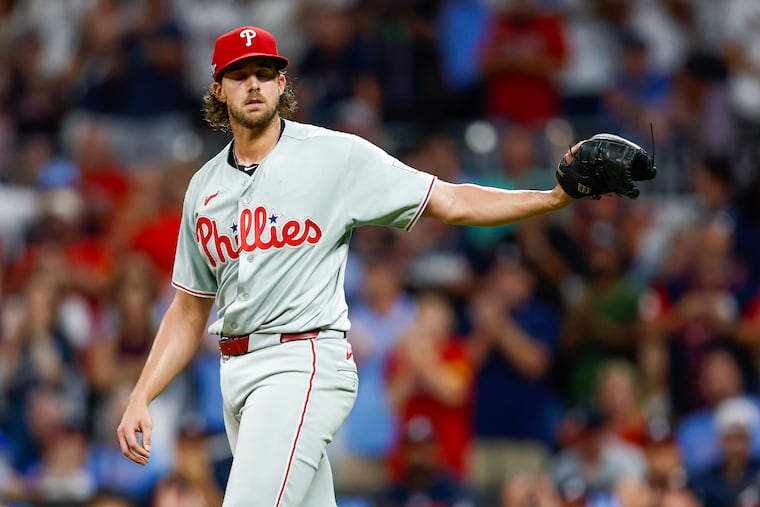
Nola, on the other hand, only managed to secure five outs. The veteran right-hander did not have his command, and he sprayed the ball all over the place while Atlanta was content to take its bases. That is, until Harris went down to get a sinker below the zone in the first inning, powering it 387 feet for a 3-0 Atlanta lead in the blink of an eye.
“I just didn’t get ahead, they didn’t chase much,” Nola said.
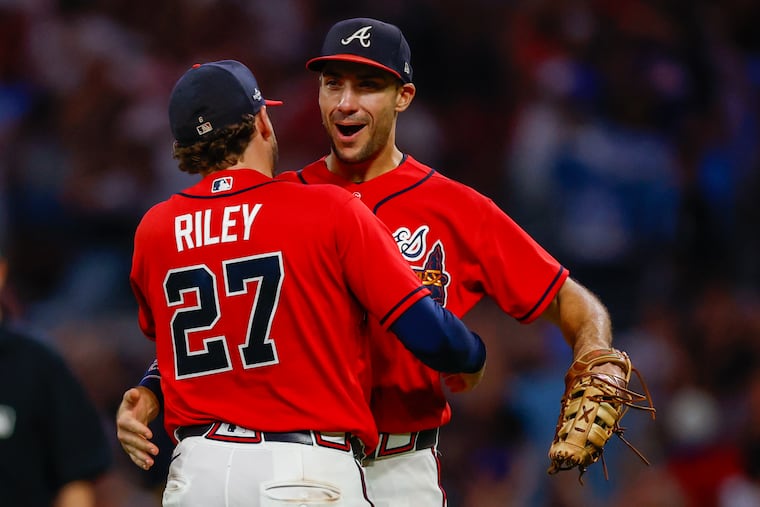
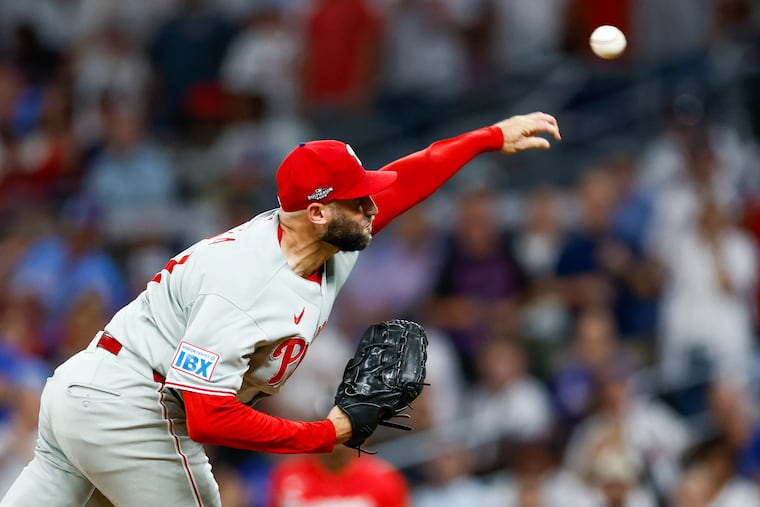
Tim Mayza finished off the second inning before Nola could see the top of the Braves’ order again. And then it was Wheeler for the third, tasked with stopping the bleeding there. But a nine-pitch walk to Austin Riley, followed by a mistake pitch to Albies, resulted in yet another homer over that brick wall in right center.
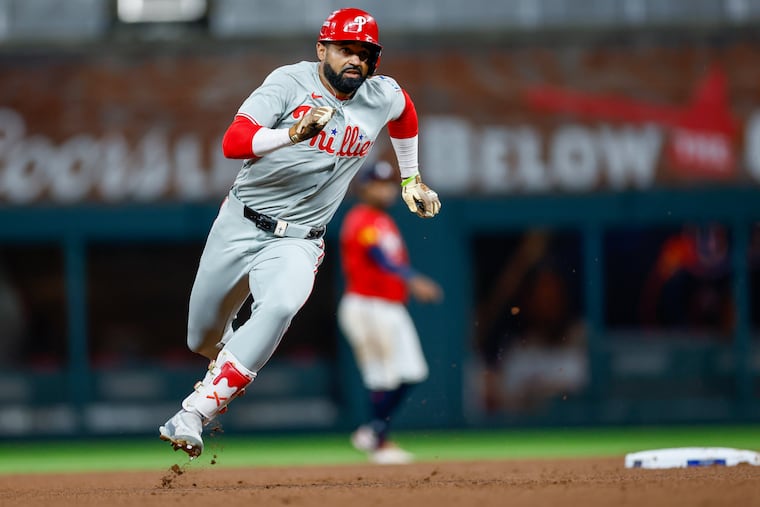
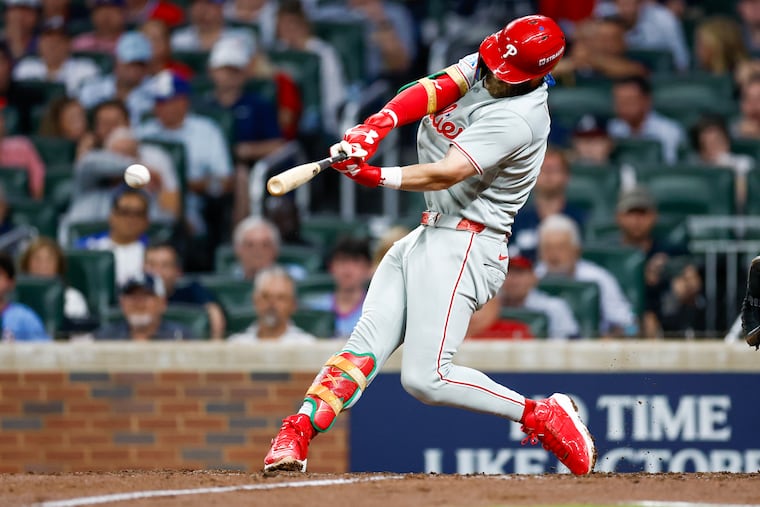
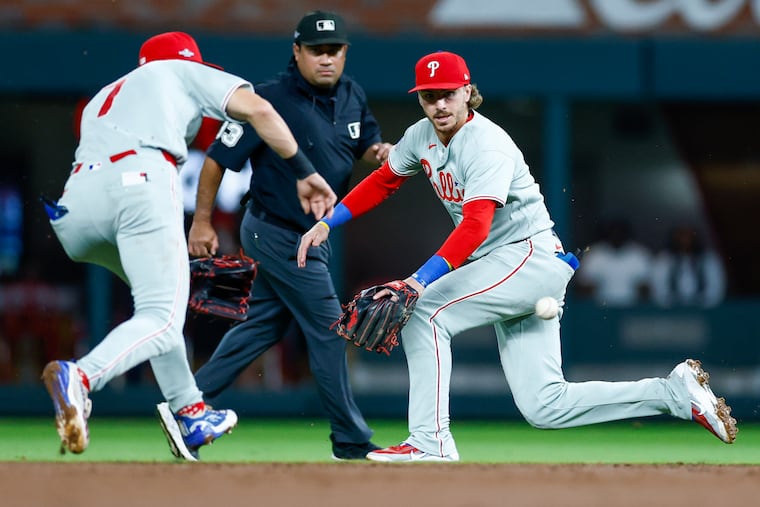
A five-run deficit, especially in the fourth, has been surmountable for this club before. But with every groundout, with every lazy fly ball, it became apparent the Phillies had exhausted the last of their comeback magic. They managed a run in the sixth — on a Schwarber single, a Bryce Harper double, and an RBI groundout from Alec Bohm — and another in the seventh. Derek Hill tripled and scored on a sacrifice fly from Turner.
But the Phillies were unable to snatch momentum back with the long ball, as they had done on Wednesday. While the Braves went deep again in the seventh, this time Matt Olson against Jonathan Bowlan, the Phillies couldn’t find their power.
“It’s hard to score in the postseason. I know we got the lineup capable, but the best teams that get to the postseason have the best pitching, and it’s not like you’re going to put up 10 every night,” Turner said. “Can we play better? Can we do things better? For sure. We got to ask ourselves those questions and find answers.”
» READ MORE: Alec Bohm is the symbol of changes that might be coming to the Phillies. Who else could be on the way out?
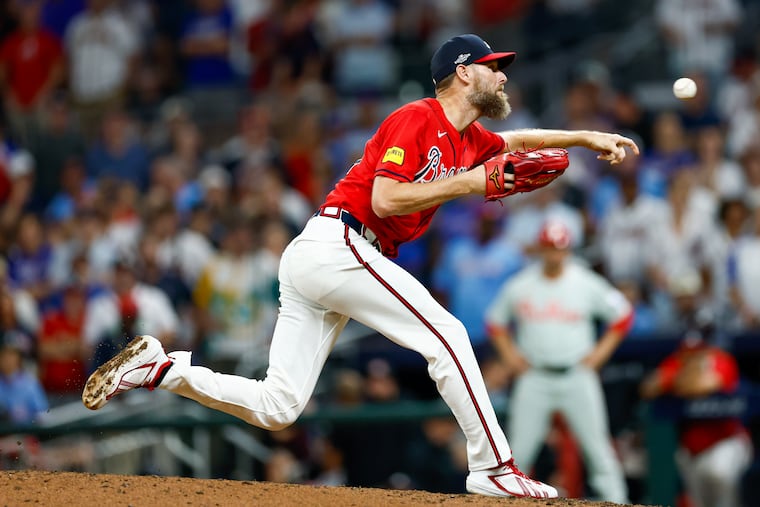
In the eighth, Atlanta brought in ace Chris Sale in relief, after the 37-year-old had thrown 95 pitches two days ago, to face Harper. He chased three pitches outside the zone to strike out in a non-competitive at-bat.
The third strike, a slider in the dirt, got past Atlanta catcher Drake Baldwin and skittered toward the backstop, but Harper didn’t notice right away. He leaned down to undo his leg guard before realizing and starting to run toward first. By then, Baldwin had recovered the ball and threw him out easily to officially end the inning.
“I don’t like the shoulda, woulda, coulda, if this ball would have dropped, or we would have put this guy in, or anything,” Harper said. “I don’t like that. You’re here to do business. You’re here to win games. We didn’t do that.”
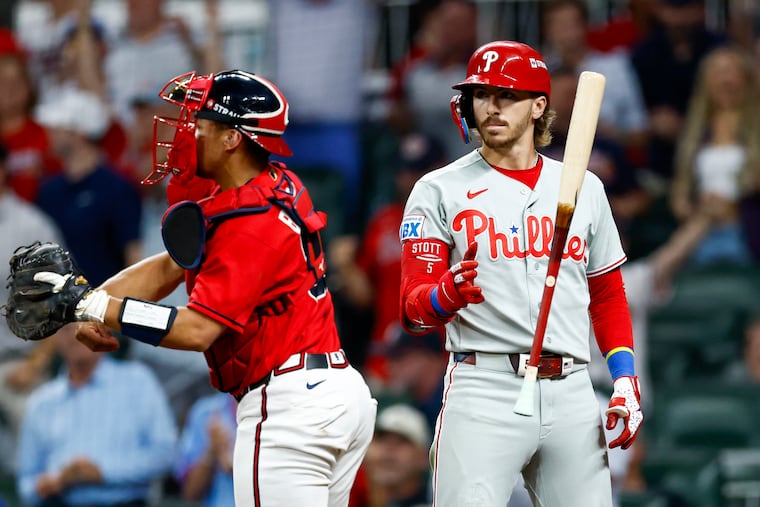
Sale closed it out in the ninth. He gave up a leadoff single from Bohm, but rebounded to retire Bryson Stott and Bryan De La Cruz. As a final indictment of the Phillies’ roster and depth, the final out came down to pinch-hitting Otto Kemp, a utility player with an .080 average in 25 major league at-bats this year, the last of which was in May.
Kemp was outclassed by Sale, badly missing on a slider well inside to send the Braves to the Division Series against the Dodgers. Fireworks ignited the sky, as the Phillies leaned on the railing and watched.
“If you don’t win the last game, it’s a crash landing no matter what,” Mattingly said. “It doesn’t matter where it is. There’s going to be one team that doesn’t have it.”
There will be changes coming. Mattingly’s future as Phillies manager is in doubt. He declined to discuss his status postgame. Bohm, Arraez, Edmundo Sosa, José Alvarado, Tim Mayza, Brooks Raley, and injured Adolis García will all be free agents. The Phillies will no longer owe dead money to Nick Castellanos or Taijuan Walker.
Harper said he expects the team to look “a lot different” next year.
“It’s going to be a long offseason, obviously. I trust in the organization and people that are in charge,” he said. “See where we go.”
But the core, built around him, still left Truist Park late Thursday night another year older, and never further from that elusive goal.