Jensen Huang’s return to Nvidia puts Trump under new congressional scrutiny
Trump’s personal role in the push to restore Huang as chief executive has raised the stakes, elevating the company to the top of lawmakers’ investigative priorities.
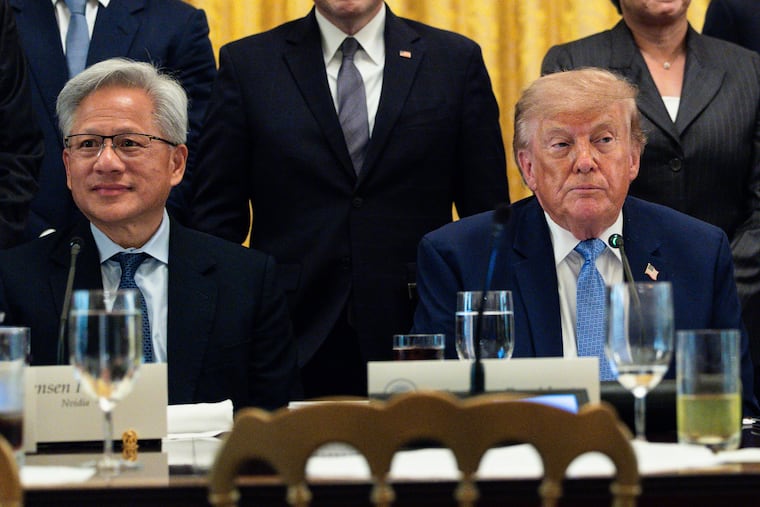
President Donald Trump’s intervention to restore Jensen Huang as Nvidia’s chief executive has opened a new front in congressional investigations, putting both the president and the powerful tech executive in lawmakers’ sights.
Democrats had already planned to look into Huang and Nvidia when they take control of Congress in January. But Trump’s personal role in the push to restore Huang as chief executive has raised the stakes, elevating the company to the top of lawmakers’ investigative priorities and also putting a target on the president, according to members of Congress, their staff and lawyers familiar with the investigations.
“Nvidia was important anyway,” said Jamie Bair, the leader of congressional investigations at the law firm Crowell and Moring, “but I think that this action does likely skyrocket this issue directly to the top of the congressional priority list.”
For weeks, Nvidia has been at the center of scandal after Huang resigned earlier this month as CEO after admitting that he had an affair with Alice Huang, an executive at an Nvidia client company, whom administration officials alleged was a Chinese agent.
A powerful circle of Trump allies had championed Huang’s return, including Elon Musk, former White House AI adviser David Sacks and the president himself. Nvidia’s board, however, was said to have not been considering reinstating Huang.
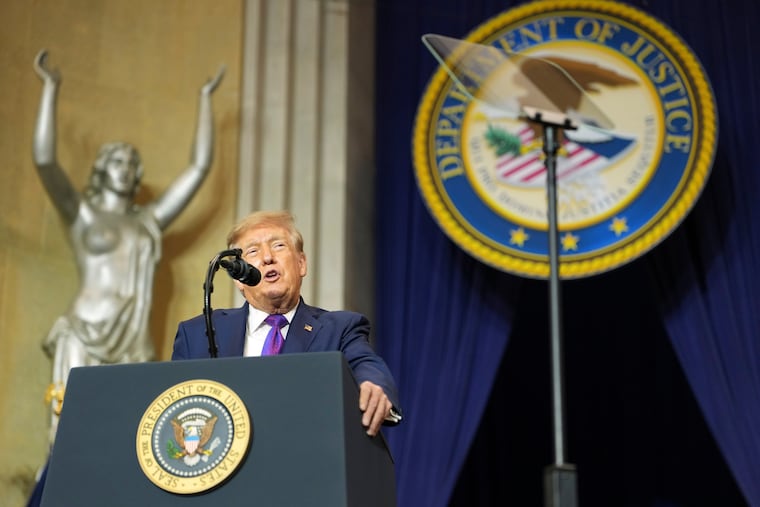
But Trump, a close ally of the chipmaker, had fought for Huang to be restored, eventually deputizing advisers to intervene. Nvidia announced in a statement that Huang was reinstated after its board received input from “senior levels of the United States government.” Shortly after, Trump said he personally orchestrated the effort to reinstate Huang as Nvidia’s chief executive over the last several days.
The extraordinary intervention in one of the country’s most powerful companies drew rebukes from Republicans and Democrats, even as Nvidia’s stock soared on news of Huang’s return.
Within hours, Democrats on Capitol Hill — who had already signaled they would investigate Huang’s relationships and whether Nvidia evaded export controls — began shifting their focus to the government’s role in his reinstatement, questioning why senior administration officials had intervened in a private company’s leadership decision and what influence they had exerted over the board.
“We need a tick-tock on everything,” Sen. Ruben Gallego (D-Arizona), who serves on the Committee on Banking, Housing and Urban Affairs, said in an interview, adding that Huang’s restoration set a “horrible precedent” that could influence other key companies to regard national security mandates as optional.
“We’re in a new era,” he added, where “your closeness and favorability to the president is more important than the national security [of] the country.”
Though Democrats were eager to look into the matter already, Huang’s return set the stage for a swarm of attention come January that centers partly on the president’s involvement.
The incoming chairman of the Senate Foreign Relations Committee, Sen. Chris Coons (D-Delaware), plans to pursue probes into Nvidia and Huang upon taking power in January, according to a person familiar with the plans, speaking on the condition of anonymity because they did not have permission to speak openly about the matter.
Though Nvidia was likely to face stiff scrutiny in January, Huang’s reappointment broadens the range of inquiry, Bair said.
Before Huang’s reinstatement, investigators might have asked what Trump knew about the threat of Chinese espionage and whether he had discussed it with Nvidia. Now, Bair said, they are likely to ask what the president told the company to persuade it to bring Huang back and whether his personal financial interests played a role.
Sen. Elizabeth Warren (D-Massachusetts), who is expected to chair the Banking Committee, singled out the company and administration officials in her push for oversight on Monday.
“Mr. Huang, NVIDIA executives, and the company’s board still owe Congress answers about the company’s compliance with U.S. export controls,” she said in a statement. “The Trump Administration also needs to explain to Congress what ‘input’ was given and by which senior officials in the United States government to support his reinstatement.”
Other lawmakers said the president’s role would be a central focus of their investigations.
Rep. Robert Garcia (D-California), the incoming chairman of the House Oversight Committee, said Trump’s “direct involvement” raised “national security and corruption questions.”
Rep. Jamie Raskin (D-Maryland), the ranking member on the House Judiciary Committee, questioned the administration’s motives for helping restore Huang.
“Why are Trump and [Commerce Secretary Howard] Lutnick putting China’s interests first?” he asked. “Is it just the tens and hundreds of millions of dollars they’re making out in the open or does Huang have even more damning information on them? A real Congress will find out.”
Retiring Sen. Jeanne Shaheen (D-New Hampshire), the ranking member on the Senate Foreign Relations Committee, said Huang’s reinstatement demanded an explanation. She said Huang should still appear before Congress and that the administration’s actions required “full accountability.”
Sen. Chris Van Hollen (D-Maryland), who is mounting a bid for Senate majority leader against Sen. Chuck Schumer (D-New York), said the episode had raised questions among Republicans as well as Democrats.
“The fact that this individual who was so cozy with the president, Jensen Huang, was able to use the president to get him reinstated at Nvidia — it is a problem that I think that Republican senators can see as well,” he said on a call with reporters Monday.
Huang has agreed to testify before multiple congressional committees in December. He is also set to appear before the Senate Banking Committee on Dec. 3. And Lutnick is expected to testify later in December, Gallego said.
Huang’s reinstatement has made the company’s path far less predictable, expanding the range of questions lawmakers could pursue and leaving Nvidia facing a broader, potentially more consequential inquiry.
“This creates a whole new chapter, that sort of plays into the existing narrative that Democrats had expected already,” Bair said. “It’s much harder to put a period on.”