A state database may have raised red flags about Malayshia Allford’s foster mother. Philly couldn’t access it.
City Council members on Friday slammed the city's child welfare chief, calling the death of Malayshia Allford preventable. "It was really a failure on a colossal scale," one member said.
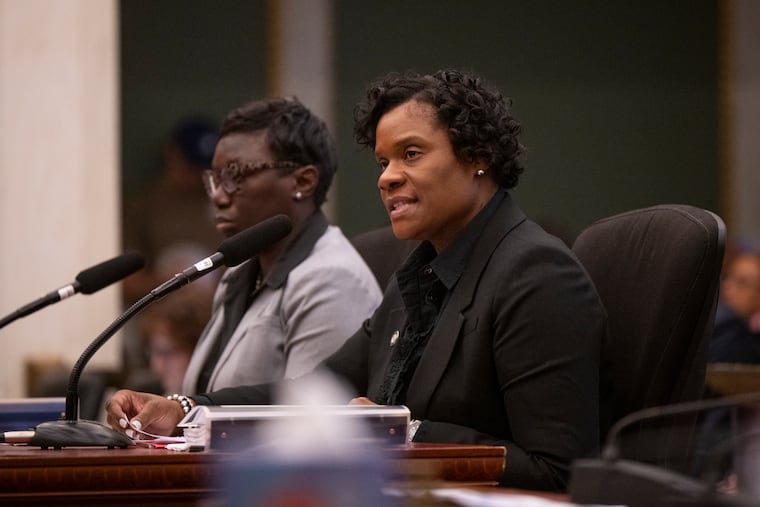
Philadelphia’s child welfare chief said Friday that the city does not have access to a state database that could have alerted officials to a previous abuse allegation against the foster mother accused of killing 10-year-old Malayshia Allford.
Kimberly Ali, the commissioner of the city’s Department of Human Services, said Friday during a City Council hearing that it can’t access Pennsylvania’s Resource Family Registry, which includes information about potential foster parents.
City officials identified the gap after reviewing Malayshia’s case, Ali said.
In 2022, a state review found that the girl’s foster mother, Carprice Williams, had abused a 4-year-old foster child in her care in 2021, and it was recommended that she never be allowed to foster again. Williams, a former Philadelphia public school teacher, appealed, and the state expunged its abuse finding from her record. Years later, she took Malayshia in.
Information about abuse allegations and appeals can be found in the state’s database, according to state law. But only the state and outside agencies that certify foster homes have access to the registry.
Ali said the city is exploring potential ways to obtain information from the database, which she said could provide “a more thorough search” before placing foster children, but that access to it is governed by a years-old state law.
Council members, who convened the hearing Friday to review the city’s foster system in the wake of Malayshia’s death, told Ali that the city should do everything in its power to obtain access to the database.
» READ MORE: How the paths of 10-year-old Malayshia Allford and a Philadelphia teacher tragically collided
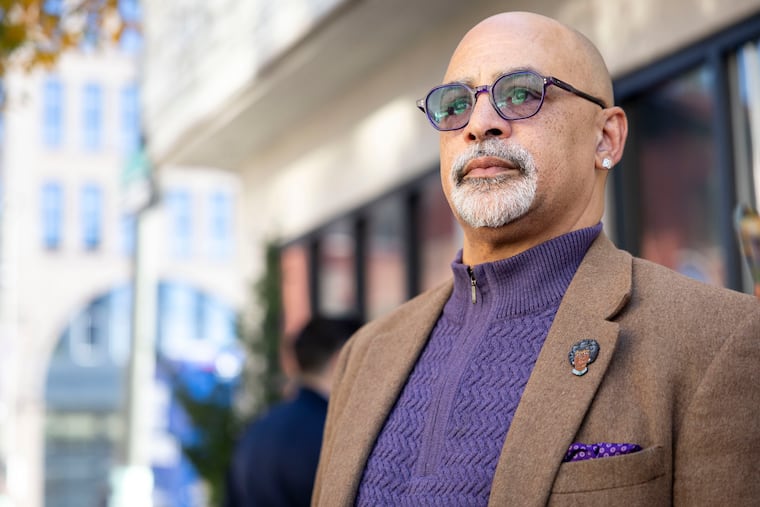
Councilmember Anthony Phillips, a Democrat who represents parts of Northwest and Northeast Philadelphia, told Ali to do “whatever it takes to figure this out.
“This is a huge opportunity for you to make sure our children are safe, and you can’t miss it again,” he said.
A spokesperson for the state Department of Human Services did not immediately respond to a request for comment.
Friday’s hearing was held by the Committee of the Whole, which is composed of all 17 Council members.
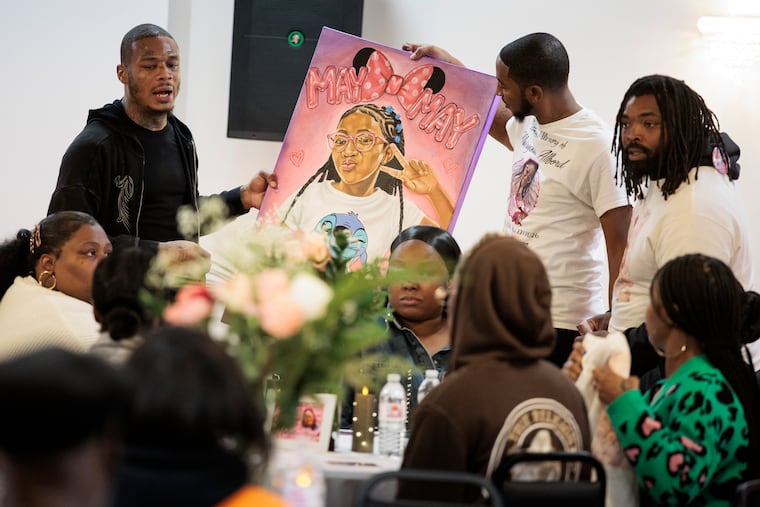
Council members called the hearing amid reports that witnesses who had visited Williams’ West Philadelphia home told police that Malayshia was subjected to horrific abuse, including withholding food, beating her with a phone cord, and throwing her down the stairs. The girl’s body was found in the trunk of a car parked at a Camden County apartment complex this month. A medical examiner determined she had died of blunt force trauma. Williams has been charged with murder.
Several members were deeply critical of DHS and of Ali, who has led the agency for six years and has worked in the department for 26 years. Councilmember Nina Ahmad, a Democrat who represents the city at-large, said Ali’s points about access to the state database were “moot” for Malayshia.
“Malayshia is not with us,” Ahmad said. “She has been sacrificed to this system, and this is abominable and intolerable. And we will not put up with this.”
Councilmember Cindy Bass, a North Philadelphia Democrat who has for years been critical of DHS, said the city needs to entirely overhaul its child welfare system.
On Thursday, she introduced legislation to move away from outsourcing child welfare case management to privately contracted agencies and for the city to control the foster system itself.
“This death was preventable. There were so many red flags all over the place that it was really a failure on a colossal scale,” Bass said. “Everything failed for this child. Everything. Every system that was in place.”
» READ MORE: City Council may try to overhaul Philadelphia’s foster care system
In 2013, the city revamped its child welfare system to rely on outside nonprofits called community umbrella agencies, which provide case management to children and families in 10 geographic service areas throughout Philadelphia.
The idea was to localize services and engender trust in the system through neighborhood-based relationships.
However, CUAs have faced a number of documented problems, including backlogged caseworkers and little progress on the number of near-fatalities and deaths of children. A 2025 Inquirer/Resolve Philly investigation found that CUAs have faced dozens of lawsuits alleging abuse in foster care.
Malayshia was receiving case management services from Catholic Community Services, also known as Community Umbrella Agency No. 4. Pennsylvania MENTOR was the certifying foster care agency in her case.
Councilmember Jim Harrity, a Democrat who represents the city at-large, said he was frustrated with Ali and the “blame get[ting] passed around.”
“You know, state DHS, no access to this, no access to that, CUAs, yada yada yada,” Harrity said. “But I want you to tell me, realistically, how do we fix this system? What are you going to do to make sure that no more of our children end up in the grave?”
Ali said her “number one” priority is getting access to the state database and get a more thorough background of potential foster parents.
But the problems exposed by Malayshia’s death extend beyond access to a state database, child welfare experts told The Inquirer.
Philadelphia’s foster care system relies on about two dozen private agencies under contract with the city to certify foster parents and identify homes for potential placements.
That fragmentation can limit the options available when a child needs a home. An agency typically looks to the foster parents it has licensed, rather than considering all available homes across Philadelphia — potentially making it harder to find the best fit for a child, said Sarah Wasch, associate director of the University of Pennsylvania’s Field Center for Children’s Policy, Practice and Research.
“The best available fit is likely going to be easier to find when you’re looking among 2,000 possibilities instead of 200 possibilities,” Wasch said.
Stefanie Arbutina, vulnerable youth policy director for Children First, a child advocacy group in Philadelphia, said in an interview that every agency involved in licensing, investigating, and monitoring foster homes needs a “pretty tight communication loop” to find and close gaps that can lead to tragedies.
Children First is one of several advocacy groups who plan to make recommendations to Mayor Cherelle L. Parker’s administration on changes needed to the city’s foster-care operations. Parker ordered the creation of a special committee to review the city’s foster care system.
One recommendation, Arbutina said, will be to establish a system for city officials to see and track foster parents who have been found to be unfit to care for children — but for whom no official report is available.
“The best thing we could possibly do is not worry about kids going into foster care in the first place,” she said.
This is a developing story and will be updated.