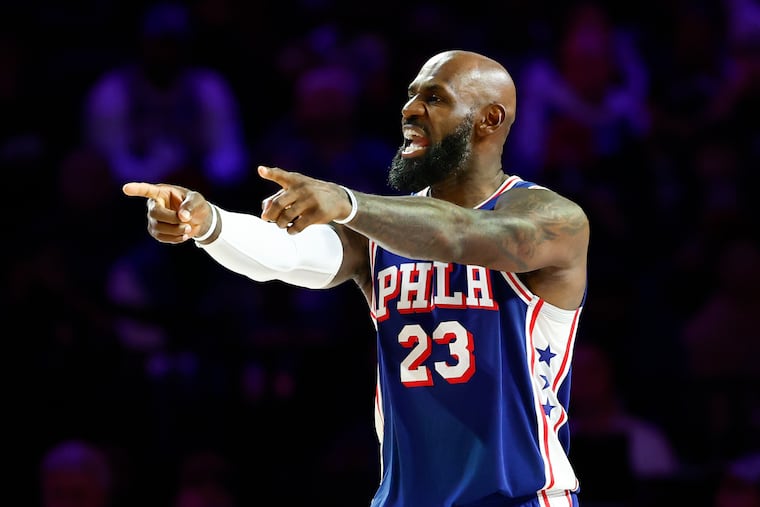
LeBron explains how his ‘love of the game’ — and maturity — keep him fresh in his 40s on ‘Mind the Game’ podcast
James discussed the Jalen Slawson chase-down block, how the best veterans stay on the court, and how the NBA has changed since he was a rookie in 2003.
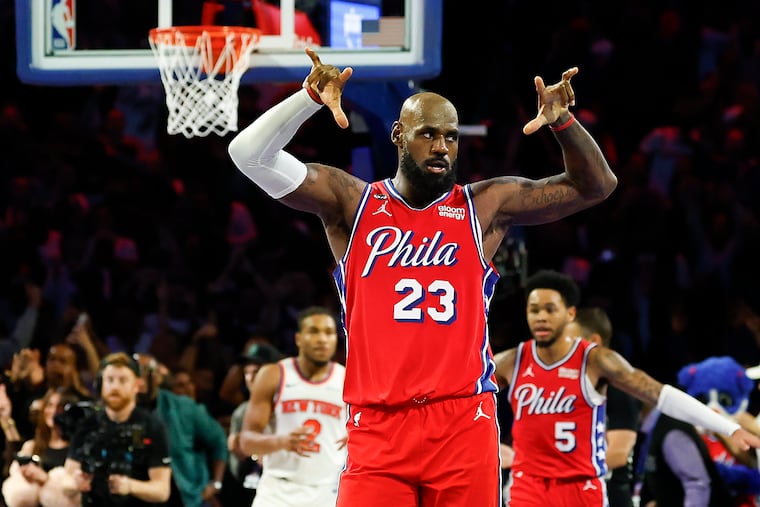
Being one of the ultimate veterans of the game has been a conversation surrounding LeBron James’ career for at least the past four seasons.
Following Udonis Haslem’s retirement in 2023, James became the oldest active player in the NBA, a distinction he hasn’t shied away from. That includes on Tuesday’s episode of his Mind the Game podcast with Steve Nash, the show’s first episode since before the Sixers tipped off their season. James and Nash, who won two MVP awards in his 18-year, Hall-of-Fame career, discussed everything that goes into being a veteran in the league and much more. Here’s what you missed …
‘For the love of the game’
The question of what keeps James playing at a high level well into his career, isn’t an easy one to answer. Nash and James tried anyway, explaining some of the things that go into the longevity of some of the veterans in the league like James, Kevin Durant, Stephen Curry, James Harden, and Kawhi Leonard.
Nash said it’s due in part to something hard to measure: love for the game.
James, who turns 42 next month, seconded this, saying that the love of the process and the game allows veteran players to still “be a presence” in games despite the miles, minutes, or intensity of a game, because that’s what keeps them doing the little things right. James said it’s more than showing up and putting on the uniform. It’s also wanting to be there for his teammates that helps to keep him “available and accountable” and in a position to play.
“If it wasn’t for the love of the game or the love of the process, I think all of our bodies would have probably been broke down,” James said. “We wouldn’t have put in the little small stuff, the extra work, the staying after practice to get the work done, the staying or getting there super early before the games or the practices to get the body work done and the mind work done.”
How the chase-down block went down
As the famous saying goes, “Necessity is the mother of invention,” or in James’ case, reinvention.
While he was able to pinpoint some of the sources of his durability, James also discussed how he can’t play the way he did 12-years ago anymore. James said it’s not because he isn’t physically able, but rather because his responsibility and usage is a lot lower at this point in his career than it was during the half-way point of it.
Now, he’s more focused on picking his spots and having spurts, rather than feeling like he has to “carry the load of the action.”
James said he wasn’t playing with a Joel Embiid or a Tyrese Maxey a decade ago. Now that he is, he said he’s taking on more of a “table-setter” role — or a “connector” role, as Nash called it.
» READ MORE: Savannah James opens up about LeBron’s move to Philly: ‘I have to figure out how to be three places at once’
After 24 seasons, James said he’s seen it all, but his teammates haven’t yet, so he’s thinking of the game for them as well, wanting to contribute to the “health” of the team, as he called it.
This is how he explained the decision that led to a chase-down block from Pacers rookie Jalen Slawson on Oct. 28.
James said after he got the steal off Slawson, he saw the chase-down coming. But he knew that if he took off and tried to dunk the ball, and he and Slawson collided and landed wrong, he could be out for several weeks. That left James to weigh the risk vs. the reward.
“Those are the type of things like that clicks into your head that wouldn’t 12 years ago,” James said. “It could have been even five years ago, four years ago, I would have probably taken off.”
Through the decades
Keeping on topic of his decades-spanning career, James also answered a fan question about how he’s seen the game change from when he started in the early 2000s, throughout his prime in the mid 2010s, until now.
The question was submitted by former Sixers player P.J. Tucker, who officially retired at the end of last season after a 20-year career that included 14 seasons in the NBA.
» READ MORE: Longtime Sixers fan Troy Clemons shares a memorable moment, and his drink, with LeBron
When he entered the league, James said the game was a slower one and each of the players on the court had a clear position and role. It was also more physical, with teams needing “a bruiser.” Now, he said, the game has evolved into a quicker game of more positionless basketball, where three-pointers are more prominent as well.
“The biggest change is playing pace and space, playing faster before the defense [is] set and playing out of principles,” Nash said.
James added that while it can look out of control at times, it’s anything but.
“Ultimately, our game is more: get the ball up the floor; if you have a gap, shoot the gap; you got two guys on you, get it, shoot, drive, re-space, pass, and kick,” he said. “And there are some concepts — and we always talk about it, everyone thinks it’s chaos, but it’s definitely controlled and guys know exactly what’s going on in the midst of the chaos.”

Inquirer beat reporters Gina Mizell and Chris Hine go behind the scenes of covering LeBron James, Jaylen Brown and the Sixers’ star-studded roster, and debate what’s real and not real about the team’s hot start. Watch here.
Watch the full interview below and subscribe to the Sixers Extra podcast on Spotify or Apple Podcasts.