The Head of the Schuylkill Regatta celebrates women’s rowing. Here’s how the sport has evolved.
Anne Cutler began rowing in 1978. Now 67, she’ll compete in the 56th Head of the Schuylkill Regatta this weekend. She reflected on the growth of women’s rowing in Philadelphia.
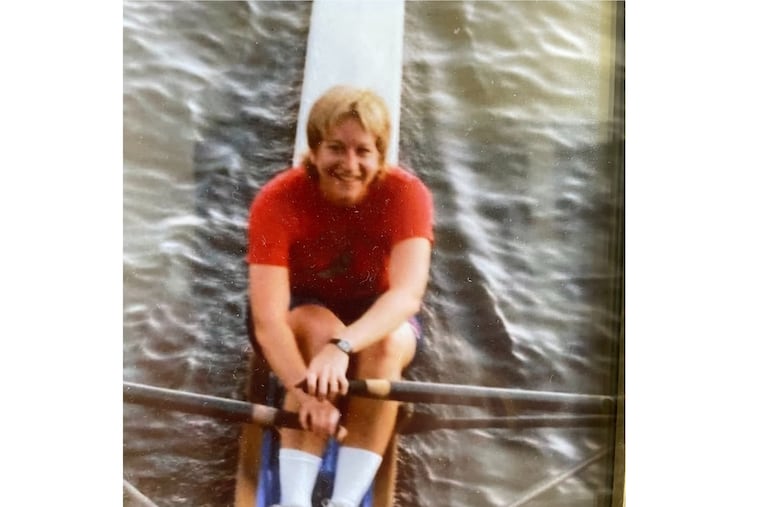
In 1978, Anne Cutler drove from her home in Bethlehem to Boathouse Row and knocked on the doors of the many boathouses, asking if she could row with them for the summer.
At the time, Cutler finished her freshman year at George Washington. During the school year, she was approached by the crew team about joining the program. She wanted to use her time back home to see if the sport was for her.
She knocked on the door of the Philadelphia Girls’ Rowing Club, where Sophie Socha, now the club’s president and a U.S. Rowing Hall of Famer, opened the door and welcomed her with open arms.
“Come on down and row with us this summer,” Cutler recalls Socha telling her.
» READ MORE: Breast cancer survivors from Whitemarsh Boat Club are rowing like ‘an athlete’
Forty-eight years later, Cutler is back rowing on the river where she started. On Saturday and Sunday, Cutler will compete in the single scull at the 56th Head of the Schuylkill Regatta, the city’s largest and most inclusive regatta.
“I’m at the time of my life where this is my time and this is my celebration of being able to still get in a boat at my age of 67,” Cutler said. “I never stopped rowing because part of my life is always being an athlete and living that lifestyle and having that community of people and staying fit. I moved away from racing but then I moved into coaching and then helping the Schuylkill River. What can women of my age do, right? At this age, as we’re aging, we don’t have to stop. We can keep going.”
The regatta started in 1970 and welcomed rowers of all ages and experience, from elite rowers to those new to the sport. Twelve women competed in the first regatta at a time when rowing was a male-dominated sport.
Women were excluded from the Philadelphia rowing scene until the 1960s. Many rowing clubs on the Schuylkill did not allow women to join or compete, so in 1938 four women started the Philadelphia Girls’ Rowing Club. It was founded as a competitive rowing organization, but for almost 30 years the members had to compete against each other.
Women’s clubs were not allowed to become members of the Schuylkill Navy, the association of amateur rowing clubs in Philadelphia, but as interest in women’s crew began to grow, they were allowed to join in 1968.
“When I started rowing, the guys, they didn’t want us there and they were very clear about that,” said Socha, who started rowing in 1961. “What changed was the attitude of men towards women, and women towards women. The women, then and now, see that it is an open sport that they can do and can try.”
Cutler remembered a time during her rowing career when someone told her she was “too pretty to row.”
“Do you want to see all the medals I have?” she said. “We couldn’t let any of that get in our way. We wanted the opportunity.”
At George Washington, Cutler said her team used to struggle to fill an eight-person boat and get money for uniforms. But she noticed an increase in opportunities for women in rowing once colleges started enforcing Title IX. Cutler said she was one of the first recipients of a Title IX scholarship.
» READ MORE: This La Salle rower built an app that’s changing the way athletes train — and the future of rowing
With more women allowed to compete in collegiate sports, that opened more seats for women in boats. Now, girls’ scholastic rowing has started to explode with the increased opportunities at the college level.
“They come now with their masseuses, sports psychologists, three practice uniforms and you’re like, ‘Yeah this is progress.’ It really is the opportunity for women to take part in a sport that, number one, has deep traditions,” Cutler said. “And to be able to take part in the tradition but also in a lifetime sport where you stay fit and to have the opportunity for friendships and personal growth.”
This weekend at the regatta, there are as many women entries as men, showcasing the continued interest in women’s crew.
“This is a celebration,” Cutler said. “This is a celebration of women, all ages that are out there.”