Regulation is growing more popular — but history suggests the details will matter
The story of UPS's rise reveals that regulations often have unintended consequences.
The deregulatory tide that has been flowing since Gerald Ford’s presidency, reshaping industries from trucking to banking to telecommunications, may finally be waning after a half century.
Even as the Trump administration heralds the elimination of many rules affecting the business sector — from limits on motor vehicle emissions to restrictions on cryptocurrencies — calls for tougher government regulation are growing louder. Public alarm about railroad safety, retail-store pricing, fraudulent trucking companies, eggs infested with salmonella and credit card interest rates is so widespread that surveys show rising support for stricter government oversight. Even a large share of Trump voters say they, too, would welcome stronger government regulation.
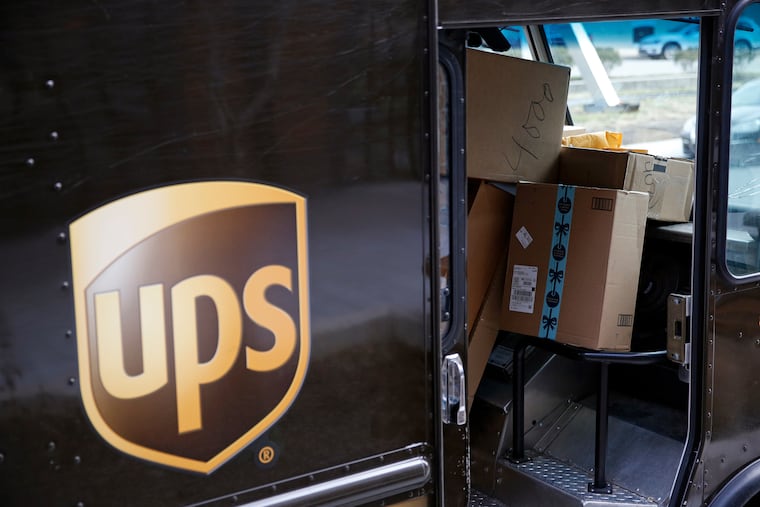
Yet, while it’s clear that regulation can be beneficial, the details matter. Historically, regulations intended to benefit consumers have often ended up instead helping companies fend off competition. The history of United Parcel Service (UPS), one of the world’s largest transportation companies, offers a telling case study of how well-intended regulations can have effects that their authors never contemplated.
Regulation was not an issue when 19-year-old James E. Casey and a teenage friend started American Messenger Company in the basement of a Seattle saloon in 1907. Trucking was not regulated anywhere in the United States, nor did the company own trucks yet. Its messengers made deliveries by bicycle or on foot.
Over, the next decade, as trucks came into use, Casey integrated them into his business as he reshaped American Messenger into a parcel delivery service for local retail stores. The company’s rates and delivery schedules were negotiated directly with stores. There were no regulations to worry about and no government agency was involved.
In 1919, Casey’s company changed its name to UPS and expanded into California. It was there that the company first encountered trucking regulation.
California was one of the first states to regulate truckers’ rates and services, but, initially, the rules didn’t impact UPS. The company escaped government oversight because the state’s regulations did not apply to truckers who served only shippers who signed written contracts. In 1922, however, UPS finally slammed head on into the regulatory state when it expanded into the fast-growing Los Angeles region by purchasing two small truck lines.
Both of its new acquisitions were “common carriers,” which meant that they were licensed to serve the general public over routes authorized by the California Railroad Commission at rates approved by the commission.
This posed a problem for Casey. He was eager to expand UPS, but common carriers were obliged to accept items of any size, and he wanted his company to handle nothing but small parcels.
Shrewdly and improbably, the delivery entrepreneur was able to persuade the Railroad Commission to prohibit UPS from carrying parcels beyond a specific size and weight. It accepted Casey’s argument that the retail stores that were its customers benefited from UPS being a more efficient parcel carrier than other trucking companies. Most truckers would have asked the regulator for greater freedom, but instead, UPS welcomed restrictions so it could exclude large items and accept only small ones.
UPS’s counterintuitive strategy proved to be brilliant.
Other Los Angeles truckers were also allowed to deliver parcels, but they squeezed them into their trucks alongside larger, heavier goods. This meant that their terminals and vehicles had to handle enormous crates and heavy barrels, not just 10-pound packages, and that they often needed to assign two men to a truck to move bulky loads.
Meanwhile, UPS could specialize, designing its vehicles and sorting machines to handle small parcels efficiently and placing only one driver on each truck. Its lower cost per item made it impossible for other truckers to compete with UPS’s parcel delivery business.
In 1925, UPS applied for permission not only to extend its routes, but also to deviate up to five miles from approved routes to deliver parcels. Common carrier truckers did not normally enjoy such freedom. Casey testified before the Railroad Commission, asserting that UPS’s business was unique and that it should not be treated like other trucking companies.
The commission agreed, declaring that delivering parcels was “essentially different” from transporting heavy freight and should be regulated differently. UPS was awarded the route flexibility other truckers coveted, allowing it to deliver small items to almost any location in the Los Angeles area while other truckers could transport parcels only over authorized routes.
More special treatment was to come.
In 1926, the commission granted UPS permission to transport parcels anywhere across Southern California without sticking to specific routes. The company then made another request: it wanted to exclude shipments by retailers from its common carrier service in San Diego. Again, the commission acquiesced — with dramatic ramifications.
The decision meant that local stores wanting UPS to deliver shoppers’ purchases would have to sign contracts giving the company all of their small shipments — thus fencing out other delivery companies. As in Los Angeles, UPS had found a way to build a common carrier that could compete against other truckers for business from shippers in other industries while making it impossible for those truckers to compete for parcel shipments by retail stores. Its operation in Southern California became highly profitable.
In 1935, UPS encountered a new challenge. Congress passed the Motor Carrier Act, which placed interstate trucking companies under the jurisdiction of the Interstate Commerce Commission.
Rather than suffering from burdensome new regulations, UPS replicated its California strategy, using the ICC to its benefit.
In the 1940s, for example, UPS switched big retailers in Philadelphia from fixed-rate contracts to confidential five-year agreements with rates that varied based on UPS’s costs, volume and the inflation rate. Exactly how it calculated those rates was a mystery.
The ICC criticized UPS’s refusal to disclose financial data, but it agreed to keep UPS’s contracts, rates and financial reports closed to the public. Philadelphia retailers had no way to judge whether a competing delivery service might offer them a better deal.
The company also capitalized on a major loophole in the Motor Carrier Act. Driven by the principle that all shippers should pay the same price for a given service, the law prohibited a trucking company from serving some customers at published rates approved by the ICC while negotiating confidential contracts with other customers. But it authorized the ICC to grant exceptions.
In the 1950s, UPS took full advantage of this loophole, winning permission to transport packages for manufacturers, wholesalers and distributors at ICC-approved rates while requiring retailers in the same locations to pay higher rates per parcel.
In theory, dissatisfied retailers could have taken their delivery business elsewhere.
In practice, though, UPS had signed them to multiyear contracts and developed a near-monopoly over retail deliveries in almost every city where it served retailers. As a federal judge observed in 1971, UPS’s policies “created magnetic ties” between the company and its retail customers.
Those ties, alongside regulators’ rulings in its favor, allowed UPS to use its profits from serving retail stores to cover its losses as it built a long-distance delivery service for other types of shippers. Additionally, they enabled the company to lower its costs by using the same equipment, buildings and workers for both of these supposedly separate services.
Taking advantage of regulation to protect its established business, while channeling those profits into building a new one, facilitated UPS becoming the country’s largest carrier of small parcels by the 1970s.
As the economy slowed and inflation climbed to new heights in the 1970s, a deregulatory tide swept the country — in part because of the perception that regulators like the ICC favored incumbents, discouraged innovation and forestalled competition that could have lowered prices for consumers trying to navigate that difficult climate. Congress loosened or eliminated federal control of prices and services for one industry after another: air cargo in 1977, passenger airlines in 1978, trucking and railroads in 1980, natural gas, oil, gasoline, banking, bus lines, telephone companies and more.
For the shipping business, this meant that new players, such as Federal Express, DHL and Emery, could go head-to-head against UPS without waiting for the government to approve their routes and rates. The unshackling of the transportation industry also helped UPS, the dominant parcel carrier in the United States, as well. It freed the company to create an all-freight airline and to launch international services as soon as foreign governments gave the okay. UPS faced more competition than ever before, but it was also able to fight back in ways that would have been difficult had it still needed a federal regulator’s assent to every move.
The overall impact of deregulation has been far reaching. The cost of long-distance phone calls fell to zero, and lower airfares enabled millions of people who had never boarded a plane to do so regularly. But there have been negative consequences as well, such as the 2008 financial crisis, which was aggravated by weakened regulation of banks.
The details of regulation can be mind-numbing. But it is at the level of mind-numbing details that regulation turns into a powerful competitive weapon, benefiting one company while burdening another. UPS’s metamorphosis from a retail delivery service into the largest trucking company in America and then into a giant of global logistics illustrates how much those details matter.
Marc Levinson is a historian and economist in Washington, D.C. His newest book is The UPS Man: James E. Casey and the Creation of Modern Logistics.
Made by History takes readers beyond the headlines with articles written and edited by professional historians. Opinions expressed do not necessarily reflect the views of The Inquirer.