Despite the ‘highest risk,’ at least 2,000 objects from the Academy of Natural Sciences has moved to Abu Dhabi
The Academy did not go forward with its plan to relocate its whole collection to the Natural History Museum Abu Dhabi but thousands of objects are on a three-year loan to the one-year-old UAE museum
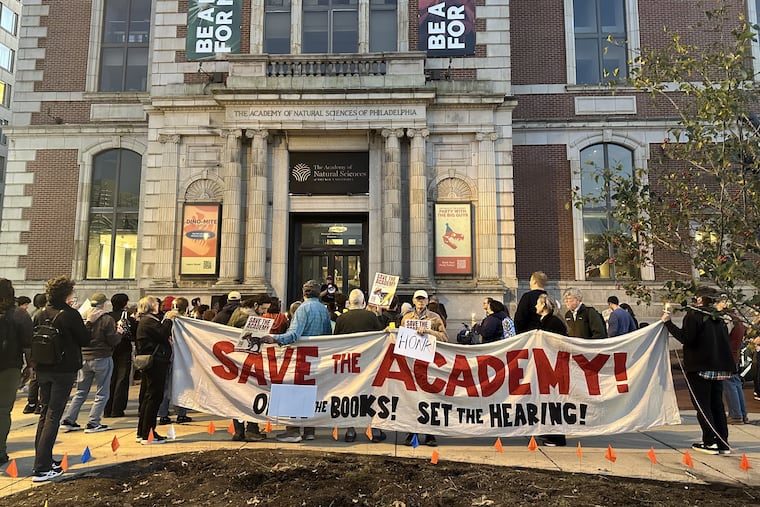
In its quest to relocate the Academy of Natural Sciences of Drexel University’s priceless collection out of Philadelphia, the Academy contacted 15 natural history museums in the U. S. as well as the Natural History Museum Abu Dhabi, according to confidential minutes from a September 2025 Academy board of trustees meeting.
Museums in Pittsburgh, New York, and Cleveland were the only ones in the U.S. to express interest, said the document submitted to City Council by Drexel Monday as part of its testimony.
“Cleveland is currently the only viable partner, willing to move quickly without funding concerns,” the document said. “Cleveland has stated they are ‘all in,’” Scott Cooper, former Academy CEO, told the board at a September 2025 meeting.
» READ MORE: Amid ‘divorce’ talks and ‘witch hunt’ allegations, Drexel-Academy of Natural Sciences talks are stalled
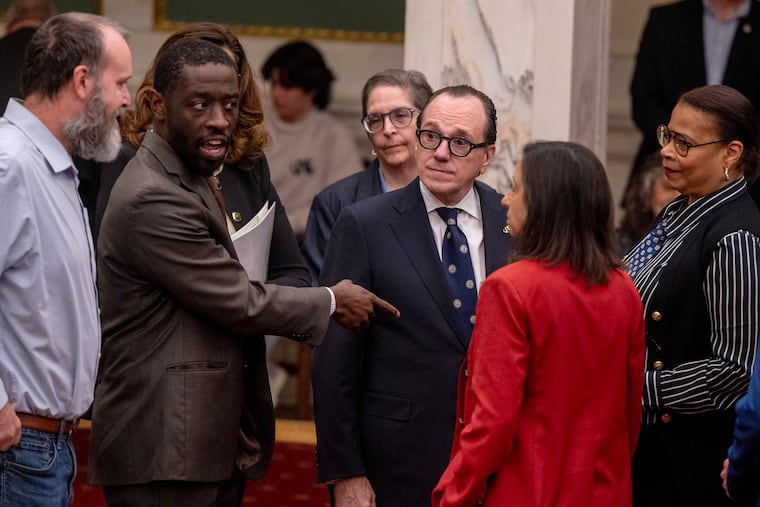
The meeting minutes were part of Drexel’s supplemental materials given to City Council, whose hearing Monday was the second investigating the late September shutdown of the Academy museum.
The Academy of Natural Sciences of Drexel University also explored a complete retooling of the Academy that would have turned it into a Freshwater Institute and would have “uniquely integrate[d] ANS’s irreplaceable assets — two centuries of biodiversity collections and archives, field ecology expertise, and scientific credibility — with cutting-edge genomic capabilities,” according to a detailed report on the potential revamping dated September 2025 that Drexel also submitted to Council.
» READ MORE: City Council grills Drexel representatives for closing Academy of Natural Sciences museum
The report, however, noted “a fundamental financial reality: that ANS’s apparent assets — $74 million in endowments, the 1900 Parkway building, and world-class collections — cannot be readily monetized due to inter alia legal restrictions, market constraints, and professional ethics considerations.”
Only the “international option” — a partnership with the Abu Dhabi museum — would have achieved “financial sustainability through complete partner funding and elimination of collection storage costs.”
One Academy board member, John Smith, noted that the attorney general and Orphans’ Court “will significantly influence Academy options.” He believed an Abu Dhabi transfer would be too heavily contested for approval, according to the Sept. 18, 2025 meeting minutes.
Neither the Freshwater Institute nor the Abu Dhabi, or Cleveland partnership materialized.
Some Academy objects moved to Abu Dhabi anyway
But that wasn’t the end of the matter. The Academy did make an unusually large loan of specimens to the Abu Dhabi museum — at least 2,000 objects, and perhaps closer to 3,500, according to a source close to the project who did not want to be named because they were not authorized to speak on the matter.
It’s not unusual for museums to loan items to each other, but the size of the loan has raised concerns. The Academy’s collection of 19 million specimens is considered one of the largest and most important natural science collections in the world.
“We routinely lend specimens from our collections to other institutions for research projects and specific exhibitions but have never done so on that scale,” Robert McCracken Peck, curator of art and artifacts and senior fellow emeritus of the Academy of Natural Sciences of Drexel University told The Inquirer recently.
The objects are still at the Abu Dhabi museum, as part of a three-year loan arrangement.
‘Highest risk’ but ‘most financially viable’
That’s in spite of the earlier option of moving the entire collection to the Abu Dhabi museum being deemed to hold “significant political risk.” But “their investment level (full digitization and AI-first research platform) would be unmatched,” the document said. This option, the document said, is the “most financially viable,” though “carries highest risk.”
Cooper “acknowledged the complexity of conducting business in the Middle East, describing it as time-consuming and frustrating,” according to the minutes. Drexel president Antonio Merlo, who was present at the meeting, also expressed skepticism, having had experience worked in Abu Dhabi when he worked for New York University.
Merlo was worried about the “political optics” and “implications for Drexel,” according to the minutes.
At a May 2025 Academy board meeting attended by Peter Kjaergaard, executive director of the Natural History Museum Abu Dhabi, Cooper called the potential Abu Dhabi deal a “a partnership … that could see the relocation of the Academy’s collections to NHMAD for an extended period.”
Academy board chair Suzanne Biemiller at the September meeting “emphasized the need for thorough discussion,” according to the minutes, “noting that paths to success are narrow with no certain outcomes.”
The meeting concluded with the following “action items”: Establish feasibility of campus collections move and 1900 Parkway building sale; secure letters of intent from Abu Dhabi and Cleveland by the end of November; and obtain a legal opinion on the likelihood of each option’s approval.
But none of the options ever came to pass, and Drexel and the Academy remain at an impasse over the Academy’s future.
During that September 2025 meeting, a question was asked about splitting the collection among multiple partners. Cooper said the preference would be to keep it together “to preserve the Academy’s legacy,” but that splitting was possible.
At the meeting, Merlo made clear that Drexel “cannot currently afford activities that do not directly support student education,” according to the minutes. “The Academy must sustain itself like every other Drexel unit.”
He suggested moving the collection to Drexel’s campus.
What specimens were sent to Abu Dhabi?
The Philadelphia specimens now in the United Arab Emirates at the Natural History Museum Abu Dhabi — a 377,000-square-foot museum that opened last November as part of the city’s ambitious museum district — include fish, mammals, and more.
Academy leaders say the items are there on a three-year loan agreement, and are then set to return to Philadelphia. The arrangement was seen as the start of a potential deeper relationship between the Academy and Abu Dhabi museum, according to an Academy source.
“There were ideas about other ways to partner with the newest museum and oldest museum, and Drexel, and research, and other avenues within our mission,” said the source, who asked not to be identified because they were not authorized to speak. Talks “didn’t get any further than the lending.”
A potential sale was “never on the table,” the source said.
Abu Dhabi’s natural history museum is the latest addition to a collection of museums in the Saadiyat Cultural District, which includes the Zayed National Museum and Louvre Abu Dhabi. Guggenheim Abu Dhabi, designed by architect Frank Gehry, has announced an opening for this December.
Attempts to reach the natural history museum were not successful. Philip Manning, director of science at the Natural History Museum Abu Dhabi, said he would forward an Inquirer request to speak to him to the communications team at the museum. A spokesperson, Dan Leach, did not respond to subsequent emails in the past month from The Inquirer.
A Drexel spokesperson declined to share details of the loan agreement. Asked whether conversations between the Academy and the Smithsonian, the Museum of Natural History in New York, and the Cleveland Museum of Natural History were over potential mergers, deaccessioning of the collection, or to replace Drexel as a partner for the museum, the spokesperson said:
“As part of the work to explore a sustainable future for the Academy, the Academy leadership had conversations with a number of peer institutions about potential opportunities for collaboration. Those conversations were exploratory and did not advance beyond the discussion stage or result in any formal agreements.”
This is a developing story and will be updated.