Philly’s most ambitious bartender wants to shake up cocktail making everywhere
Even as his own bar debuts in Philly, James Beard Award-winning bartender Danny Childs has been sowing the seeds of a beverage revolution here and abroad.
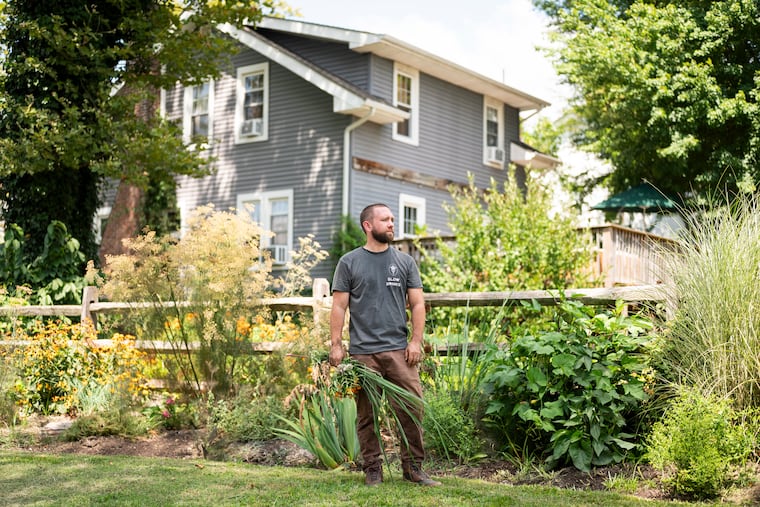
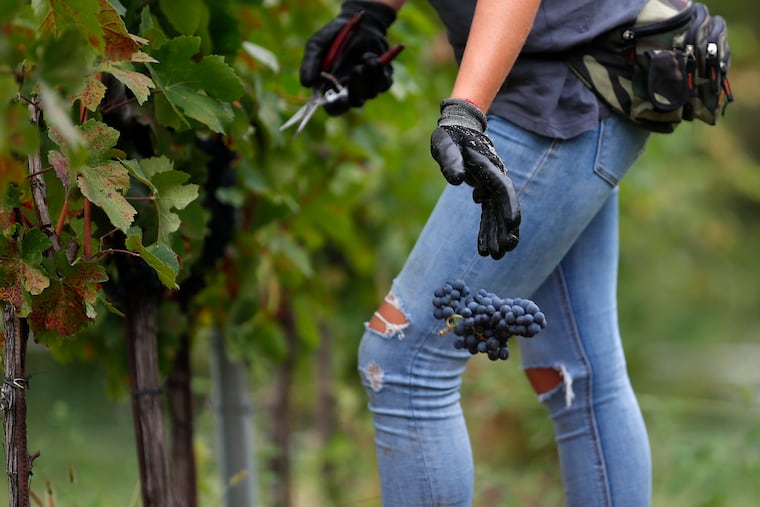
There’s an unassuming backyard in South Jersey that powers some of the area’s most interesting cocktails. The third-of-an-acre Pennsauken plot looks like that of any suburban home, with a weathered swing set and plenty of lawn, but it generates over 100 species of fruit, vegetables, herbs, and flowers each year, a mix of the familiar — lavender, dill, celery, tomatoes, peppers, etc. — and the far more intriguing: dandelion chicory, huacatay, prickly pear cactus, pawpaws, yuzu, jujubes, wormwood, and Jenny Lind melon.
Ingredients from this garden have been showcased in drinks at some of Philly’s best cocktail bars, as well as bars in Chicago; Cleveland; Berlin; Mexico City; Turin, Italy; and Bacolod, Philippines. That’s because the garden’s keeper, James Beard Award-winning beverage writer and bartender Danny Childs, knows how to transform the bounty into a liquid treasure trove.
This backyard and the wilds of South Jersey inspired Childs to develop a range of farm- and field-to-bar beverages, alcoholic and non, collected and detailed in his 2023 book, Slow Drinks.
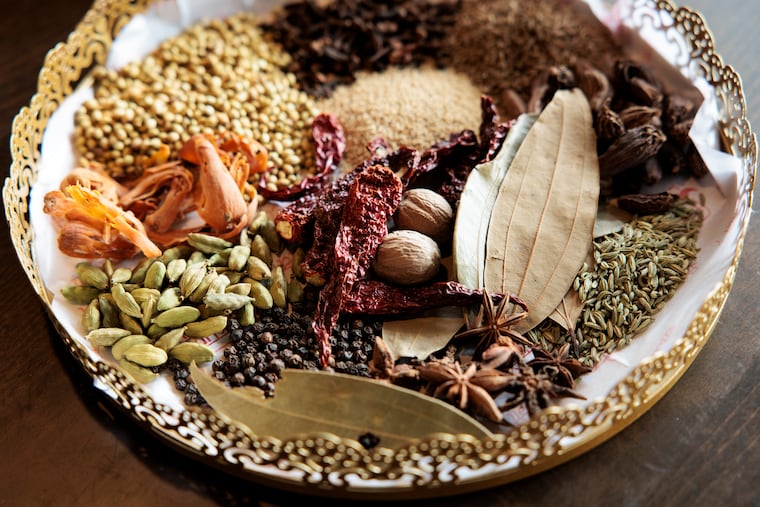
The principles and practices in the book combine to form a drink-making theory that’s familiar to anyone who’s dined in a farm-to-table restaurant. The best illustration may be homemade amaro, which can capture a time and a place in a bottle by way of its botanicals. Slow Drinks has a recipe for every season — in spring, it’s a strawberry-tinged rabarbaro with roasted dandelion root; in fall, it’s a wormwood-heavy génépy spiked with apples, cranberries, and figs.
The theory behind Slow Drinks, which Childs views as larger than the book itself, emphasizes seasonality, local sourcing, preservation, and storytelling, and it can be applied anywhere.
The farm- and field-to-bar approach has caught the attention of prestigious bar programs here and abroad: Slow Drinks has sold 14,000 copies in English and some 4,000 copies in Italian. It was recently translated to Mandarin.
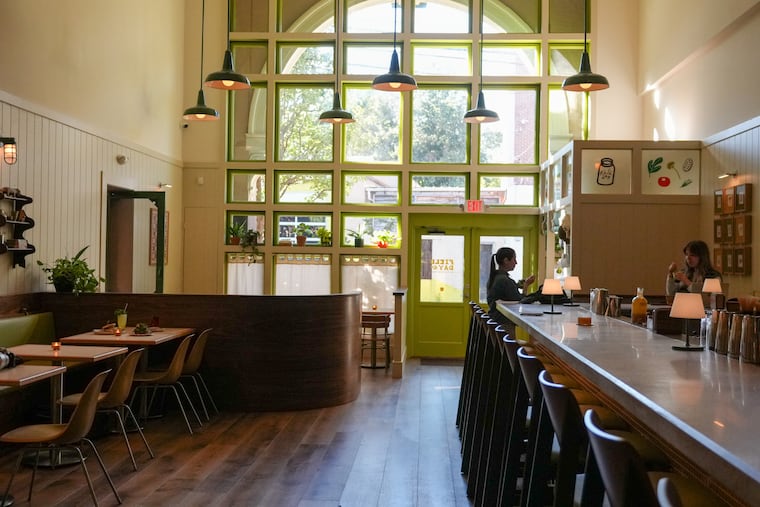
Though Childs has consulted on several beverage programs in Philly, this year marks the opening of his first bar, Field Day, in Northern Liberties, which he owns with his wife, Katie. Flagged as a “regional cocktail bar,” Field Day will filter its menu through a Slow Drinks lens, showcasing the breadth of ingredients and culinary traditions that swirl around our pocket of the Mid-Atlantic, from the Jersey Shore to Pennsylvania Dutch country. Think sherry and cherry wishniak highballs, boozy gelati, and a daiquiri-colada hybrid flavored with pawpaws and strawberries, along with regional foods like tomato pie, Lebanon bologna, and steamed clams.
The bar’s debut marks the culmination of years of work. But Childs’ ultimate goal is much bigger. He wants Slow Drinks to take root at bars everywhere. He’s made some headway, but just as it takes time to turn black walnuts into booze, sowing the seeds of a cocktail revolution is no fast or easy feat.
Pitching a movement
It was steamy outside but freezing inside the Ritz-Carlton New Orleans, where Childs was presenting at 2025’s Tales of the Cocktail, the national drinks-industry conference that is nerdy and bacchanalian in almost equal measure.
The annual convention brings together a wide range of beverage professionals — bartenders, bar owners, distillers, marketers — who converge on seminars that would likely bore a layperson to tears. Slideshows on backbar configuration, viscosity, extraction, and “sensory analysis of spirits” were standing-room only, even as cocktail samples were being passed outside conference-room doors. The most-anticipated presentations saw people queue up outside the meeting rooms up to 45 minutes beforehand.
Childs had organized a panel with himself, bartending legend Jim Meehan (best known for cofounding the East Village cocktail bar Please Don’t Tell, or PDT), and Matchbook Distilling’s Leslie Merinoff Kwasnieski. It was slated for a Thursday morning, the penultimate day of the five-day-long conference and when many bartenders fly back home to work lucrative weekend shifts. That may have accounted for the relatively modest crowd in the double-wide meeting room that had been jam-packed for a boisterous lecture on dilution two days before.
Another factor that may have contributed to crowd size? Compared to some more granular items on the Tales of the Cocktail agenda, the panel — entitled “the Slow Beverage Movement” — promised to be a little lofty.
Over an hour, fielding questions from then-executive director of Slow Food USA Bilal Sarwari, the panelists made the case for cocktails concocted the locally inflected way. The discussion at times veered into very dry territory: Childs waxed on ethnobotany, Meehan meditated on our world’s disappearing biodiversity, and Merinoff Kwasnieski, at one point, gushed about fungal networks’ impact on soil quality.
The talk was well-received by the audience (a small contingent of which were Slow Food Negroni Week scholarship recipients, whose rides to the conference had been subsidized by fundraising efforts that Childs had a hand in), and a couple queries ate up the 10 minutes left for questions. Reliably upbeat, Childs said he couldn’t have been happier with how it went.
Having sat in on several other seminars with higher-energy audiences, I myself wasn’t so sure how well the pitch had landed. A bartender with a gardening habit might be an easy sell. But could Slow Drinks’ time- and labor-intensive cocktail theory gain a foothold in the mainstream? How many bartenders are willing to ferment their own ginger beer, forage ingredients for housemade amari, or harvest actual roots for root beer?
Deeply unpopular, very important
I asked Meehan later about the challenges facing this prospective movement. In 2024, Meehan released a book, The Bartender’s Pantry, written, as he framed it in our interview last year, “in the wake of the reindustrialization of the craft cocktail.” He considers it in league with Slow Drinks — a call to think harder about cocktail ingredients and their sourcing in a time when “our world and our climate is under great duress.”
Like Childs, Meehan feels strongly about this cause, but he’s skeptical about industry uptake. “Are people doing this? Absolutely not. And will they do this? I don’t know. I doubt it,” he said.
But Meehan had reason for optimism, too. “As I think back to the early days of the craft cocktail movement that I participated in [in the aughts] … it is very hard to describe to today’s young bartenders how deeply unpopular what we were doing was — how unpopular, unprofitable, and how vain and silly most people viewed us.”
He remembered working 12-hour shifts at Pegu Club, the storied New York cocktail bar that opened in SoHo in 2005, and earning just $80, a fraction of what he would make at Gramercy Tavern. He would repeatedly deny requests to sub vodka in for other spirits on the cocktail menu. “It was tough,” Meehan said.
Time and “a never-ending parade of great press” eventually moved the needle, he said, as a curious clientele of mostly young professional women came in, dragging their vodka-drinking boyfriends with them. He was surprised to see customers casually embracing whiskey and gin drinks within just a couple of years. By the 2010s, craft cocktail bars were opening in cities all over the country.
To some extent, Meehan — no longer bartending — finds himself on the outs again, having taken up a new mantle in advocating for a more thoughtful, sustainability-minded approach to beverages. He considers himself in the same camp as Childs in that sense, but he thinks Childs has an edge he and his cocktail-pioneer comrades didn’t: “We were weirdos, and Danny is, frankly … very normal and very reasonable and very articulate, and I think mostly he’s very positive,” Meehan said. “For these reasons, I think this guy has a very good chance of being successful.”
“I think that there’s something revolutionary about what Danny’s putting out there,” Meehan said. “I’m sure people think that we look like some bartender form of Alice Waters, but I think that it is very important work.”
Changing perceptions
Childs is well aware that the very idea of locally inflected cocktails can come across as pretentious and twee — they’re the kind of thing you might have seen skewered on Portlandia.
But it’s also hard to imagine a better ambassador for what seems like a very fancy thing: Childs first developed Slow Drinks as a concept while working as bar manager at Farm & Fisherman, a family-friendly tavern in a Cherry Hill strip mall. Over a decade, he hooked suburbanites on sophisticated cocktails that were also approachable and highly drinkable, only going on a spiel about sourcing when prompted.
Childs’ upbringing no doubt plays a part in his innate ability to soft-sell. Before he moved to Marlton at age 11, he grew up in Delco: first in his grandparents’ house and then a Clifton Heights apartment complex. His dad bartended at the Clifton Inn (now Murray’s Bar & Grille) for years. “I grew up in that bar in a lot of ways,” Childs said. He remembers learning to play pool and shuffleboard there, and having his first underage drink one Christmas Eve.
His blue-collar roots are balanced by a deeply nerdy side. Childs’ fascination with plants, fostered by his naturalist-oriented uncle and grandfather, kicked into high gear when he studied anthropology and ethnobotany at the University of Delaware. He spent four years traveling through South America to study the use of medicinal plants among Indigenous people. (If not for a bartending gig in Chile, Childs might be an M.D./Ph.D. teaching and practicing ethnomedicine today.)
He swerved out of academia postcollege, when a would-be gap year sent him down an agricultural rabbit hole: first on a Marlton Christmas tree farm — where he and Katie homesteaded in a military tent equipped with a wood-burning stove for nine months — and then over stints at Urban Roots Farm in Newtown Square and at Plowshare Farms in Bucks County.
Those various walks of life all braided together when Childs took a job at Farm & Fisherman in 2013. It was there that he started dreaming up “cocktails through an anthropological lens” — a phrase, as he writes in Slow Drinks, that he scrawled on a bar napkin, then spent years teasing out. He started applying age-old practices of fermentation and infusion to the local ingredients surrounding him, then mixing them up behind the bar.
Childs codified these methods in Slow Drinks, which is intended as a springboard for other bartenders and home enthusiasts, offering building-block master recipes for shrubs, liqueurs, aromatized wines, and more preserved, distilled, and infused liquids. Cocktail recipes (pickled ramp martini, stone-fruit amaretto sour, clarified persimmon punch, etc.) round out the book, showing region-specific applications season by season.
Just as he knows the larger theory runs the risk of feeling esoteric to guests, he recognizes the work required may intimidate industry pros. “Bartenders are taught how to make syrups and mix cocktails with ingredients that are on their backbar. It’s changing a little bit, but the bars pushing that envelope are still like the top 1%,” he said. “I know it might seem difficult or out of reach.”
Childs’ ultimate counterargument is a humble one: He’s not actually doing anything new here. “People have been doing this for hundreds and in a lot of cases thousands of years.”
Local gaze, global ambition
Childs has been dedicated full-time to Slow Drinks as a business and a concept since 2023, when he left his role at Farm & Fisherman. The departure gave him time to promote the book but also more flexibility and autonomy over where the larger idea might go.
“It was kind of like jumping out of the plane without a parachute and hoping for the best,” Childs said of the decision to leave.
In the years since, he’s consulted on several bar projects in the Philly area (most notably Almanac and La Jefa, both James Beard Award nominees). With Katie as copilot, he’s grown the Slow Drinks brand via pop-ups and collaborations, some of which have left lasting impressions. (If you find yourself at Mexico City’s Baldió, ask to try the chinampas Chartreuse and agave amazake.) He’s also established a close relationship with the international organization Slow Food that’s taken him to various cities and countries to present on the budding movement, often with an entourage of scholarship-backed bartenders who are practicing this style of drink making already.
Childs also spent much of the last two years laying the groundwork for Field Day, whose staff claims a number of Philly’s most promising restaurant-industry talent, including chef Melissa McGrath and fermentation whiz Jamaar Julal.
Even as he becomes a bar owner, Childs is going full tilt on Slow Drinks. The business’ headquarters live above the bar, in an office/lab that shares space with Cescaphe Ballroom’s wedding complex. This summer he and Katie hired Canyon Shayer, a Philly Distilling and Heaven Hill alum, to be the S corporation’s COO and “director of culture,” working with clients on developing and implementing Slow Drinks-style beverage programs.
In a way, Field Day is a test case, “a blueprint for, this is what [Slow Drinks] looks like in practice day in and day out,” Childs said. “I think we’ve just really scratched the surface of getting people fully bought into it, and that it is something that can leave the industry better than we found it.”
If Childs gets his way, bartenders all over will see potential ingredients every time they step foot outside — even if it’s just into their own backyards.
Inquirer Food Festival
Get your ticket to Philly’s ultimate food party! Join top Philly chefs and bakers for one unforgettable day of food.