Trump administration asks appeals court to intervene in California ballot suit
The government’s moves came as it has gone to extraordinary lengths to scrutinize the midterm elections, ostensibly in search of instances of voter fraud.
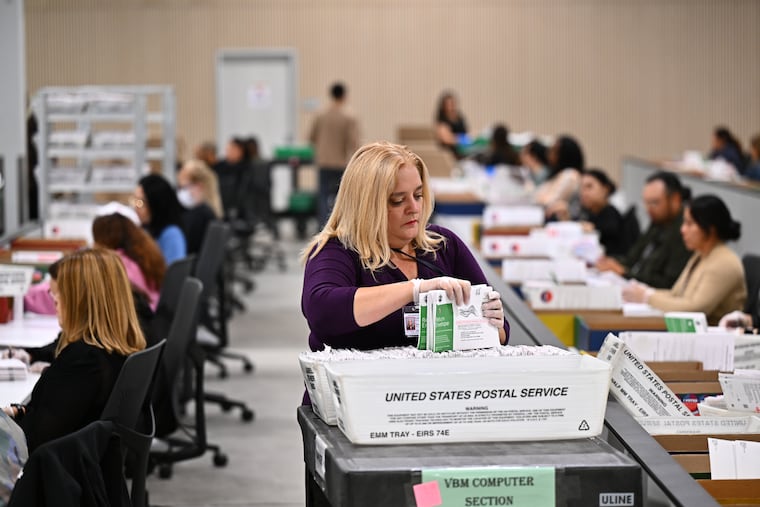
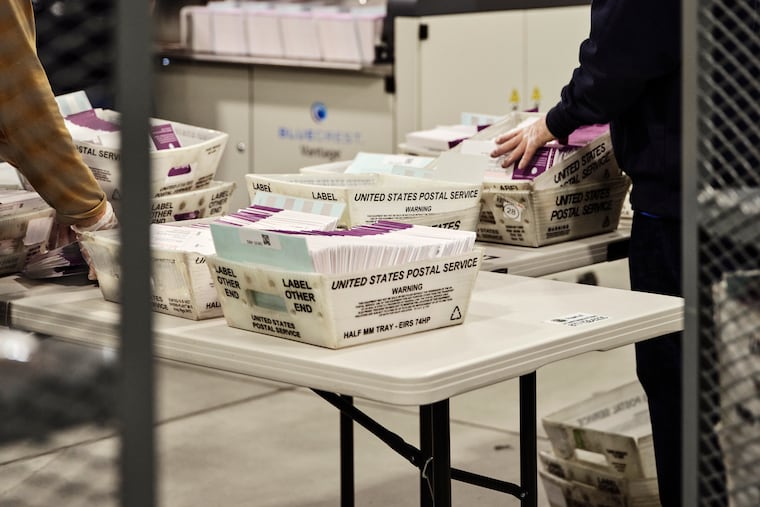
WASHINGTON — The Justice Department asked a federal appeals court Thursday to step in and accelerate a lawsuit against California, where it has sought to compel the state not to tabulate as many as 20,000 mail-in ballots sent to voters it claims are “likely noncitizens.”
The request jumped ahead of a lower court that was still considering the government’s emergency request last week. The government’s moves came as it has gone to extraordinary lengths to scrutinize the midterm elections, ostensibly in search of instances of voter fraud. Related efforts, such as trying to force states to turn over voter rolls and having homeland security agents interview recently naturalized citizens about their voting history, have been blocked in other federal court cases.
In a filing on Thursday, the Trump administration cited the “critical and exigent nature” of its request, and blamed a lower court’s “silence” so far for holding up the lawsuit. It repeated accusations that California was in the processing of sending and counting “vote-by-mail ballots cast by ineligible noncitizens to illegally participate in federal elections.”
The judge presiding over the case, Judge David O. Carter of the Central District of California, had scheduled a hearing next Tuesday to consider the government’s claims.
It was unclear what evidence the Trump administration had relied on, or what federal data or methods had been used to create the list of 20,000 individuals.
In a filing on Monday, the government wrote that the Homeland Security Department had “received what appeared to be the California voter roster for the general election of 2026,” and forwarded it to U.S. Citizenship and Immigration Services to check against its immigration data.
The agency produced a “refined list of individuals” that homeland security officials eventually distilled down to the list of more than 20,000 people, according to the filing.
California election officials have said the data shared by the Trump administration was riddled with omissions and difficult to parse.
Judges in other cases have raised concerns about the reliability of federal immigration data, as applied to screening state voter rolls. Data sets the Trump administration has compiled to help determine a person’s citizenship have repeatedly been found to be out of date or unreliable for establishing citizenship.
This article originally appeared in The New York Times.