Anthropic’s massive IPO is a stress test for public benefit corporations
The model gives mission-driven businesses extra protection to pursue a public good without shareholder backlash. But what about a tech company that has warned of its products’ existential dangers?

Anthropic’s market debut is a coming-out moment for a corporate structure that’s so far remained niche: the public benefit corporation, or PBC.
The legal framework, also known in some places as a benefit corporation, dates back to the early 2010s and has been adopted in more than 40 U.S. states. Thousands of American companies are now set up as BCs or PBCs, but fewer than two dozen are publicly traded.
In simple terms, the model gives mission-driven businesses extra protection to pursue a public good without risk of backlash from profit-focused shareholders. That’s why it’s been favored by do-gooder retailers like Patagonia, Dr. Bronner’s, and Warby Parker Inc.
“It allows corporations that really are sincere about these missions to do this without fear of being sued,” said Michael Dorff, executive director of the Lowell Milken Institute for Business Law and Policy at the University of California at Los Angeles School of Law.
Now, a very different kind of PBC — a tech company valued at more than $1 trillion, which has warned of its products’ existential dangers to humankind — is behind the biggest IPO in history. And Anthropic isn’t alone among its peers. OpenAI’s for-profit arm is also a public benefit corporation, and xAI initially was set up the same way.
In its S-1 filing with the Securities and Exchange Commission, Anthropic acknowledged that its structure is unusual and described it as “carefully designed” to fulfill its mission. It also said it can’t promise that the expected positives of PBC governance will be realized.
The structure comes with some soft guardrails, experts say. PBCs in Delaware are required to submit status updates to shareholders, but only once every other year and they don’t have to make them public. Shareholders can sue if they think the company isn’t appropriately balancing profit against purpose. (That doesn’t extend to employees, consumers, or communities.)
Prior to its IPO filing, Anthropic announced the creation of a public benefit fund, where it will commit a portion of shares that will increase as the company grows. It has also set up a long-term benefit trust to oversee the corporation and its mission. (Similarly, OpenAI Group PBC receives oversight from the nonprofit OpenAI Foundation.)
The trust has the power to elect and remove a majority of board members, with Anthropic cofounders choosing the remaining seats, so shareholders won’t have the power to elect them.
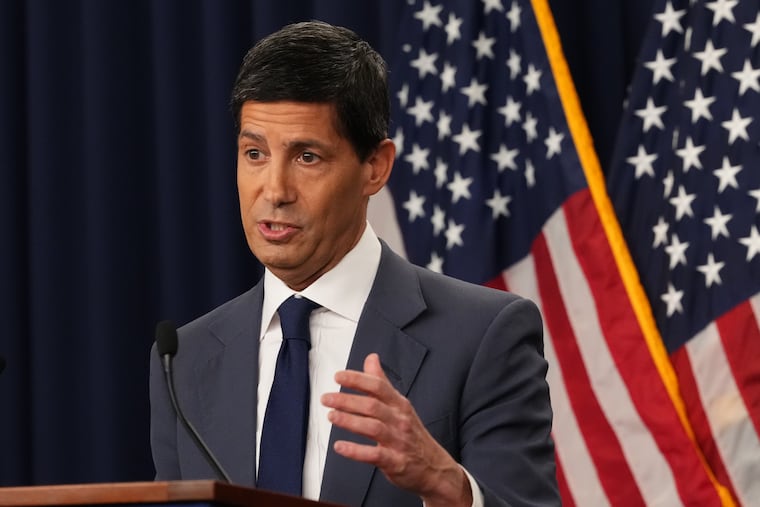
That gives pause to some investors. “In theory, the PBC could help us get the right balance on safety versus growth because they’re explicitly allowed to prioritize their mission,” said New York City Comptroller Mark Levine. But “because it keeps full power in the hands of the seven founders, it gives no avenue for public accountability through shareholder activism.”
Anthropic’s mission in its charter under Delaware law is “to responsibly develop and maintain advanced AI for the long-term benefit of humanity.” One critique of the PBC structure is that it allows for mission statements that are vague or subjective. For example, if reaching artificial general intelligence comes with major societal risks and a heavy climate toll, does that ultimately benefit humanity, and who decides?
“What it means to have socially responsible AI right now is just really contestable,” said Jill Fisch, a business law professor at University of Pennsylvania Law School.
Anthropic did not respond to a request for comment.
Legal status as a benefit or public benefit corporation is distinct from third-party certification as a B Corp, although the former evolved out of the latter. B Corp standards are in some ways more stringent — for example, a company must meet certain sustainability criteria, which isn’t required to become a PBC. Sampurna Khasnabis, senior equity analyst at Nia Impact Capital, a green investor, says “there isn’t as much accountability or teeth” with a PBC as with a B Corp certification.
Public PBCs face the risk of a plunging share price, which could ultimately lead them to abandon the structure in favor of strategies to boost the stock, according to Dana Brakman Reiser, a professor at Brooklyn Law School. “That, I think, would exert a huge amount of pressure, regardless of what your governance system might be,” she said.
In Anthropic’s case, the PBC model “is now about to face the full force of public markets: quarterly earnings expectations, index-driven ownership, and investors focused on growth,” said Kristin Hull, founder and chief investment officer at Nia Impact Capital. It “may not stand up to the risks of AI itself.”
It’s not unheard of for a company to go the public benefit route and then walk it back. Allbirds incorporated as a PBC when it was private, to advance an environmental mission. Earlier this year, after a long period of share price decline, the company (now Smartbird Inc.) switched from footwear to AI computing infrastructure and dropped its PBC status. In an SEC filing, it said that going forward it would “be operated in the best interests of our stockholders, without balancing the best interests of our stockholders against the public benefit of environmental conservation.”
Even as AI development raises safety concerns — with the companies themselves warning of grave dangers — and as the data-center build-out stirs strong backlash, PBC status may connote social responsibility. But how long that will remain the case is an open question.
PBC designation can be seen in part as “an effort to reassure both the public and the regulators,” said Fisch. “I don’t think the PBC structure gets you that. But I can see why if you were running one of these companies, you would like to send that signal.”
If AI developers want their public benefit status to confer credibility, they should be taking specific actions like disclosing their climate emissions, said Carol Liao, a law professor at the University of British Columbia.
“These companies are making extraordinarily broad claims about benefiting humanity, while building an industry with rapidly growing demands for electricity, water, land, data centers, physical infrastructure,” she said.
Ultimately, PBC governance is “akin to having a workout buddy,” said Dorff, of UCLA. “When the alarm goes off at five in the morning, if you know your friend is waiting for you at the gym, you’re probably more likely to show up. But it doesn’t require you to.”