Raymond Horsch had letter from former Mayor John Street telling police ‘don’t arrest him,’ attorney told federal judge
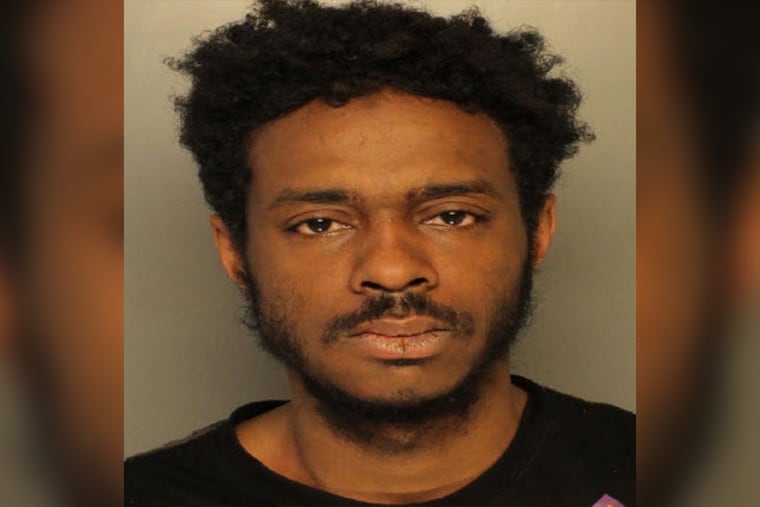
Raymond Horsch's lawyers said in a 2009 drug case that the Philly pornographer had a letter from former Mayor John Street instructing police not to arrest him.
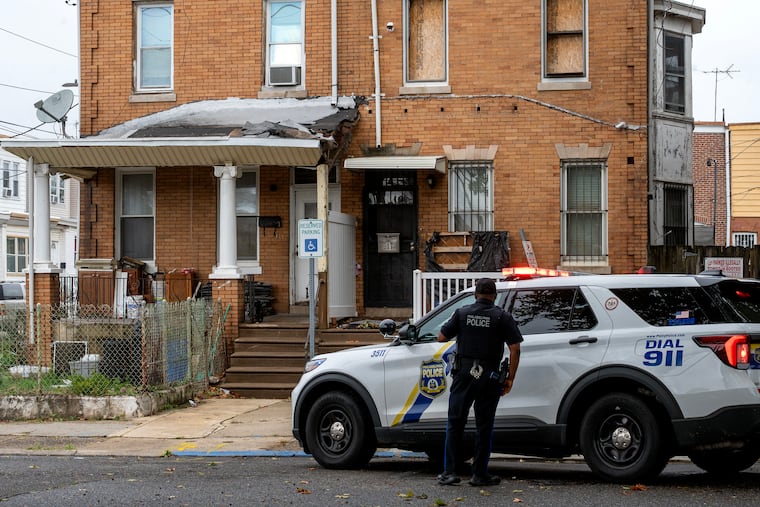
Raymond “R.C.” Horsch’s lawyer told a federal judge that former Philadelphia Mayor John F. Street wrote a letter asking police not to arrest Horsch because he was working on a documentary about women in addiction in Kensington, according court records unsealed Tuesday.
At Horsch’s sentencing for federal gun and drug crimes in 2012, attorney Jerome Brown told U.S. District Judge R. Barclay Surrick that his client was a good man with much to contribute to society, including that he was working on a documentary “about prostitution and heroin addiction” in Kensington.
“In fact, and I don’t have it with me, he even had a letter from Mayor Street that said, if you — don’t arrest him because he’s doing something good here,” Brown told the judge, according to a transcript of the hearing.
Street, the patriarch of a prominent political family who was Philadelphia mayor from 2000 until 2008, did not respond to multiple phone calls or a letter delivered to his home seeking comment Tuesday.
His son, State Sen. Sharif Street, cast doubt on Brown’s assertion that his father wrote a letter for Horsch, saying it was out of character.
“It sounds like he made up a fake letter,” Sharif Street said of Horsch.
Brown did not respond to a request for comment.
The Inquirer has not independently reviewed the letter.
Horsch, who died last year at the age of 82, was known to embellish facts of his life and forged documents, including passports, IDs, and cash. His adult son, Eugene, was arrested earlier this year with a fake federal drug enforcement badge.
Jill Fertel, a former Philadelphia prosecutor, said she recalled a different lawyer for Horsch presenting a copy of a similar letter at his 2010 sentencing in an unrelated Municipal Court case over an attempt to lure a 9-year-old girl into his car in Kensington.
Fertel said she was not able to examine the letter at that time but recalled that Horsch’s attorney presented it as from “someone high up in City Hall, or the police department.”
Sgt. Eric Gripp, a spokesperson for the Philadelphia Police Department, said that, to his knowledge, the department did not issue letters to filmmakers that matched Brown’s description.
Fertel said the letter was given to the judge and relied upon for sentencing.
The defense attorney, she said, “suggested that it was to be handed to cops in case he was stopped, to show police why he was lawfully in the area, because he was making a documentary about prostitution in Kensington,” she said.
She said she was surprised by it.
“I remember thinking how on earth is it possible that he has these connections? And what does it say about people in government that they’re connected to Raymond Horsch?” she said.
Horsch sought a new trial in the child-luring case, and when the 9-year-old victim did not reappear in court, the charges were withdrawn and his original conviction was vacated. The case was later expunged, and all court filings in the case were sealed.

Read more of The Inquirer's reporting on the sprawling missing persons investigation centered around the late pornographer Raymond “R.C.” Horsch and his son, Eugene:
- How a pornographer's violent art complicates Philly missing women mystery
-
Raymond Horsch had access to a Kensington crematorium linked to illegal body parts sales, years before investigation
-
‘Consumed by anger’: Inside the 1985 psych profile of Raymond Horsch
- A troubling photo of a missing woman appeared on Raymond Horsch’s erotic website, years before police investigated
- Police grapple with a lack of bodies in disturbing Olney investigation — and for families, a lack of closure
- Two women appear dead in “graphic and dark” videos recovered from Olney house, police say
Although it is unclear if such a letter survived the expungement order, lawyers for The Inquirer have asked a judge to unseal those records. A hearing in the matter has been scheduled for Nov. 10.
The transcript from Horsch’s sentencing hearing, which was made public Tuesday alongside other case documents at The Inquirer’s request, gave new insight into the information Horsch provided to federal prosecutors, ultimately persuading a federal judge to hand him a greatly reduced prison sentence.
Other filings unsealed last week showed that Horsch told federal officials about a child sex trafficking ring, fraud, and drug crimes as he faced charges for owning multiple illegal guns and for running a sprawling marijuana grow operation out of his Bucks County home. He faced a mandatory minimum sentence of 20 years in prison, but was ultimately handed a sentence of just 4 ½ years behind bars, plus five years of probation.
Police now believe that after his early release from federal prison in 2013, Horsch went on to kill women in addiction whom he met on the streets in Kensington.
Detectives found video footage of Horsch apparently strangling one woman who went missing in 2018 on camera, and photos of several other women alive inside his house and then dead.
Seven missing women have been tied to Horsch and his home on Chew Avenue in Olney. Five have been presumed dead.
Brown’s statement about a letter from Street raises new questions about the violent pornographer’s possible interactions with city leadership and law enforcement, and whether police missed opportunities to intervene before the women disappeared.
But at the 2012 sentencing hearing, Brown told the judge that Horsch did not solicit women in Kensington but was “doing some good works” by documenting drug addiction. Horsch, in interviews about his pornographic career, admitted using drugs and cash to entice women into having sex with him on camera, often staging violent death scenes that he later marketed as snuff films.
The records released Tuesday show that Horsch and his attorneys asked for a reduced sentence based on the importance of his family relationships, physical and mental health issues, and his age. His lawyers argued that more jail time would effectively be a life sentence for the then-68-year-old.
Amy McHale, Horsch’s ex-wife who went missing about four years later, testified before the judge on Horsch’s behalf. She identified herself as a paralegal of five years and recounted how Horsch had helped her get sober and off the streets.
“He helped me get into Peirce College. He supported me in every way he can. I’ve seen him help other girls who were in my position. Even while we were together, you know, sometimes girls would come and stay. And I supported him in that because of how much he helped me,” McHale said.
Marc Rickles, one of Horsch’s two attorneys in the case, recounted his client’s lengthy career as a chemist and an artist, saying he “enhanced society in many ways through his art and science.” He wrote a book on converting whey products into fuel. He helped people in addiction who had “lost their way,” Rickles said.
He and Brown both emphasized Horsch’s age and health problems, including macular degeneration in his eyes.
“I don’t think you’d see Ray again in a criminal setting,” Rickles said.
Rickles did not respond to a request for comment.
At that point, Horsch had been in federal lockup for three years, with no visitors except his attorneys, according to court testimony. That time, Rickles said, was more than enough.
“He hasn’t been the best dad in the world,” Rickles continued, “and I think he’s seen things that it’s not too late for him to help his son who has some issues who is also a very bright young man.”
After hearing their arguments, Judge Surrick said it was “almost tragic” that someone with Horsch’s “incredible talent” would resort to crime at such an advanced age.
“I have to impose a sentence that’s going to protect the public,” Surrick said. “It is my sincere hope that the public really doesn’t need to be protected from you anymore.”
He added: “You’re 69 years old at this point in the ball game, and to continue with criminal activity at would just be the most senseless thing I can imagine.”
He sentenced Horsch to 4 ½ years behind bars.
Eugene Horsch appeared at the sentencing hearing but did not testify. Eugene Horsch, 44, is in federal custody, charged with drug and weapons offenses stemming from a chance car stop in July that also revealed he was in possession of a fake ID made out in the name of a missing woman.
Brown said Eugene “went off the deep end” after his father’s arrest in 2009, sinking deeper into drug use. He was locked up for several months on drug charges, according to Brown.
During the hearing, Raymond Horsch’s attorneys also said he was working with the California-based professor and vampire-themed erotic fiction writer Thomas Roche on a documentary project based in Kensington that would focus on women in addiction. Roche did not respond to a request for comment.
It is unclear if the project was ever completed. But two years after the hearing, Horsch unveiled an audio-visual art exhibition at the Paper Mill in Kensington that featured nude photos and video of women who appeared to be injecting heroin.
The exhibit culminated with footage of what Horsch said was the corpse of a sex worker who died from an overdose being fed into a crematorium.
Staff writer Barbara Laker contributed to this article.
The Inquirer’s journalism is supported, in part, by the Lenfest Institute for Journalism and readers like you. News and editorial content are created independently of The Inquirer’s donors. Gifts to support The Inquirer’s high-impact journalism can be made at inquirer.com/donate. A list of Lenfest Institute donors can be found at lenfestinstitute.org/supporters.