A South Jersey food anchor folds amid a staffing crisis and rising costs
After nearly 11 years in Haddon Township, Goodbeet will close at the end of October. The health-focused restaurant will continue selling food through wholesale accounts and an online store.
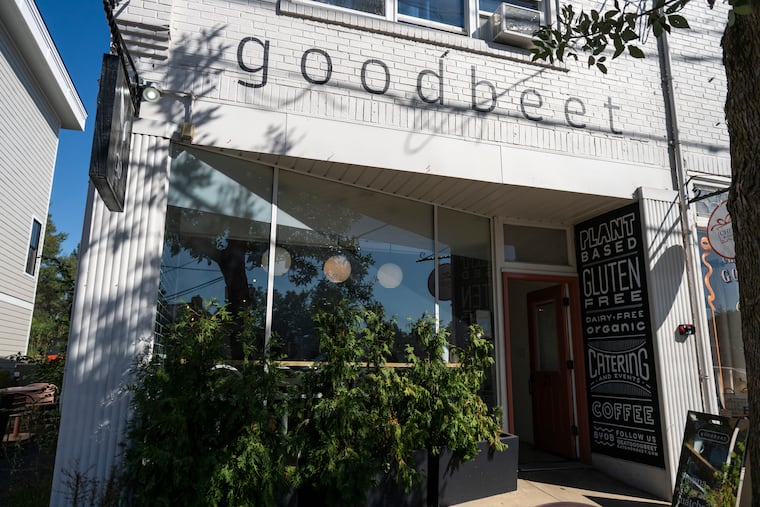
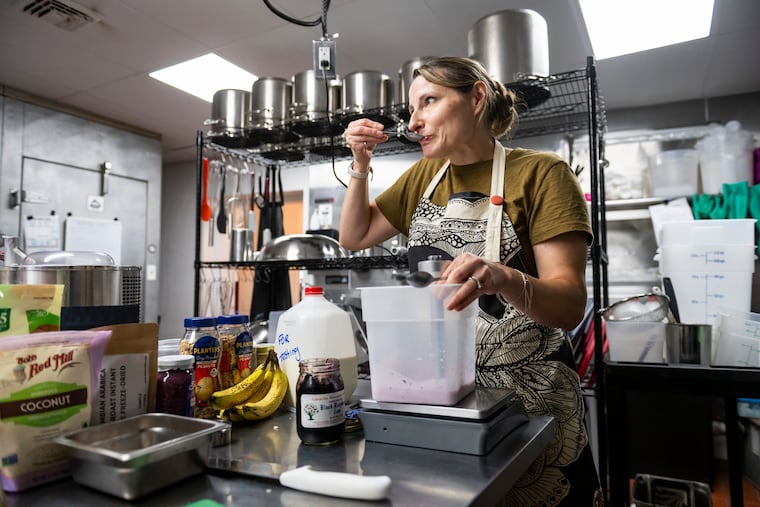
Ashley Coyne had dealt with plenty of staffing problems in nearly 11 years of running Goodbeet, her health-focused restaurant in Haddon Township’s Westmont section. But nothing could top one week in September.
One kitchen employee was out for surgery. Another broke his wrist and fingers. The kitchen manager landed in the emergency room with a badly sliced thumb. Then a front-of-house employee was injured playing volleyball.
Coyne had to shut down her kitchen for two consecutive days because she had nobody to cook.
“I was like, ‘I’m done,’” she said.
And she was.
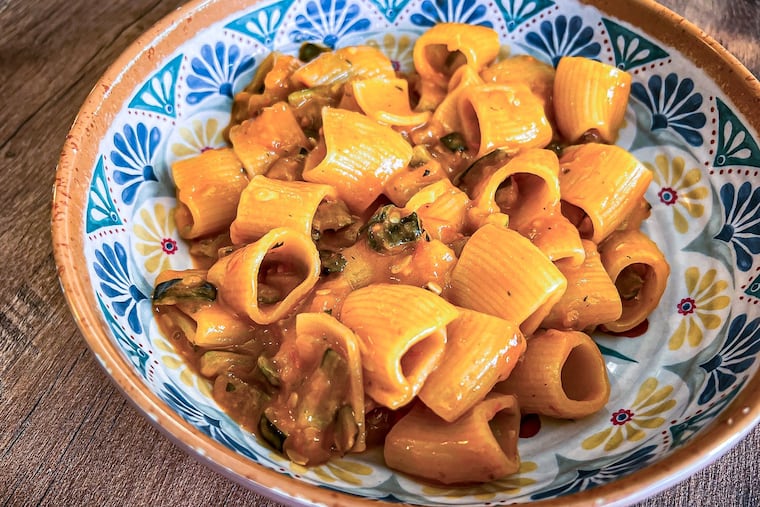
Goodbeet ended full kitchen and dine-in service last Friday. The storefront at 29 Haddon Ave. will continue selling coffee, smoothies, baked goods, and prepared foods through Oct. 31. Coyne plans to continue Goodbeet as a wholesale and online business, offering sauces, dressings, plant-based meatballs, prepared meals, salads, and desserts for pickup and delivery.
A shifting climate
For Goodbeet, an anchor on Haddon Avenue’s commercial strip, the competitive landscape has changed dramatically.
“We used to be a destination,” Coyne, 39, said. “People would travel serious distances to come here. Now, they don’t have to.”
When Coyne opened in 2015 as Heart Beet Kitchen, restaurants devoted to plant-based, gluten-free, and health-conscious food were relatively uncommon in South Jersey. Today, plant-based dishes are fixtures at chains such as Sweetgreen, Cava, and Chopt, while supermarkets and convenience stores have expanded their prepared-food offerings.
Coyne, who rebranded the restaurant in 2021, responded by broadening the menu. After a decade of serving no animal products, she began allowing customers to add chicken and salmon to bowls in 2025. In September, she introduced a salmon bowl and fried chicken sandwich.
The decision drew angry responses from some longtime vegan customers, including criticism directed at employees. But Coyne said the additions increased sales and attracted families whose members wanted different kinds of food.
“We sell so much chicken,” she said. “It brought in new customers.”
The changes came as the plant-based restaurant business faced competing trends. While 60% of American households purchased plant-based foods in 2025, according to the Plant Based Foods Association, U.S. foodservice sales of plant-based proteins fell 7% that year, according to an analysis by Good Food Institute analysis. Vegan food has entered the mainstream, but it’s apparently come at the expense of vegan restaurants.
In the Philadelphia region, several vegan fast-casual operators have contracted. HipCityVeg opened in 2012 and grew to a chain in Philadelphia, its suburbs, D.C., and New York; today, it’s down to its original Rittenhouse location. Goldie, the vegan falafel chain that restaurateurs Steve Cook and Michael Solomonov opened in 2017, reduced its footprint from four Philadelphia shops to one over the summer, citing slower weekday lunch business and changing consumer-spending habits.
The pressures extend beyond vegan restaurants. Sweetgreen, the national salad-and-bowl chain, reported a 6.2% decline in same-store sales in the second quarter of 2026.
The broadened menu did not eliminate Goodbeet’s financial constraints. Coyne said she could not raise prices enough to fully offset rising food and labor costs without risking the loss of customers.
Staffing issues
Yet the problem that ultimately closed the kitchen was not the cost of ingredients. It was keeping the kitchen staffed.
Before the pandemic, Coyne employed several full-time kitchen workers. More recently, she said, nearly everyone on her staff had another job. One employee teaches and works at Goodbeet nights and weekends. Another works only Fridays. Her cook also works at Wonder, the prepared-food and delivery chain.
Coyne generally pays $18 to $20 an hour, while some applicants seek $25. She understands why workers need more money, but said Goodbeet cannot necessarily offer enough hours to support full-time employment.
“People just aren’t as invested or committed to one place anymore, because they can’t be,” she said.
For a single-location restaurant with a small staff, even a few absences could disrupt operations. Unlike chains that can shift employees between stores, Coyne had no backup kitchen crew.
The early days
Coyne was 26 when she began developing Goodbeet after losing her marketing job with the Philadelphia Wings. Her family had restaurant-industry experience, but she had never run a restaurant herself.
Her prospective landlord initially turned her down. She returned several months later, convinced him to give her a chance, and opened with a lease she remembers as barely more than a page.
Customers lined up on the opening day in 2015. Within months, she signed a lease for an Ocean City location. She later expanded into Bordentown and operated a separate concept, Poppy Taco, inside nearby Reunion Hall. All eventually closed, leaving Westmont as Goodbeet’s sole storefront.
The pandemic initially brought a surge in business. Coyne kept the restaurant operating, set up an outdoor pickup table, and found customers eager for food they considered healthy.
The longer-term strain emerged around 2023. As operating costs increased and staffing became more difficult, Coyne began expanding meal preparation, grab-and-go offerings, and wholesale accounts, packaging products such as plant-based burgers and meatballs for other businesses.
She was gradually building a business less dependent on daily restaurant service. But the intensity of September’s staffing crisis prompted her to close the kitchen.
“Five years ago, I would have handled it,” Coyne said. “I’ve worked every single job in this restaurant. I’ve cooked, I’ve done the front of the house, I’ve done everything.”
This time, she couldn’t bring herself to fill the shifts.
Next steps for Goodbeet
Coyne owns the building and is discussing a possible lease with an experienced restaurateur who wants to open a small café there, potentially in January.
Meanwhile, she and Glenda Navas, a cook who has worked for her for nearly a decade, plan to retain Goodbeet’s wholesale accounts and launch an online store.
Coyne hopes to concentrate on the parts of the business she believes can continue to grow.
“We’re not disappearing,” she said.
Still, the end of storefront service means losing more than a place to buy a meal.
Since announcing the closing, Coyne has watched customers return to tell her what Goodbeet meant to them. Some recall picking up desserts during the pandemic, when a restaurant visit was one of their few outings. Others describe a welcoming place where employees knew their families and their lives.
Jay Lassiter, 54, of Cherry Hill, isn’t vegan. He visits once or twice a week, usually after going to the gym next door.
Last week before the dine-in closing, he said Goodbeet offered something he had difficulty finding elsewhere: food he felt good about eating in a place where he felt comfortable.
Since the announcement, he has watched customers coming in more often, hugging Coyne and sharing their memories.
“It’s almost like a shiva,” he said. “People are coming to pay their respects because we all know what’s coming.”
Lassiter knows he will still be able to buy some of Goodbeet’s food. But that isn’t quite the same.
“There are a hundred things about this place that I’m going to miss,” he said. “But I think a safe, hospitable place to make healthy choices and be surrounded by good people is the thing that I’m going to miss the most.”
Inquirer Food Festival
Get your ticket to Philly’s ultimate food party! Join top Philly chefs and bakers for one unforgettable day of food.