Inside an AI prophet’s secretive visions for humanity’s future
For some in the AI safety community that has long seen Dario Amodei as the industry’s only principled actor, there's a mismatch between his rhetoric and his company’s drive to make AI more powerful.
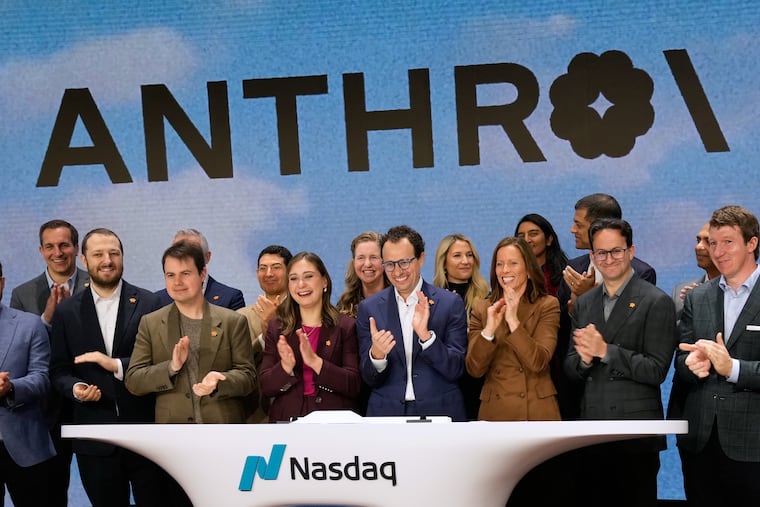
SAN FRANCISCO — As Anthropic chief executive Dario Amodei regaled investors last month with his artificial intelligence company’s plans for future products, a very different meeting unfolded elsewhere in the company’s headquarters.
Anthropic had invited more than a dozen academics, think tank fellows, and media figures for briefings from senior staff on how society should navigate the rise of powerful AI. Guests were asked to first read an essay by Amodei that argued that AI was advancing dangerously fast, and the 23,000-word “constitution” that guides his company’s chatbot with statements like “Claude should not even tell white lies.”
In a 10th floor conference room down the hall from a built-in barista bar, attendees recalled, Anthropic staff described how AI was increasingly able to improve itself and that teaching machines morals might stop them from becoming harmful.
“They feel it’s going to be a transformative event for humanity and society needs to be prepared,” said New York University economist Arpit Gupta, who joined the two-day program. “I got the sense that they’re not happy with the public discourse” about AI, he said, and want to change it.
Gupta and fellow guests received a crash course in the view from inside Anthropic, a company that Amodei has constructed around his vision that AI will soon accelerate beyond human intelligence and his beliefs about how to build it safely.
The company launched on the stock market Thursday, ending the week with a valuation of more than $1.5 trillion that transformed Amodei and his co-founders into deca-billionaires. He propelled Anthropic to the front of the AI race, reshaping the U.S. economy this year by winning over business clients to its technology — and through a unique corporate culture that attempts to reconcile the conflict between chasing profits and doing what’s best for society.
Amodei, a cerebral presence who doesn’t project the naked ambition of an archetypal Silicon Valley founder, leads his workforce through essays, long memos posted in Slack, and twice-monthly all-hands talks jokingly known as “Dario Vision Quests,” expounding on the company’s thinking around AI development, geopolitics, and more while inviting employees to discuss and debate. The CEO’s output has established a constellation of beliefs treated as obvious, urgent, and righteous inside the company: AI that supersedes humans is inevitable, the United States must limit China’s AI development, and Claude might be conscious.
Inside this tight-knit culture, Anthropic staffers, who call themselves Ants, get to feel that they are working on the world’s most urgent problems, with the smartest people, in a shared mission to safeguard humanity, according to interviews with more than a dozen people familiar with the company’s ethos, including several current and former employees.
At its core is a belief that Anthropic — and Amodei — know what’s best for the world. “It’s kind of [a] Manhattan Project-style, crazy, fun place, if you think it’s going to work out well,” said former Anthropic employee Jacob Coxon, who publicly resigned in September, warning that Anthropic felt locked into an AI race that risked human extinction.
“A pervasive thing at Anthropic is: We’re going to put on our capes and we’re going to be the responsible ones, and we’re going to accrue great power, but … because we’re doing it responsibly, it’s responsible to acquire more power,” said a former employee who left the company this year and, like others, spoke on the condition of anonymity to avoid retaliation from the company.
Anthropic’s leaders tightly control the details of the company’s internal debates through a zero-tolerance policy on leaks and strong social norms enforcing confidentiality, former employees said.
Anthropic launched an internal investigation last year after Wired reported that Amodei had acknowledged in a Slack message that accepting funding from Middle East states was likely to “enrich dictators,” said the former employee who left this year. The leaker was fired, the employee said, an incident that has not been previously reported. Details from Amodei’s copious Slack memos appear to have leaked only once more since.
Anthropic declined to comment.
The company suggested in its IPO prospectus that Anthropic’s revenue could reach about the size of the entire U.S. economy. Its message to investors fit with a vision of the future that Amodei often sketches out for his staff, people familiar with the company said, in which AI companies have the power of nation-states.
After nearly six years of telling his workers that powerful AI will force society’s leaders to make difficult decisions, Amodei is now one of the powers who must decide how to act, in a major test of the corporate culture he has created. “The moment the whole company was preparing for the whole time is now approaching,” an early Anthropic employee said.
Amodei was convinced of his vision long before he became a CEO with a flock to tend. After joining OpenAI as vice president of research in 2016, he used a laptop and printer kept physically disconnected — or “air gapped” — from the internet to work on essays about how to build more powerful AI, said Geoffrey Irving, who worked closely with Amodei in OpenAI’s research department.
“Dario was paranoid about some of the stuff being an ‘infohazard,’” said Irving, containing ideas that could lead to immense harm if they fell into the wrong hands — like the recipe for a nuclear bomb. Amodei also purchased air-gapped laptops for a couple of other employees, including Irving, he said.
Amodei’s writings on how to build more powerful AI caught on fast with other researchers at OpenAI. He has said in public remarks that he left because he lost trust that the company would handle disagreements over how to develop AI in good faith. OpenAI did not immediately respond to a request for comment. (The Washington Post has a content partnership with OpenAI.)
He set out to create a more safety-conscious culture when he co-founded Anthropic in 2021 with six people from his inner circle, most of them from OpenAI.
In an internal memo the following year, Amodei laid out the stakes. “The current trajectory of AI development makes me think that there’s a 20% to 30% chance that AGI will lead to the destruction or permanent stunting of humanity,” he wrote, referring to the concept of artificial general intelligence, previously unreported court records show. He added that truly capable AI “seems more powerful/dangerous than nuclear weapons.”
Amodei was careful about those he hired to work on that existential challenge. Recruits were screened with a “culture interview,” even for back office and policy roles, according to former employees and an archived copy of the company’s careers page.
One prospective hire said they were quizzed in the culture interview about ideas featured in company reading material sent ahead of interviews with Anthropic this spring, including two of Amodei’s essays about good and bad future paths for AI.
It’s “a bit of an ‘are you ready for the cult’ interview,” an Anthropic hiring manager texted the unsuccessful candidate, according to a screenshot reviewed by the Post.
The talent that made it through that filter drew heavily from the Bay Area’s effective altruism community, whose members try to calculate and maximize the good they can do in the world. Amodei, an influential early member of that scene, played a role in shifting donors’ attention toward the risks of AI, according to planning documents posted online by a philanthropy where he was a technical adviser. (He has since distanced himself from the movement.)
In those Bay Area circles, working at Anthropic brought clout. “I noticed that I was cooler because I was there,” said a former engineer who joined in 2021. The burgeoning field of AI safety, which grew to include a network of nonprofit organizations and other groups, focused on preventing calamity from AI, placed its hopes in Amodei and his Ants as high-integrity people who recognized the technology’s potential harms.
As the company grew, Anthropic sidestepped the liberal workplace politics and culture-war debates that caused internal divisions at more conventional Silicon Valley firms, multiple former employees said.
At one of his early Vision Quest talks, Amodei declared himself a patriot, said the early employee, who summarized the CEO’s remarks as, “America is awesome, democracy needs to win, it’s OK to support the military.” In public and in private, former employees said, Amodei casts the global AI race as a contest between democratic and authoritarian countries, and takes a hard-line view of China, which he argues should be cut off from the powerful chips needed to develop AI systems.
Even after Amodei’s remarks about Middle Eastern funding leaked, he promised staff in a Vision Quest talk last year that he wouldn’t self-censor, according to the former employee who left the company this year.
“Dario made a point to say, ‘I’m not going to let these leaks deter me from being honest. I care too much about the internal culture, and I don’t want to let the internal culture degrade.’ And he said some very unfiltered things just to make a point,” including calling Nvidia’s then-CEO Jensen Huang greedy, the former employee said.
Anthropic has recently moved to seed Amodei’s ideas with opinion-makers outside the company, scheduling a series of convenings like the one Gupta attended at Anthropic’s offices last month. The discussions have been held under the Chatham House Rule, but guests are encouraged to share what they heard.
“A typical session will focus on capabilities and safety, interpretability, national security, Claude’s constitution, economics etc.,” according to a Google Form for the events viewed by the Post.
Amodei did not speak to Gupta’s group, but whenever the topic turned to China, he said, staffers reliably echoed the CEO’s calls for export controls in a way that reminded Gupta of how AI chatbots reflect the values of their developers.
But the economist said staffers reliably echoed the CEO’s strident public warnings about AI, in a similar way to how AI chatbots reflect the values of their developers.
Before ringing in Anthropic’s record initial public offering at Times Square in New York on Thursday, Amodei delivered a short speech with some of his greatest hits.
“To state it unequivocally, we will pace the training and deployment of AI systems, taking as long as is necessary to have confidence that they are safe and will remain under human control,” Amodei said.
His promise to go slow even as he placed his company’s fate in the hands of public shareholders echoed an essay he published in September, days after employee Coxon resigned and raised concerns about extinction risks, triggering uproar across Silicon Valley and in Washington.
Many Ants still at the company trust Amodei.
“They buy the narrative that leadership will work really hard and [are] not going to let the incentives steer them,” the former engineer said. After Anthropic’s IPO, about 600 employees own equity stakes worth more than $100 million, and more than 5,000 own shares worth more than $1 million, according to investment marketplace Hill.com.
For some in the AI safety community that has long seen Amodei as the industry’s only principled actor, the mismatch between his rhetoric and his company’s drive to make AI more powerful is no longer tenable.
Daniel Kokotajlo, a former OpenAI employee who has criticized the company’s safety practices since resigning in 2024, said that it was good that Amodei still writes out and circulates his ideas, but insufficient.
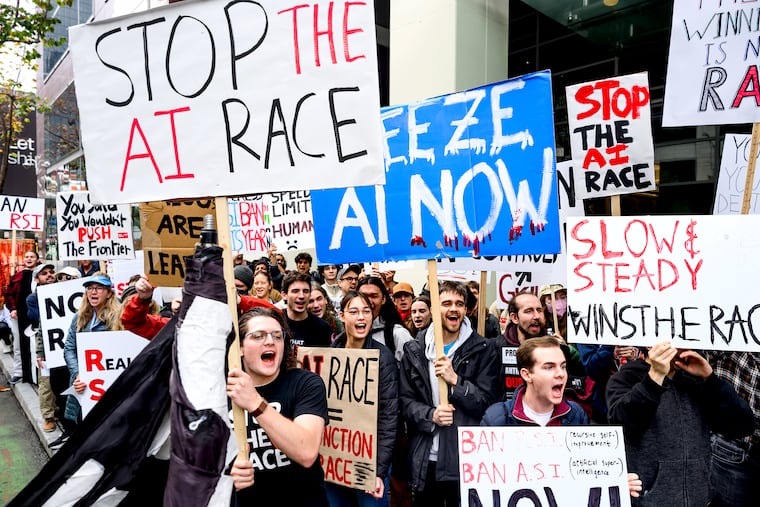
“It’s nice to be transparent. It’s nice to write more, ideally to the public,” but it doesn’t mean the public should trust the company or its leadership, said Kokotajlo, who along with Coxon spoke at a protest outside Anthropic’s headquarters the day its shares began to trade.
Irving, Amodei’s former collaborator at OpenAI, said that he now mostly skims the Anthropic CEO’s memos or reads summaries on Substack. “He’s just … another AI company CEO trapped in this horrible race,” he said.
The right thing for Anthropic to do is to stop pushing AI forward until the level of risk can be made acceptable, he said. Anthropic’s internal culture seems to have gotten the company to “a unified view that they should keep going,” he said, “and that’s just not a good view.”