America’s real crisis: The fear we’re losing control over our lives
After the hope of Election Day, an unequal future of unreliable AI and political inertia has America uncertain and afraid.

The month of November dawned across America with the soft glare of hope, when millions of citizens stood on lines and cast ballots to change the direction of a nation that most of us agreed was running off the rails.
But the days since the “blue tsunami” of the Nov. 3 election have been overtaken by dark metaphors, casting shadows as dreary as the late afternoon gloaming of the despised return of standard time.
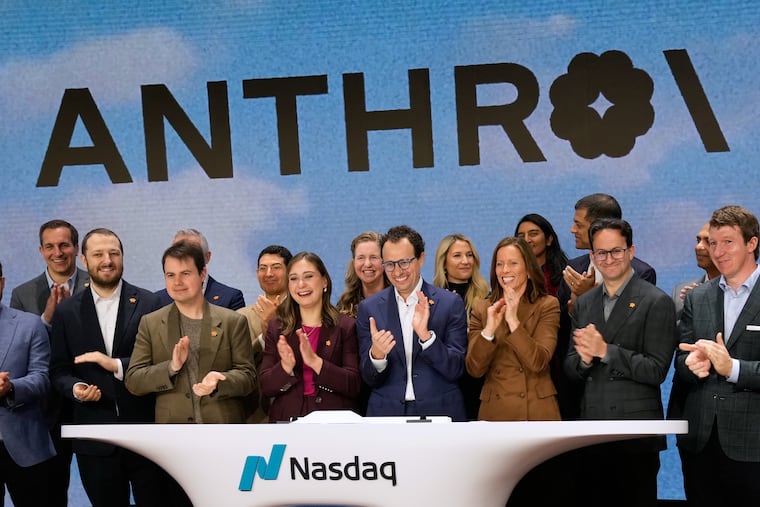
At the Nasdaq exchange, executives from the artificial-intelligence leader Anthropic cheered and applauded the opening bell last Thursday, and why wouldn’t they? Its long-awaited initial stock offering turned almost all of the 5,300 employees at the company, which developed the AI assistant known as Claude, into instant millionaires. At Thursday’s closing price, Anthropic’s founders and workers had more wealth than the bottom third of all Americans.
To make matters even worse, the tulip mania of the AI bubble is bursting and, along with the sense that robots are coming for our jobs, sparked Wall Street’s worst week in a while, causing the rest of us schlubs with 401K plans to lose a collective $4 trillion, if not more.
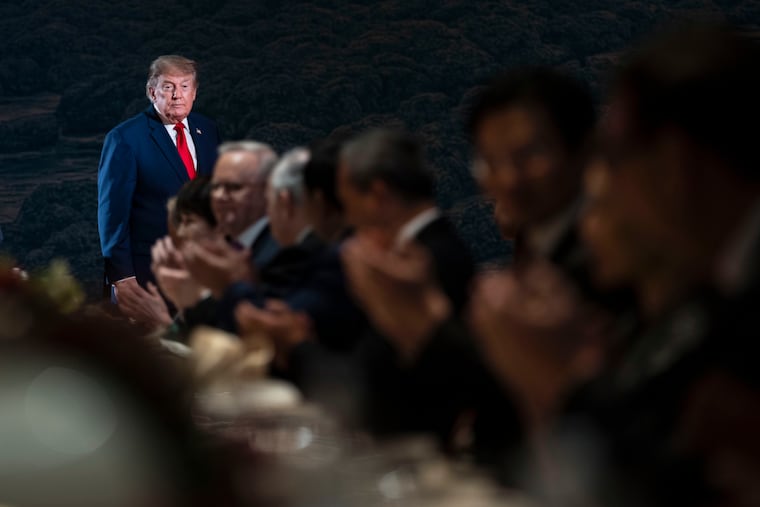
The cruel gods of metaphor were working overtime in Palm Beach County, home to the 47th president of the United States. On the same day Donald Trump was hugging his fellow dictators Vladimir Putin and Xi Jinping at their Yalta-but-with-three-Stalins summit in China and pledging to boost (?!) the production of fossil fuels, the climate deities were dumping a record 6-to-7 inches of rain on West Palm Beach, flooding the streets that Trump and his Qatari bribe jet buzz when he comes back to Mar-a-Lago.
While the president and his billionaire backers in Silicon Valley continued to tout AI and its noisy, polluting data centers as one giant leap for humankind, everyday humans are increasingly preparing for the end of civilization as we know it.
The staid, typically grey pages of the New York Times were filled last week with articles about Americans prepping for the worst. Its own veteran “Your Money” columnist, Ron Lieber, devoted his space to “My A.I. Hack Emergency Plan” to tell readers about how his family is stockpiling cash ($500, in small bills), water (you’ll need a gallon a day, per person), and other essentials for the day when the robots created by Big Tech’s millionaires start turning against us.
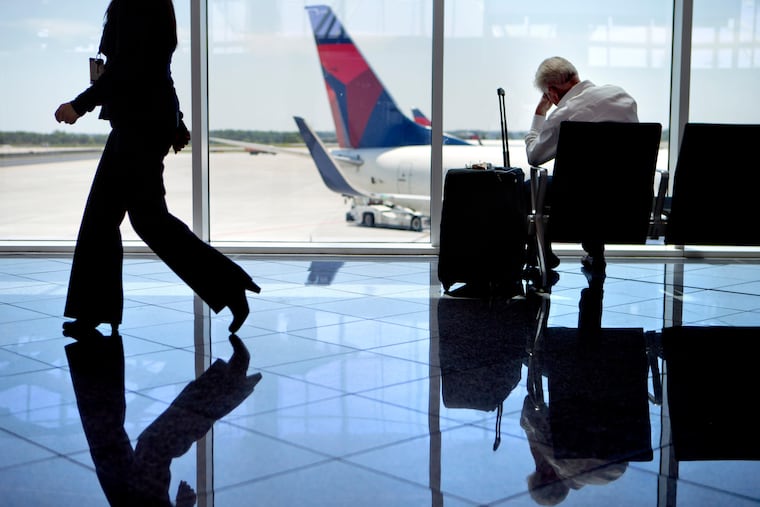
The last couple of weeks — punctuated by the still-not-well-explained four-hour failure of U.S. air traffic control that was bracketed by meltdowns around email, banking, and other online systems — felt like a bucket of cold water ending a year that had flashed so many positive signs of what Americans crave more than anything else: Hope.
What started in January in the frigid streets of Minneapolis, with residents blowing whistles and guarding streets to protect their neighbors from masked immigration goon squads, seemed to culminate on an unseasonably warm November day as a near-record 123 million Americans cast ballots that repudiated a strongman regime in Washington and elected the most diverse Congress in history.
But the gales of November came early in 2026. The tech meltdowns, the fears that obscene wealth inequality is a prelude to a financial collapse, the planet’s leaders whistling past the graveyard of climate change, and the seeming inability of the U.S. political system to respond to the public’s disgust over not just data centers but the unstoppable power of AI itself — it all boils down to one simple fear.
Are humans losing control over our own destiny? Is it too late to close the Pandora’s box that we’ve apparently opened in the race to build robots packed with so much intelligence — artificial intelligence, not “super,” not imbued with human empathy or creativity — that they will soon be building even more powerful machines without our input?
What if hope and “neighborism” and voting and our shared disgust with tyranny isn’t enough to stop the forces we’ve already unleashed?
If it were up to me, I’d proclaim “agency” as the word of the year for 2026. Claude and all the other robots — “AI agents,” they call them — are gaining it. We humans are rapidly losing it. What are we even doing here?
I’ve lived long enough to see true moments of crisis for America — the 1960s’ assassinations and riots I witnessed as a grade-schooler, or 9/11 — but I’ve never felt such widespread angst, a feeling that we are getting rid of the things that make us feel alive and creating a world we no longer recognize.
“Tennessee is dead,” a man named Kennedy Kemp wrote last week in a post that went viral. “At least the Tennessee I grew up in is.” He explained that “little by little, the locally owned restaurants, family businesses, and places that gave this city and state its personality are disappearing, only to be replaced by another chain you can find in 30 other states.”
And that was before the data centers.
Sure, there are positive uses for super computers. The promise of new drugs and cures for diseases is a powerful selling point for AI, but do we even want to live longer in a society where robots have the upper hand? In a world where one man has nearly a trillion dollars while most folks live paycheck to paycheck?
While we’re still getting a paycheck, that is.
“I think that it’s very likely that pretty much all humans on Earth will become unemployable,” Anthropic safeguard researcher Tao Lin said in an interview just days before the company’s IPO. “I want to tell people that AI will be more capable than you, personally, very soon. It will be able to defeat you, personally, very soon.”
Critics were quick to note that Lin’s comments were part of an odd phenomenon in which AI executives brag about their robots’ power to crush the job market and maybe even destroy humanity as a weird reverse-psychology trick — to put you in awe of Claude’s awesome power, so investors will throw money at it. AI might defeat you, but it just made Lin a multi-millionaire.
But then the weather might kill you before the robots get their chance. It seems all too fitting that in the same week that Wall Street was throwing nearly $2 trillion at the company seeking to “defeat” humankind, the world’s leaders were bringing the same suicidal impulses to the climate change that is killing us softly.
» READ MORE: America survived Y2K.26, but can we make it through two more years? | Will Bunch
On the day that Trump, Putin, and Xi giggled about pumping out more coal and “refined petroleum products” into Earth’s clogged arteries, we continued to shatter planetary temperature records.
But the people in charge seem even less interested in fighting climate change than they are in stopping the advance of the killer robots. In Turkey, the United Nations climate summit known as COP31 is currently working on a new global plan that doesn’t even mention fossil fuels — even as climatologists say we’re running out of time to curb the greenhouse-gas pollution that exacerbates floods like the rising waters now swamping Florida.
Just as depressing is the fact that the epic midterm election results — fueled in part by public revulsion over the data centers that are worsening carbon pollution — doesn’t seem to have changed the political calculations on Capitol Hill. In a lame-duck session, nearly half of Senate Democrats are working with Trump and the GOP to ram through a permitting bill that might have some good aspects, but, overall, it will make it easier to build even more data centers and their dirty power plants.
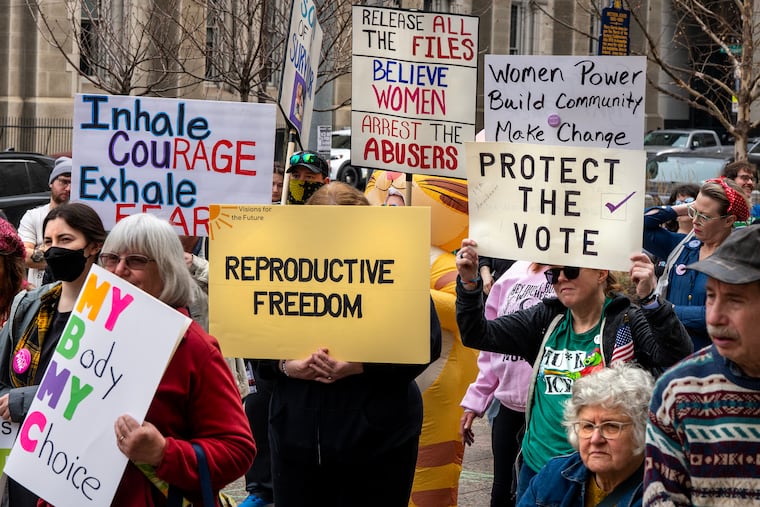
The American University sociologist Dana Fisher, who studies contemporary protest movements, noted that this month’s Democratic landslide was a kind of revolution, capping a period of unusually high turnout at town meetings, campaign events, or demonstrations like No Kings. But she cautioned that “if the Democratic party pressures [the newly elected] to fall in line behind historically weak incremental and unsuccessful policies, bullying them to continue business-as-usual in the U.S., this revolution will fail.”
The idea that we can change our future with an election is the story that Americans tell ourselves in order to live. If that didn’t change anything at all, we should shudder at what’s next.
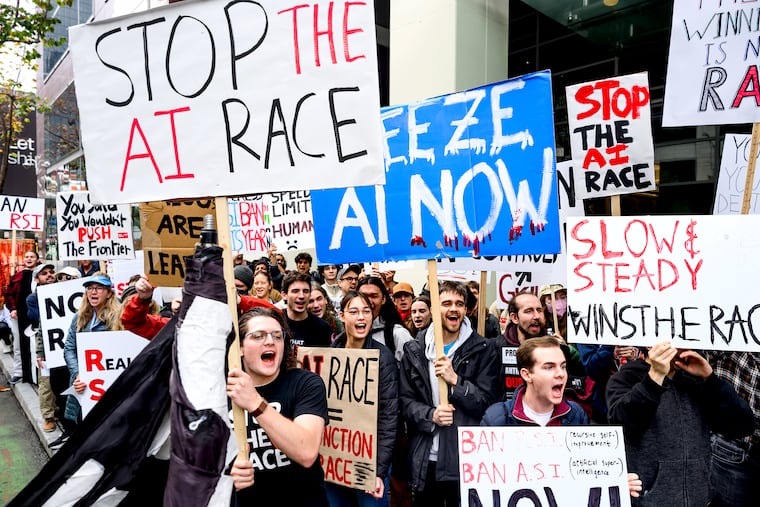
In Europe, epic numbers of young people have already taken to the streets to demand a course correction away from a future of high costs and AI domination. That hasn’t come to the United States, where apparently we’re too busy getting $20 bills from the ATM and hauling jugs of water back to our hardened bunkers.
Let’s not be this way. We need to pressure Washington to follow through on the radical change that voters demanded on Nov. 3, or else the revolution is going to happen by other means — and it probably won’t be pretty.
Despite what Anthropic’s millionaires want us to think, we still have agency. Use it, or lose it.
» READ MORE: SIGN UP: The Will Bunch Newsletter
About our columnists
In contrast to news reporters, who operate within an independent, nonpartisan framework, columnists are charged with including their perspectives, opinions, and viewpoints when presenting their reporting. Inquirer columnists include Jenice Armstrong, Will Bunch, Luis F. Carrasco, Paul Davies, Daniel Pearson, Trudy Rubin, and Sabrina Vourvoulias.