East Whiteland’s board of supervisors will grow, voters decided, after a data center stoked fierce pushback
Meanwhile, Malvern's borough council will shrink.

Voters on Tuesday approved a measure expanding East Whiteland’s board of supervisors to include two more members, after a group of residents rallied to increase representation on the board due to their opposition to the data center project.
The board of supervisors — who are elected for six-year terms and oversee the budget, hear conditional use applications, and appoint staff and members to advisory committees — will grow from three members to five.
It was one of three questions that voters approved Tuesday in Chester County, where residents also consented to shrinking the Malvern Borough Council from seven to five and passed robust Home Rule Charter updates in Tredyffrin.
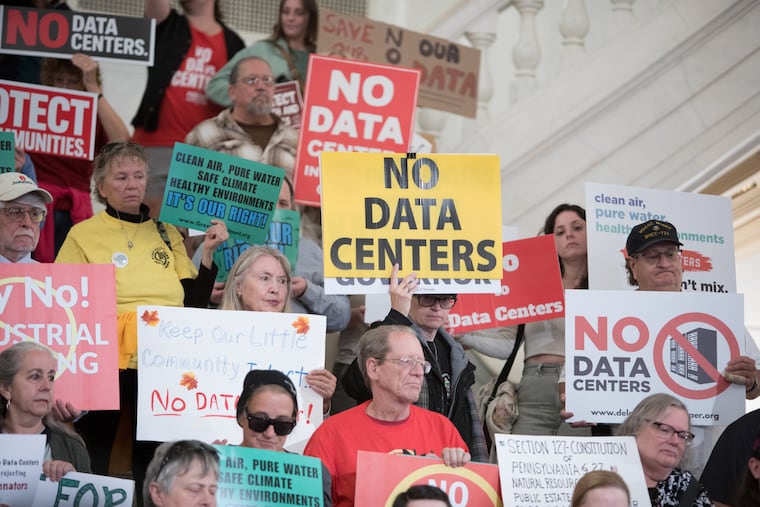
East Whiteland, with a population of roughly 15,000 people, has faced increased scrutiny in the last year after a 1.5 million-square-foot data center proposal, originally approved by the township’s three elected officials in 2024, resurfaced as its developers sought to expand the project.
Residents have turned out in large numbers to meetings to oppose it, and pursued different legal avenues to halt construction. Pushback to data center projects is becoming more and more commonplace across Pennsylvania as more residents oppose the projects cropping up near them, even shifting Democratic Gov. Josh Shapiro’s once-favorable stance.
That discontent ultimately underpinned the resident-led effort to add two more supervisors to East Whiteland’s board. Organizers who sought petition signatures said they felt adding additional supervisors would add a broader range of perspective, representation, and understanding to local government.
At the polls Tuesday night, residents weighed that argument as they cast their ballots.
Rajie Mangan, 55, cast his vote in favor of expanding the board.
“When they’re doing all these data centers and all that, I think that it becomes crucial having multiple points of view,” he said.
They faced some headwinds: Neither the Democratic Party nor the Republican Party endorsed the question, encouraging voters to strike the effort down. But the measure passed with 64% of the vote, with 62% of eligible voters casting a ballot in Tuesday’s election.
Madeline Marcotte, 60, knew having an expanded board would not stop the existing data center project.
“The group that’s pushing the referendum has promised qualified candidates, and I look forward to seeing who they put forward,” she said. “But I don’t want to see the corporate class taking over the supervisors.”
Without saying which way he voted, Richard Orlow, who served on the board for 10 years until the end of his term last December, said there were pros and cons to expansion.
“There’s just a lot of work. I might have liked a little more help. But we did fine; three is a good number because it’s easier to deliberate and get decisions made,” said Orlow, 68. “There’s less input, but in East Whiteland, you can always count on the public providing plenty of input.”
Scott Lambert, chairman of the East Whiteland supervisors, said Wednesday he respected the voters’ decision.
“My commitment to serving our community remains unchanged,” he said.
While East Whiteland’s board will grow, Malvern residents decided to go in the opposite direction, with nearly 60% of voters backing a measure to shrink the council. No council member will lose their seat as a result of the vote.
A group of residents there had petitioned to downsize, saying the larger board size of seven made it difficult to get things done and placed more burden on borough staff. The organizers also had said it was difficult for either party to nominate qualified candidates for the borough with a population of around 3,500.
Tredyffrin voters, meanwhile, overwhelmingly approved with 70% of the vote a lengthy update to the township’s Home Rule Charter, which had last been altered in the 1970s.

Want to get Inquirer Chester County straight to your inbox every week? Sign up here for our guide to the news, stories, and events shaping life in your community.
This suburban content is produced with support from the Leslie Miller and Richard Worley Foundation and The Lenfest Institute for Journalism. Editorial content is created independently of the project donors. Gifts to support The Inquirer’s high-impact journalism can be made at inquirer.com/donate. A list of Lenfest Institute donors can be found at lenfestinstitute.org/supporters.