Independents could shape November election. Why shut them out of primaries?
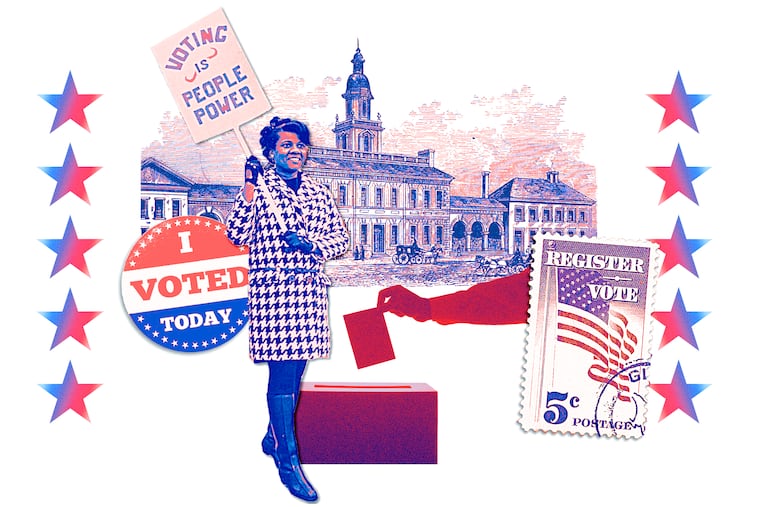
The state House passed legislation to open primary elections to Pennsylvania’s roughly 1.5 million independent voters, but the bill has not moved through the Senate.
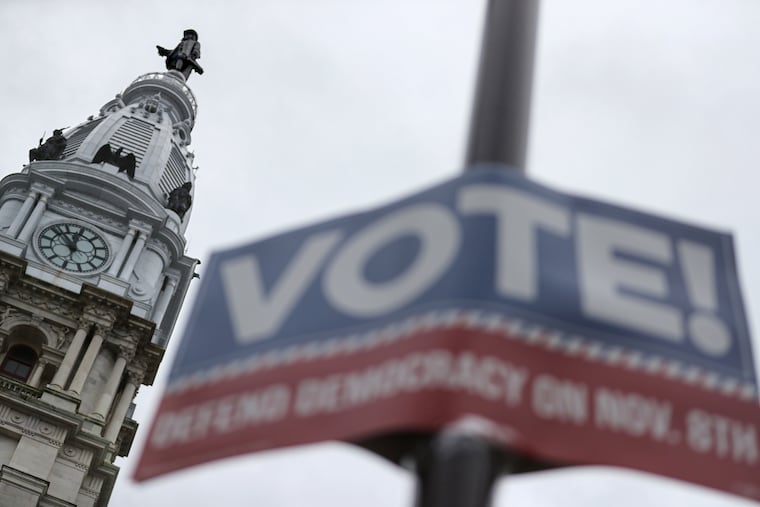
David Thornburgh is chair of Ballot PA Action, which advocates for opening Pennsylvania’s primary elections to independent voters.
Some of the most consequential elections in Pennsylvania this November will take place in Southeastern Pennsylvania and the Lehigh Valley. And yet, the voters who could help decide them are the same voters Pennsylvania continues to exclude from its primary elections: independent voters.
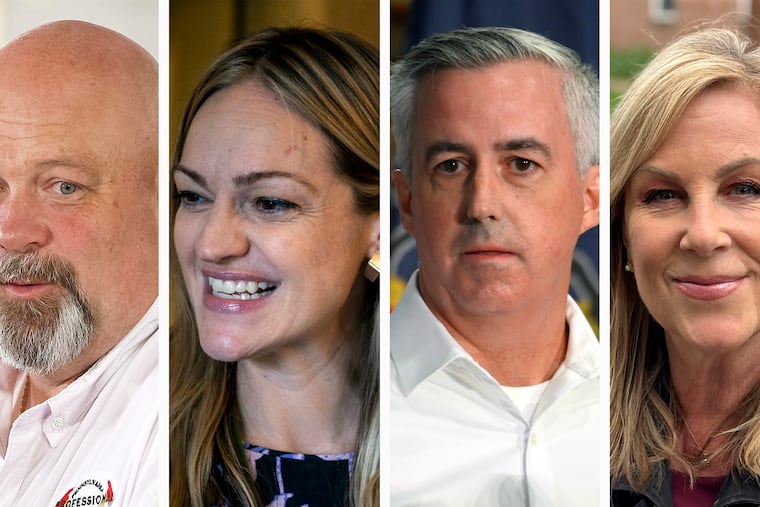
In Bucks County, Republican State Sen. Frank Farry faces Democrat Eileen Hartnett Albillar. In Berks and Montgomery Counties, Democrat Chris Thomas and Green Party candidate Mike Schonewolf are challenging Republican State Sen. Tracy Pennycuick. And in the Lehigh Valley and upper Bucks County, Republican State Sen. Jarrett Coleman faces Democrat Mark Pinsley.
These closely watched races will likely determine control of the Pennsylvania Senate, where Republicans hold a narrow 27-23 majority. The 30,000 or so independent voters in each Senate district will play a decisive role in the outcome.
Without an incentive to reach out for their votes in the primary election, candidates often pay little attention to independent voters until the general election season heats up a few weeks before. At that point, these voters feel a little like the high school kid who, on Friday night, gets asked to the senior prom happening the next night. The invitation seems rushed and insincere. That’s bad politics.
A rare opportunity
But now Pennsylvania has an unprecedented opportunity to change this.
On Sept. 29, the Pennsylvania House of Representatives made history by passing legislation to open primary elections to the commonwealth’s roughly 1.5 million independent voters. House Bill 280 passed 115 votes to 88 with bipartisan support, as 16 Republicans joined 99 Democrats in voting for the measure.
It was a breakthrough more than three decades in the making.
For at least 30 years, lawmakers have debated giving independent voters a voice in primaries. While the Senate passed such legislation in 2019 by a vote of 42-8, with support from the current Senate president pro tempore and majority leader, every effort in the House had fallen short.
Until now.
So why does what once seemed impossible now seem within reach? For one, independent voters now account for roughly one in six registered voters, with their numbers growing faster than either major party’s registration over recent decades. In the south-central, southeast, and the Lehigh Valley regions — Pennsylvania’s independent voter belt — that number’s even higher at one in five. Nationwide, 48% of all voters — an all-time high — identify as political independents, significantly more than they identify with either party.
According to the National Conference of State Legislatures, Pennsylvania is one of only eight states that does not allow independent voters to participate in partisan primary elections.
Pennsylvania independents are not sitting on the sidelines by choice. They vote in general elections, pay taxes, serve in our military, own businesses, volunteer in their communities, and send their children to public schools.
But when primary election day arrives, Pennsylvania tells them they cannot help choose Democratic or Republican nominees unless they join one of those parties.
And that matters beyond the competitive Senate districts drawing attention this fall.
The clock appears to be running out as legislators are preoccupied by their own races and perhaps frozen in place awaiting the outcome of the Nov. 3 election.
In more than nine in 10 Pennsylvania legislative districts, where one party holds a significant registration advantage, the primary can effectively determine who represents that community. For independent voters, exclusion from the primary can mean exclusion from the election that matters most.
With the passage of House Bill 280, the question moves to the Senate. While a Senate bill could technically advance before the end of the current legislative session in December, the clock appears to be running out, as legislators are preoccupied by their own races and perhaps frozen in place awaiting the outcome of the Nov. 3 election.
Up to senators
But in the eastern part of the state, Senate leadership in support of opening primaries is particularly strong and diverse, and could move sharply to advance such legislation early in the new year. In the Lehigh Valley, State Sens. Lisa Boscola — a tireless and persistent champion — and Nick Miller, along with Southeastern Pennsylvania State Sens. Steven Santarsiero, Carolyn Comitta, Timothy Kearney, Amanda Cappelletti, Tracy Pennycuick, Judith Schwank, Joe Picozzi, and Maria Collett, have cosponsored Senate legislation.
Their support demonstrates that opening Pennsylvania’s primaries is not a partisan issue, but one of fairness, representation, and strengthening our democracy.
The coalition supporting open primaries consists of independent voters, veterans, young Pennsylvanians, business and civic leaders, and elected officials from both parties.
This November, voters will decide who represents their communities and potentially which party controls the Senate. Independent voters are critical to those races, but they are due a voice not just in deciding who gets the job in November, but in determining who gets their name on the ballot in the first place.
Pennsylvania lawmakers have an opportunity to finally make that a reality.
About guest essays
Guest essays, or op-eds, are commentary pieces that present the opinion or perspective of the author. Many are submitted to us by Inquirer readers and writers with insight on the news, but we also solicit op-eds from authors on specific topics. For more information visit our guidelines.

Inquirer Opinion Newsletter