Rubio says ‘major combat operations’ in Iran are no longer needed
The secretary of state's declaration was the most explicit signal yet that President Donald Trump does not intend to escalate his conflict with Iran after last week’s U.S. midterm elections.
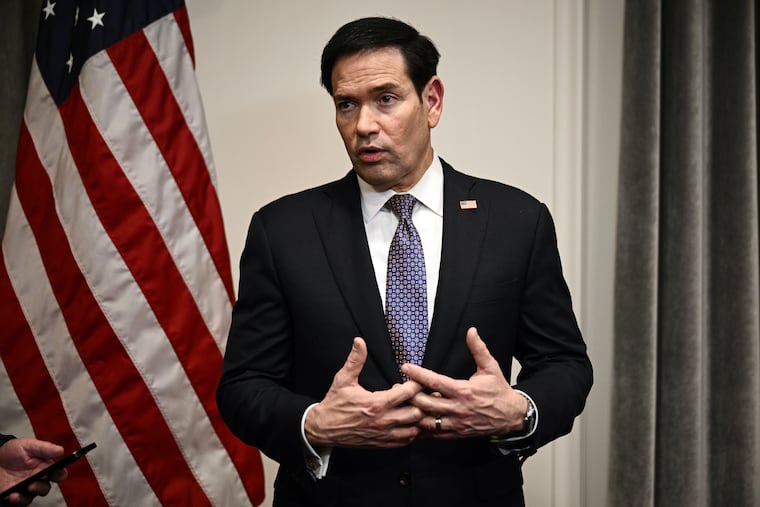
PARIS — Secretary of State Marco Rubio said on Tuesday that the Trump administration’s economic pressure campaign against Iran was effective enough that “there’s really no need for major combat operations any longer.”
Rubio’s declaration was the most explicit signal yet that President Donald Trump does not intend to escalate his conflict with Iran after last week’s U.S. midterm elections.
Speaking to reporters in Paris, Rubio added that the United States might still respond with force if Iran “crosses certain red lines,” which he did not specify.
A day earlier, Trump told reporters that the war against Iran “militarily is effectively over.” But while Trump often opines off the cuff, Rubio lent an official veneer to that position by saying he had informed his counterparts about it on Tuesday at a meeting of Group of Seven foreign ministers.
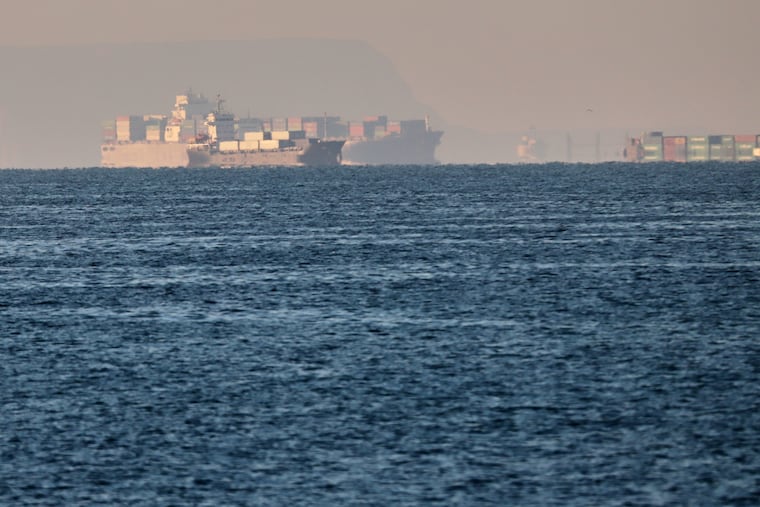
Israeli officials and Iran hawks in Washington have called for more bombings in the war against Iran, which began more than eight months ago. But Rubio said that further American strikes were no longer necessary because a combination of U.S. economic sanctions and an American naval blockade “are doing devastation” to Iran’s economy.
He would not say how much longer Iran might be able to endure the American pressure, or what outcome the United States was pursuing.
“I think the way to look at it is: You do bad things, bad things will happen to you. That’s the way to read it,” he said.
The announcement of a possible new American approach comes after voters delivered a stinging rebuke to Trump’s Republican Party, handing Democrats majorities in both the House and Senate. Many Republicans, including Vice President JD Vance, have blamed the conflict as a major reason.
In the weeks before the American vote, the U.S. and Israeli militaries drew up plans for a new round of strikes on Iran, and many observers believed that, once the midterm elections were past, Trump might feel little political risk in a new escalation of the conflict.
Asked whether the Israeli government supports the new U.S. position, Rubio said he did not know its view.
In a news conference before he departed Paris after two days of meetings on topics ranging from Iran to Ukraine to artificial intelligence, Rubio was sending a clear signal about U.S. policy, repeating his statement about an end to major combat operations several times.
But as is often the case in the Trump administration, the clarity was not total.
On Monday, Trump had said of the Iran conflict: “We’re just keeping it the status quo.” But when asked on Tuesday whether the new U.S. policy amounted to an acceptance of the status quo, Rubio bristled.
“No, not status quo,” he said. “The economic pressure is going to get even worse.”
Rubio noted that the Treasury Department was working to close loopholes in U.S. sanctions and to identify and punish sanctions violators. He also said that Iran has been subsisting in part on the sale of oil shipped from its ports during a brief ceasefire agreement between the United States and Iran in June, some of which remains on the high seas waiting for buyers.
“Once that dries up, almost all of their oil revenue will dry up,” Rubio said.
Rubio said a U.S. deal with Iran could still be possible, but he cast doubt on the possibility that one could happen soon. The Trump administration has demanded that Iran allow shipping to resume freely through the Strait of Hormuz and abandon its nuclear program.
“The problem is the conditions they continue to place are absurd,” Rubio said. “Like they’re not even serious right now.”
Polling around the election also revealed voter anger over allegations of corruption in the U.S. government. Last month, the U.S. ambassador to Greece, Kimberly Guilfoyle, resigned under pressure amid allegations that she had used her influence in the Trump administration for personal gain.
Speaking to reporters on Monday, Rubio said that he has set high ethical standards for U.S. diplomats. But he declined to state whether he was confident that the standard was being met throughout the State Department.
“We take this very seriously, and we won’t tolerate any exception to the rule,” Rubio said.
This article originally appeared in the New York Times.